
Where Is That Water Coming From?
Water stains spreading across your ceiling. Damp patches that appear and disappear. A drip you can hear but can't see. Finding the source is the first step to stopping the damage.
We specialize in tracking down elusive roof leaks. Water can travel far from where it enters, but we know the tricks it plays. Professional detection means fixing the right spot—not guessing.
Why Roof Leaks Are So Hard to Track Down
If leaks were simple, you'd have fixed it already. The frustration is real—water appears in one spot, but the problem is somewhere completely different. Here's why that happens.
💧 How Water Travels
- •Water enters through small gaps you can't see from below
- •It runs along battens and rafters, travelling horizontally
- •Sarking (underlay) can channel it in unexpected directions
- •It finally drips down metres from where it entered
- •The ceiling stain is rarely directly below the leak
⚠️ Why DIY Detection Fails
- •The obvious problem (cracked tile) may not be the leak source
- •Some leaks only appear in certain wind/rain conditions
- •Walking on roofs without experience causes more damage
- •Can't safely access roof cavity to trace water path
- •May fix wrong spot, wasting money while leak continues
Professional detection finds the actual source—so you fix the right spot once, instead of guessing and repairing multiple times.
How We Find Your Leak
A systematic approach that tracks water to its source
Information Gathering
When does water appear? Heavy rain only? Certain wind direction? How long has it been happening? This tells us a lot about likely causes before we even get on the roof.
Internal Inspection
Where accessible, we check the roof cavity from inside. Water stains on timbers show us the water's travel path. Daylight through the roof shows gaps. This inside-out view is often more revealing than looking at tiles.
Roof Exterior Inspection
We examine the roof surface methodically—checking tiles, ridge capping, valleys, flashings, and penetrations. We know the common failure points for Peninsula roofs.
Water Testing (If Needed)
For elusive leaks, we use controlled water testing—running water over suspect areas while observing from inside. This simulates rain conditions and confirms the entry point before we commit to repairs.
Report & Repair Quote
We explain what we found, show you photos if helpful, and provide a quote to fix it properly. You'll understand exactly what's wrong and what it takes to fix it.
Common Leak Sources We Find
Ridge Capping
Cracked or failed pointing is the #1 leak cause. Water enters through gaps in the mortar along ridge lines.
Valley Irons
Rusted valleys, lifted edges, or debris blocking water flow cause leaks at these high-volume drainage points.
Flashings
Failed seals around pipes, vents, skylights, and where roof meets walls. Common on older installations.
Cracked Tiles
Cracked or displaced tiles let water through. Sometimes hairline cracks are hard to see but leak significantly.
Gutter Backup
Blocked gutters cause water to back up under tiles. The leak appears to come from the roof but starts at the gutter.
Corroded Screws
On metal roofs, corroded or loose screws let water in around each penetration point. Often multiple fail together.
Recent Leak Detection Project
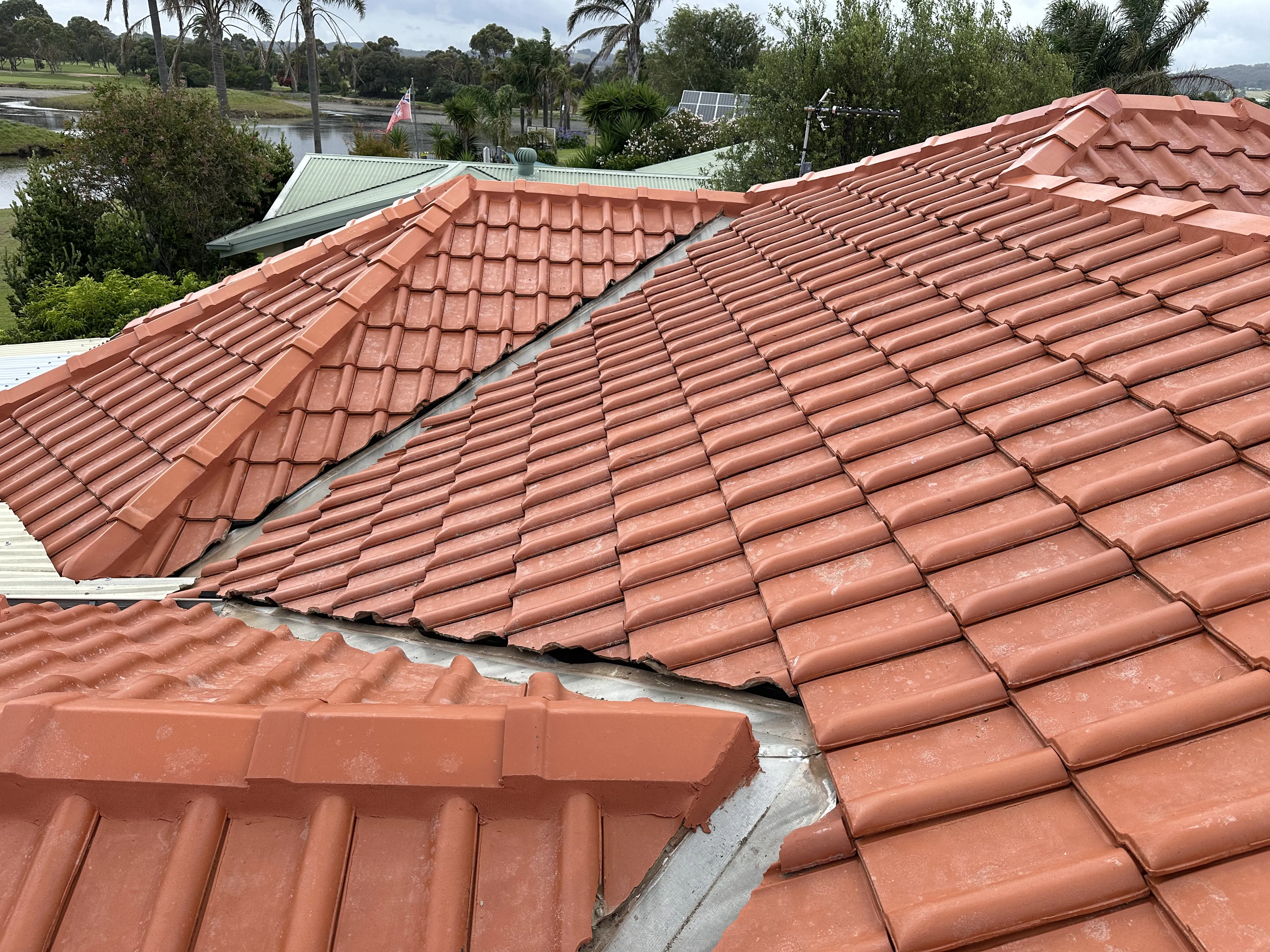
What We Find & Fix
Every leak has a source—our job is to find it. Whether it's failed pointing, damaged flashings, or hidden structural issues, we track down the problem and fix it properly.
- ✓ Full roof inspection
- ✓ Roof cavity check
- ✓ Leak source identified
- ✓ Repair quote provided
💰 If you proceed with our repair quote, the inspection fee is often credited toward the repair cost.
Leak Detection Across the Peninsula
We track down leaks throughout Frankston and the Mornington Peninsula. From coastal homes with wind-driven rain to inland properties with tree debris issues, we find the source.
Leak Detection FAQs
How do you find where my roof is leaking?
We use a systematic approach: 1) Interview you about when leaks occur and where water appears, 2) Inspect the roof exterior for obvious issues—cracked tiles, failed flashings, blocked valleys, 3) Check the roof cavity from inside for water stains, daylight, and damage patterns, 4) If needed, we do controlled water testing—simulating rain on specific areas while observing from inside. Most leaks can be traced within a single inspection.
Why is water appearing far from where the roof is leaking?
Water follows the path of least resistance. It can enter your roof in one spot, travel along battens, rafters, or sarking for several metres, then finally drip down to your ceiling in a completely different location. That's why the stain on your ceiling often isn't directly below the leak. Tracing the water path is part of what we do.
Can you find leaks that only happen in heavy rain?
Yes. Some leaks only occur when rain comes from a specific direction, when it's very heavy, or when wind-driven. We consider the circumstances of your leaks and can simulate those conditions with controlled water testing. We may also need to inspect during or after rain to catch intermittent leaks in action.
How much does roof leak detection cost?
Leak inspection costs depend on the complexity of the case. Simple, accessible single-story homes are less costly than multi-storey homes or those requiring extensive water testing. If we find the leak and you proceed with our repair quote, the inspection fee is often credited toward the repair cost. Contact us for a specific quote.
What are the most common causes of roof leaks?
In our experience: 1) Failed or cracked pointing on ridge capping (most common), 2) Rusted or damaged valley irons, 3) Failed flashings around penetrations (pipes, vents, skylights), 4) Cracked or displaced tiles, 5) Blocked gutters causing water backup, 6) Damaged or deteriorated sarking, 7) Corroded screws on metal roofs. Age, coastal exposure, and tree debris all accelerate these issues.
Should I try to find the leak myself?
We understand the temptation, but we don't recommend it. Walking on roofs is dangerous without proper safety equipment. You can easily cause more damage by stepping on fragile tiles or disturbing failed areas. And without experience, you may fix the wrong spot while the real leak continues. Let us do the diagnosis—it's safer and more reliable.
How quickly can you come out for a leak?
For active leaks causing damage, we prioritise urgent callouts—often same-day or next-day. For leaks that only appear occasionally or aren't causing immediate damage, we can usually schedule within a few days. Call us and we'll assess the urgency and get you booked in.
What if you can't find the leak?
It's rare, but some leaks are genuinely difficult to locate—especially intermittent ones. If we can't find it on first inspection, we may recommend returning during specific weather conditions, or installing temporary water sensors. We won't charge for a second visit if the first inspection didn't locate the source and conditions prevented proper testing.
Related Services
Explore our other professional roofing services
Roof Restoration
Complete roof restoration including cleaning, repairs, and coating
Learn More →Roof Repairs
Fast and reliable roof repairs for all roof types
Learn More →Roof Painting
Professional roof painting with premium coatings
Learn More →Roof Cleaning
High-pressure roof cleaning to remove moss and debris
Learn More →Find Us on Google Maps
Stop That Leak Before It Causes More Damage
Every rain brings more water damage. Book a professional leak detection and get the problem fixed at the source.
✓ Free Quotes ✓ Find the source ✓ Same-day urgent callouts ✓ Fix it right
Roof Leak Detection Across the Peninsula
We provide professional roof leak detection services throughout Frankston and the Mornington Peninsula. Click your suburb to learn more.