Heat Reflective Roof Paint: Save Energy & Protect Your Peninsula Home
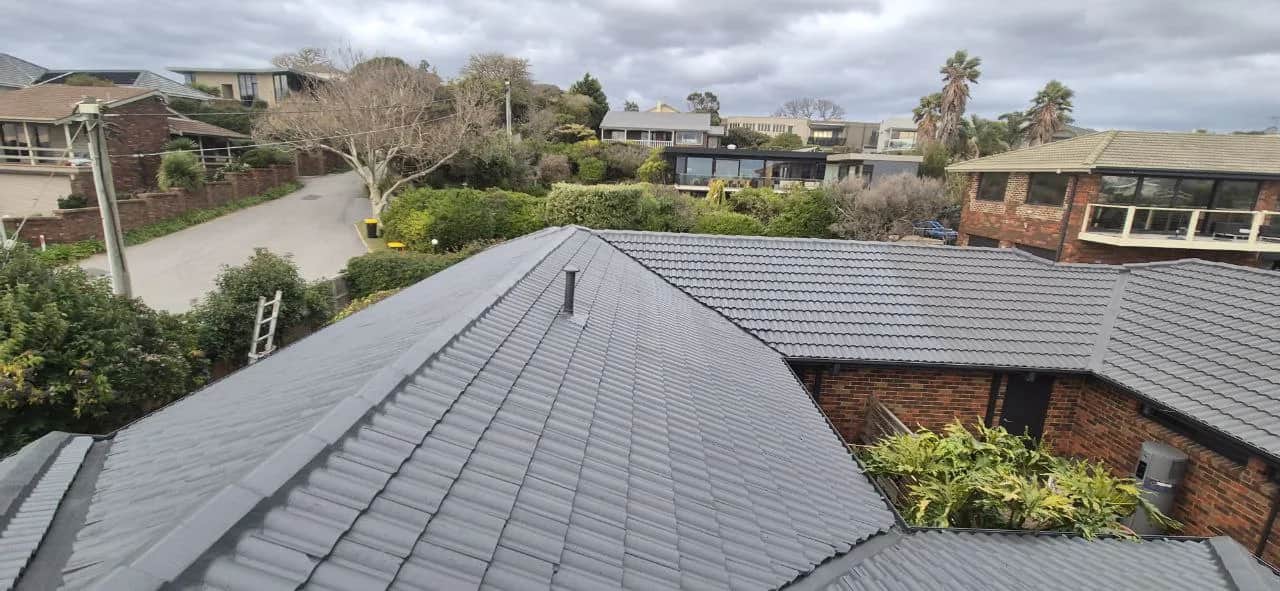
Heat reflective roof paint can reduce your roof’s surface temperature by up to 60°C. For homeowners in Frankston, the Mornington Peninsula, and the City of Casey, where summer heat waves meet coastal humidity, that temperature drop translates directly into lower energy bills, improved indoor comfort, and a roof that lasts significantly longer. But it’s not just about heat. Our coastal environment brings salt air, high winds, and erratic weather that accelerate roof deterioration. A quality reflective coating acts as both a thermal barrier and a protective membrane — reducing wear, preventing corrosion, and keeping your roof in better condition for years.
The Science: How Heat Reflective Paint Works
During a standard 35°C summer day in Frankston, a dark-coloured concrete tile or metal roof can reach surface temperatures exceeding 80°C. That heat doesn’t stay on the surface — it transfers through the roof cavity and radiates down through your ceiling. By 4pm, your air conditioner is fighting a losing battle against the heat pouring in from above.
Unlike standard exterior paint (which is purely cosmetic), heat reflective coatings are engineered with ceramic microspheres and specialised pigments. These compounds reflect the sun’s infrared radiation before it can be absorbed by the roofing material. The result: your roof stays dramatically cooler, your ceiling cavity stays cooler, and your living spaces stay cooler.
Solar Reflectance Index (SRI)
The SRI is a scale from 0 to 100. Zero represents a standard black surface that absorbs all heat; 100 represents a white surface that reflects all heat. Standard roof paint typically scores 10–20. Premium heat reflective coatings achieve SRI ratings of 80–95, meaning they bounce the vast majority of solar energy back into the atmosphere instead of heating your home.
Thermal Emittance
Reflection is only half the equation. Emittance measures how quickly a surface releases heat it has absorbed. A standard metal roof has low emittance — once it gets hot, it stays hot. A quality reflective membrane has high emittance, shedding heat rapidly once the sun goes behind a cloud or sets in the evening. University of Melbourne research confirms that high-albedo paints make charcoal metal roofs run 21°C cooler and slate grey tile roofs 19°C cooler.
Why Peninsula Homes Need Specialised Protection
While heat reduction is the headline benefit, homeowners in Frankston, Seaford, Mount Eliza, and across the Mornington Peninsula face challenges that inland homes don’t.
The Salt Air Factor
If you live anywhere along the Nepean Highway or near Port Phillip Bay, your home is constantly bombarded by salt-laden winds. Salt accelerates metal roof oxidation (rust at screw points and overlaps) and causes concrete tile “fretting” where the surface crumbles away. A premium heat reflective membrane seals tile porosity and encapsulates metal sheets, preventing salt from contacting the raw roofing material.
The Urban Heat Island Effect
As suburbs like Narre Warren, Cranbourne, and Frankston continue developing, the increase in concrete, asphalt, and dark roofing creates an “urban heat island” effect — making local suburbs 5–6°C hotter than nearby rural areas. A heat reflective coating on your roof helps counteract this, cooling not just your home but contributing to lower ambient temperatures in your neighbourhood.
Financial & Environmental Benefits
- Cooling cost savings of 12–25% for homes and 7–17% for commercial spaces.
- Total electricity bill reduction of approximately 25% during summer months.
- If your average summer electricity bill is $600, a 25% saving puts $150 back in your pocket every quarter.
- Reduced thermal shock (rapid expansion and contraction) means fewer cracked tiles, loosened screws, and pointing failures.
- A coated roof suffers less structural fatigue, extending its lifespan before total replacement is needed.
💡 Pro Tip: Over the 10-year warranty period, the energy savings from a heat reflective coating often contribute significantly toward paying for the entire restoration.
Choosing the Right Reflective Coating
Not all roof paints are created equal. In the Australian market, there are specific formulations designed for our high UV index. At Frankston Peninsula Roofing, we use premium coatings with three key properties:
- Ceramic microsphere technology — hollow ceramic beads that create a vacuum barrier against heat transfer.
- Self-cleaning nanotechnology — formulations that resist dirt pickup, because dirt reduces reflectivity over time.
- High elasticity — the coating stretches with the roof during temperature changes without cracking.
Colour Choices: Performance vs Aesthetics
- White/off-white — Reflects up to 95% of solar radiation. Best for pure efficiency.
- Pastels (light grey, cream) — Excellent balance of appearance and performance.
- Dark colours (charcoal, Monument, black) — Even with reflective technology, dark colours absorb more heat. But “cool roof” technology makes a dark grey reflective paint roughly 20% cooler than standard dark grey paint.
💡 Pro Tip: For the Mornington Peninsula coastal aesthetic, Surfmist, Shale Grey, and Dune are popular choices — modern appearance, good at hiding salt spray, and excellent thermal efficiency.
Tile vs Metal: Different Roofs, Different Approaches
Concrete and Terracotta Tiles
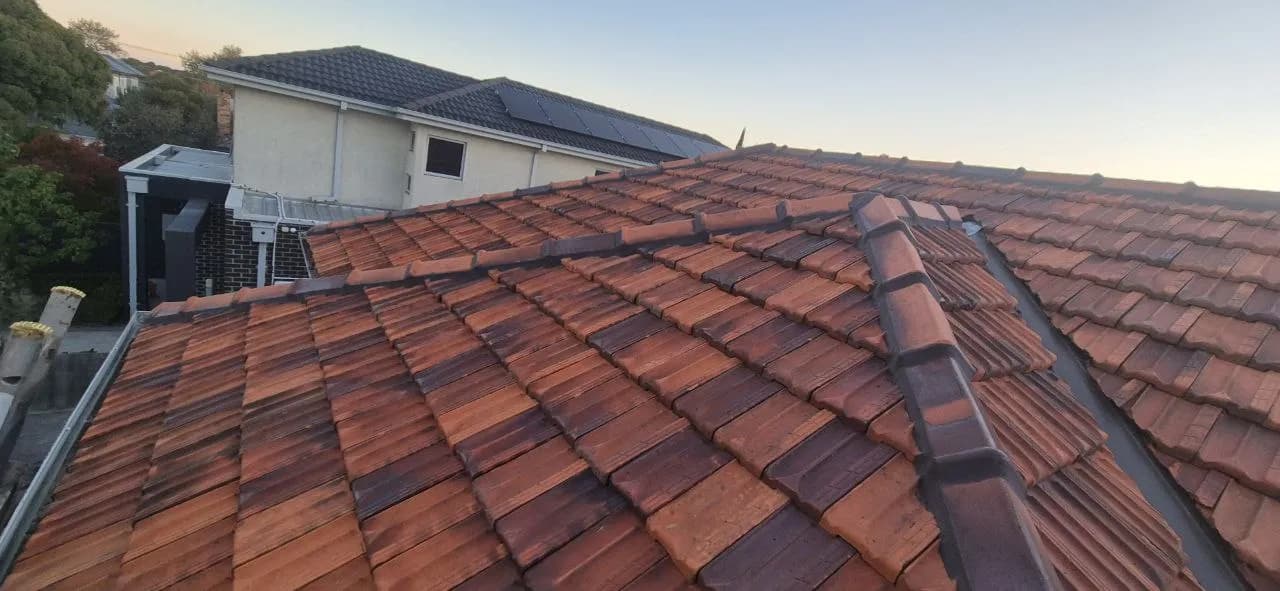
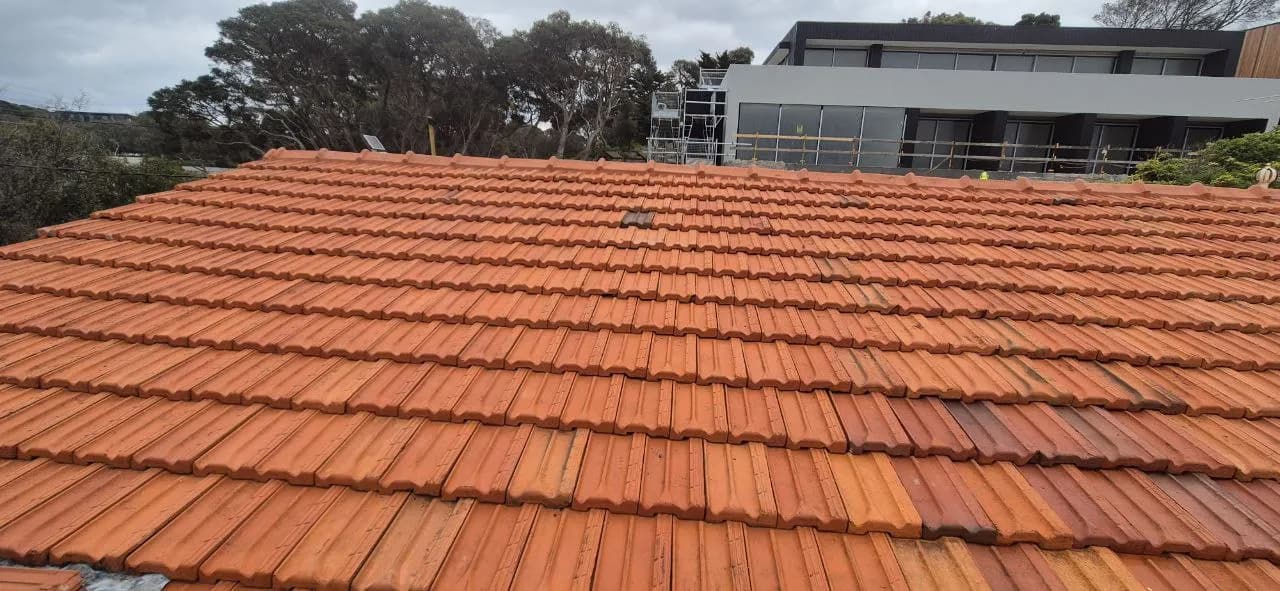
Concrete tiles become porous over time, absorbing water that leads to moss and lichen growth (a common sight in Mount Eliza and Frankston South). We use a high-build sealer that penetrates deep into the tile surface, locking down the sand-and-cement matrix. The heat reflective coating is then applied on top to create a uniform, waterproof glaze.
Colorbond and Metal Sheeting
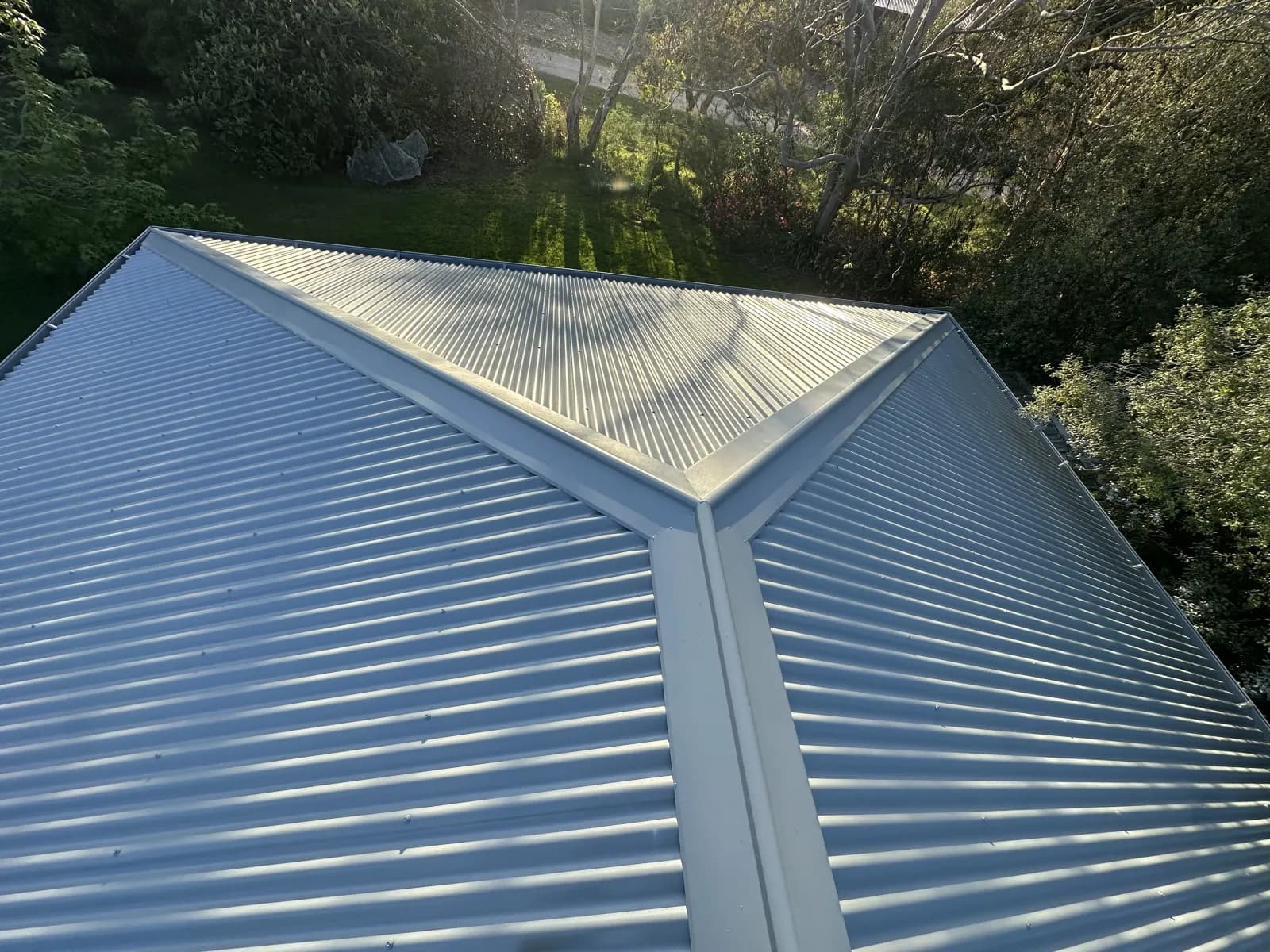
Metal roofs in Seaford, Chelsea, and across the coastal suburbs are prone to oxidisation. Preparation is critical: we treat rust with specialised converters, then use an etch primer that bonds chemically to the metal surface. This prevents peeling — the most common failure point in DIY jobs.
Our 5-Step Application Process
Applying heat reflective paint is a precise process involving specific thickness and chemical bonding. Here’s exactly how Mike and the team handle a project:
- Step 1: On-site inspection — We check for broken/cracked tiles, rusted screws or sheets, ridge capping condition, and safe access points. No phone quotes.
- Step 2: High-pressure cleaning and sterilisation — Industrial-grade machines (minimum 3,500 PSI) strip the roof back to a clean base. Anti-fungal treatment kills invisible mould spores that would otherwise grow under the paint.
- Step 3: Repairs and preparation — We fix the roof before painting. Tile roofs get rebedding and repointing with flexible compounds; metal roofs get screw tightening and rust treatment.
- Step 4: Priming and sealing — Porous tiles need a high-solids sealer; metal needs an etch primer. Both must cure for 24 hours.
- Step 5: Two-coat application — We apply the reflective coating with an airless spray gun for uniform thickness. Base coat, cure, then top coat using a cross-hatch technique to eliminate missed spots.
⚠️ Safety Warning: Paint film thickness matters. Too thin and it won’t reflect heat. Too thick and it may crack. Professional airless spray equipment is the only way to achieve the correct dry micron rating consistently across the entire roof.
Why DIY Heat Reflective Painting Is Risky
We regularly get called to fix DIY roof painting jobs that failed within 12 months. The issues are always the same:
- Safety — Working at heights is the leading cause of construction fatalities in Australia. We are fully insured and trained in harness safety.
- Preparation failure — A domestic pressure washer (1,500 PSI) cannot remove 20 years of grime. Paint applied to a dirty surface peels within months.
- Inconsistent coverage — Without an industrial airless sprayer, achieving the uniform thickness needed for heat reflection is impossible.
- Voided warranty — Incorrect application voids the manufacturer’s product warranty entirely.
Maintenance After Coating
Once your roof is coated, maintenance is minimal but not zero. A soft wash with a garden hose every 12–18 months removes dust that reduces reflectivity. Check valleys and gutters for debris buildup. Never high-pressure wash a coated roof — it can damage the membrane.
Protect Your Roof and Lower Your Bills
Heat reflective roof paint is one of the best investments a Peninsula homeowner can make — protecting your roof from salt air and UV damage while cutting energy bills by up to 25%. Whether you have concrete tiles in Frankston or a Colorbond roof in Narre Warren, professional application with premium materials delivers results that last a decade or more.
Frankston Peninsula Roofing provides free, no-obligation roof inspections across Frankston, the Mornington Peninsula, and the City of Casey. Call Mike on 0437 641 027 or request a quote online to find out how heat reflective coating can work for your home.
Related Services
Serving Frankston, Mornington Peninsula & South-East Melbourne
We provide expert roofing services across these suburbs and surrounding areas. Click your suburb for local information and a free quote.
Frequently Asked Questions
How effective is heat reflective roof paint in reducing temperatures in the Frankston area?
Heat reflective roof paint can reduce roof surface temperatures by up to 60°C. For a typical Frankston or Peninsula home, this translates to interior temperature reductions of up to 30%, resulting in energy savings of approximately 25% on cooling costs during summer.
Does the paint colour affect how well heat reflective coatings work?
Yes. Lighter colours (white, Surfmist, cream) reflect up to 95% of solar radiation and perform best. However, even darker colours with heat reflective technology run roughly 20% cooler than standard dark paint. We help you choose a colour that balances thermal performance with your home’s appearance.
How long does a heat reflective roof coating last?
With professional application and premium materials, expect 10–15 years of performance. We back our application with a 10-Year Workmanship Warranty. The coating continues to reflect heat throughout its life, though a soft garden-hose wash every 12–18 months keeps reflectivity at peak levels.
Can heat reflective paint be applied to both tile and metal roofs?
Yes. We apply heat reflective coatings to concrete tiles, terracotta tiles, and Colorbond/metal sheeting. The preparation differs — porous tiles need a high-build sealer first, while metal roofs need rust treatment and etch primer — but the reflective topcoat works on both.
Is DIY heat reflective roof paint worth it?
We strongly advise against DIY application. A domestic pressure washer can’t properly prepare the surface, brush application can’t achieve the precise film thickness needed for heat reflection, and any application error voids the manufacturer’s warranty. Professional application ensures the coating actually performs as designed.
Need Help With Your Roof?
Get a free, no-obligation inspection and quote. We'll give you honest advice — even if that means telling you it just needs minor repairs.