Metal Roof Leak Repair: How to Find & Fix Leaks on Your Peninsula Home
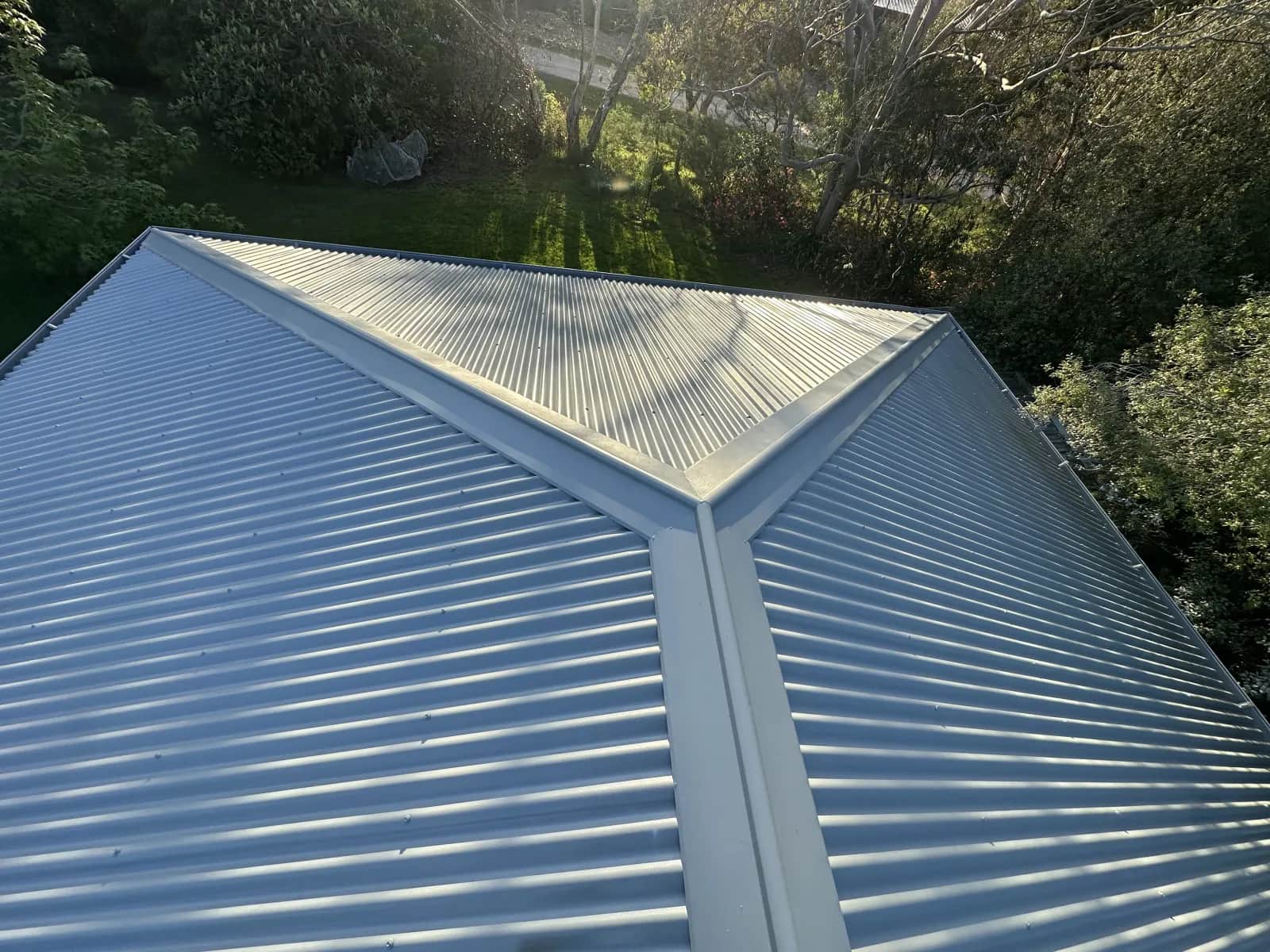
Metal roofs are the go-to choice for homes across Frankston, the Mornington Peninsula, and the City of Casey. They handle hail, high winds, and decades of UV punishment. But living near Port Phillip Bay means your metal roof faces a relentless enemy: salt air corrosion. Combined with Melbourne’s wild temperature swings and ageing fasteners, even the toughest Colorbond or Zincalume roof will eventually develop leaks. This guide covers how metal roof leaks happen in our coastal climate, how to track down the source, and the repair methods we use every week across the Peninsula.
Why Metal Roofs Leak on the Mornington Peninsula
A metal roof doesn’t crack like tiles or blow off like shingles. It fails in subtler ways — ways that are accelerated by our local coastal environment. Understanding the mechanisms helps you catch problems before water stains appear on your ceiling.
- Salt air corrosion — Salt spray from Port Phillip Bay travels up to 1km inland on windy days. It settles in sheltered spots (under eaves, in valleys) where rain doesn’t wash it away, accelerating rust formation on cut edges and fastener points.
- Thermal expansion stress — A 15°C morning followed by a 40°C afternoon causes metal sheets to expand and contract significantly. Over thousands of cycles, this works screws loose, cracks sealant, and pulls flashings away from walls.
- UV degradation of washers — The neoprene rubber washers on every roofing screw degrade under UV exposure over 10–15 years. Once they crack, every screw becomes a potential entry point for water.
- Galvanic corrosion — When dissimilar metals contact each other (copper touching steel, lead flashing on Zincalume), an electrochemical reaction eats through the less noble metal, creating holes.
- Blocked valleys and box gutters — Leafy suburbs like Frankston South and Mount Eliza generate massive leaf litter. When valleys or internal box gutters block, water backs up and finds its way through any gap.
Common Metal Roof Leak Points
After repairing hundreds of metal roofs across Frankston, Seaford, Cranbourne, and the wider Peninsula, the same failure points come up repeatedly. Knowing where to look saves hours of troubleshooting.
Seam and Lap Failures
Metal roofing is installed in large panels that overlap at the edges. The sealant between these laps degrades with UV and thermal cycling. Once the bond breaks, water wicks in through capillary action — traveling uphill against gravity during wind-driven rain. This is the number one cause of mysterious leaks that only appear during storms.
Corroded Fasteners
A standard metal roof has hundreds of screws, each one a potential leak point. The neoprene washer under each screw head is the water seal. UV destroys this rubber after 10–15 years. Simultaneously, thermal expansion gradually backs screws out of the timber battens below. Once the washer fails or the screw loosens, rainwater flows directly into the roof cavity.
Flashing Failures
Flashings are the metal trims that seal every junction: where roof meets wall, around chimneys, at valleys, and around penetrations like vents and skylights. They are the weakest structural point on any roof. When the silicone seal degrades or the flashing physically pulls away from the substrate, water has a direct path into your ceiling cavity.
Rust-Through on Cut Edges
Colorbond steel is protected on its flat surfaces by multiple coating layers. But every time the sheet is cut during installation, the raw steel edge is exposed. In coastal Frankston and Seaford, salt attacks these exposed edges first. Look for red or brown flaking under the eaves or along ridge lines where cut edges face prevailing winds.
How to Find a Metal Roof Leak
Finding the source is often harder than fixing it. Water rarely drips straight down — it travels along beams, insulation batts, and electrical conduits before emerging on your ceiling metres from the actual entry point. Here is the systematic approach we use at Frankston Peninsula Roofing.
Step 1: Interior Inspection
Start in the roof cavity with a torch. Look for dark water stains on timber rafters, mould growth, musty odours, or compressed insulation batts (water ruins the fluffiness). Trace any staining uphill toward the roof sheets — the highest point of moisture is closest to the entry point.
Step 2: Exterior Visual Walk
On a dry day with non-slip footwear, walk the roof and look for: missing or raised screws, lifted flashing edges, debris dams in valleys, rust patches, and cracked sealant. Pay particular attention to areas directly above any interior water staining you found.
⚠️ Safety Warning: Working on roofs is dangerous. If your roof is steep, double-storey, or you don’t have proper safety equipment, call a professional. Falls from roofs are one of the leading causes of serious injury in Australia.
Step 3: The Hose Test
This is a two-person job. One person stays in the roof cavity with a torch. The second person uses a garden hose on the roof, starting at the lowest point (eaves) and slowly working upward, soaking one section at a time. Wait several minutes between sections — water can take time to travel through the roof structure. When the person inside spots dripping, you have isolated the entry zone.
💡 Pro Tip: Don’t spray wildly. Isolate specific areas (chimney flashing only, then vent pipe only, then valley only) to pinpoint the exact entry point. Rushing this step means you fix the wrong spot.
Metal Roof Leak Repair Methods
Once you have identified the source, the repair method depends on the failure type. Here are the professional techniques we use across Frankston and the Mornington Peninsula.
Resealing Seams and Laps
- Clean the overlap area with a wire brush to remove moss, dirt, and old sealant. Wipe with solvent to degrease the surface.
- Apply a generous bead of neutral-cure silicone (never acid-cure, which corrodes metal) between or along the edge of the lap.
- Tool the sealant smooth with a gloved finger to eliminate air bubbles and ensure complete coverage.
- For persistent lap leaks, install stitching screws at 100mm intervals along the overlap to compress the joint mechanically.
Replacing Failed Fasteners
This is the most common metal roof repair we perform. Remove the old screw, check if the timber batten below is sound, then install a slightly larger gauge screw (14-gauge instead of 12-gauge) to grip fresh wood. Always use Class 4 coated screws with fresh EPDM washers — these are rated for coastal salt exposure. The washer should compress firmly but not flatten completely.
Flashing Repair and Replacement
- If the flashing has pulled out of the brickwork, drill new fixing holes and secure with masonry anchors.
- Apply a thick bead of neutral-cure silicone along the top edge to stop water running behind the metal.
- Where flashing is severely corroded, cut a new piece from matching Colorbond sheet using tin snips and rivet into position.
- Always ensure the new flashing overlaps the old sheeting by at least 50mm on all sides.
Patching Rust Holes and Punctures
For small punctures, clean the area back to bare metal, apply rust converter, then seal with a silicone and mesh sandwich (sealant, fibre mesh, more sealant). For larger holes caused by rust-through or fallen branches, cut a colour-matched metal patch 50mm larger than the damage on all sides. Bed the patch on silicone, secure with rivets or stitching screws every 25mm, and seal all edges.
Preventive Maintenance for Coastal Metal Roofs
Prevention is always cheaper than emergency repairs. For Peninsula homeowners, these maintenance habits significantly extend your roof’s life.
- Biannual inspections — Check before winter (April) and after summer storms (October). Look for early rust, loose screws, and lifted flashings.
- Annual salt wash — In coastal suburbs like Seaford, Chelsea, and Dromana, hose your roof down once a year to remove accumulated salt, especially under eaves where rain doesn’t reach.
- Gutter maintenance — Clear gutters and valleys every 3–4 months in leafy areas. Blocked gutters force water backwards into eaves and fascia.
- Tree management — Trim branches to at least 2 metres from your roof. Overhanging branches drop leaves, provide possum access, and scour paint off sheets through friction.
- Address rust immediately — Surface rust caught early can be converted and sealed in 30 minutes. Left for a year, it eats through the sheet entirely.
Repair vs. Full Restoration: Which Do You Need?
A repair fixes a specific problem — one leak, one section of rust, a handful of failed screws. A full metal roof restoration is a comprehensive overhaul: high-pressure cleaning, replacing all degraded fasteners, treating all rust, re-sealing every penetration, and applying protective roof coatings. The restoration approach makes sense when you have multiple leak points or widespread surface deterioration across the roof.
As a general rule: if your metal roof is under 15 years old and has isolated issues, targeted repairs are cost-effective. If it is 20+ years old with multiple failing areas, a full restoration extends the life by another 10–15 years at a fraction of the cost of a complete replacement.
When to Call a Professional
While a single loose screw is manageable for a confident homeowner, most metal roof leak situations benefit from professional assessment. You should call Frankston Peninsula Roofing if:
- The roof is steep, double-storey, or has limited safe access.
- You have more than 3–4 leak points — this indicates systemic failure rather than isolated damage.
- The leak involves box gutters — these are complex internal structures that require licensed expertise.
- You can see structural sagging or feel soft spots when walking on the roof.
- You want warranty-backed work — our professional repairs come with a 10-Year Workmanship Warranty.
Materials That Matter in Coastal Environments
Using the right materials is the difference between a repair lasting 2 years and one lasting 15 years. For homes in Frankston, Seaford, Cranbourne, and the wider Peninsula, we exclusively use:
- Class 4 roofing screws — Specifically coated to resist salt spray. Standard Class 3 screws corrode within 5 years in coastal zones.
- Neutral-cure silicone — Products like Sikaflex or Selleys Roof & Gutter. Never acid-cure silicone, which chemically attacks metal coatings.
- EPDM rubber washers — UV-stabilised to withstand decades of sun exposure without cracking.
- Rust converter — Chemically transforms iron oxide into a stable polymer layer before sealing.
- Colorbond-matched patching metal — Ensures repairs are invisible and protected by the same multi-layer coating system as the original roof.
Don’t Let a Small Drip Become a Big Problem
A single metal roof leak left unaddressed for one winter season can cause thousands of dollars in ceiling damage, insulation replacement, and mould remediation. The repair itself might cost $200–$500, but the water damage it prevents is worth ten times that. If you have noticed water stains, dripping during rain, or rust patches on your metal roof, get it assessed before the next storm hits.
Frankston Peninsula Roofing provides free, no-obligation roof inspections across Frankston, the Mornington Peninsula, and the City of Casey. We will assess the damage, explain your options honestly, and provide a fixed-price quote. Call Mike on 0437 641 027 or request a quote online.
Related Services
Serving Frankston, Mornington Peninsula & South-East Melbourne
We provide expert roofing services across these suburbs and surrounding areas. Click your suburb for local information and a free quote.
Frequently Asked Questions
How much does metal roof leak repair cost in Frankston and the Mornington Peninsula?
A straightforward repair such as resealing fasteners or replacing a section of flashing typically costs $150–$500. More complex work involving box gutters, multiple rust patches, or structural sheet replacement ranges from $500–$1,500. We provide fixed-price quotes with no hidden costs after a free on-site inspection.
Can rusted metal roofing be repaired or does it need replacing?
Surface rust can be treated with a rust converter and sealed with protective coatings. However, if rust has eaten through the steel creating holes, that section needs replacing. We assess the depth and spread of corrosion to determine the most cost-effective solution for your home.
Why does my metal roof leak only during heavy rain with wind?
Wind-driven rain forces water uphill through capillary action at sheet overlaps and flashings. Standard gravity drainage handles light rain, but high-wind downpours push water into gaps that are otherwise watertight. This usually indicates deteriorated lap sealant or lifted flashings that need professional attention.
How long does a metal roof leak repair last?
A professional repair using quality materials (Class 4 fasteners, neutral-cure silicone, EPDM washers) lasts 10–15 years in coastal conditions. Our work comes with a 10-Year Workmanship Warranty. DIY repairs with hardware-store sealant typically last 2–3 years before failing again.
What causes metal roof screws to leak?
Every roofing screw has a neoprene rubber washer that creates the water seal. UV radiation degrades this rubber over 10–15 years, causing it to crack and shrink. Once the washer fails, water enters around the screw shaft. Thermal expansion also gradually loosens screws from timber battens, breaking the compression seal.
Need Help With Your Roof?
Get a free, no-obligation inspection and quote. We'll give you honest advice — even if that means telling you it just needs minor repairs.