Roof Colour & Energy Efficiency: How to Save Money on the Mornington Peninsula
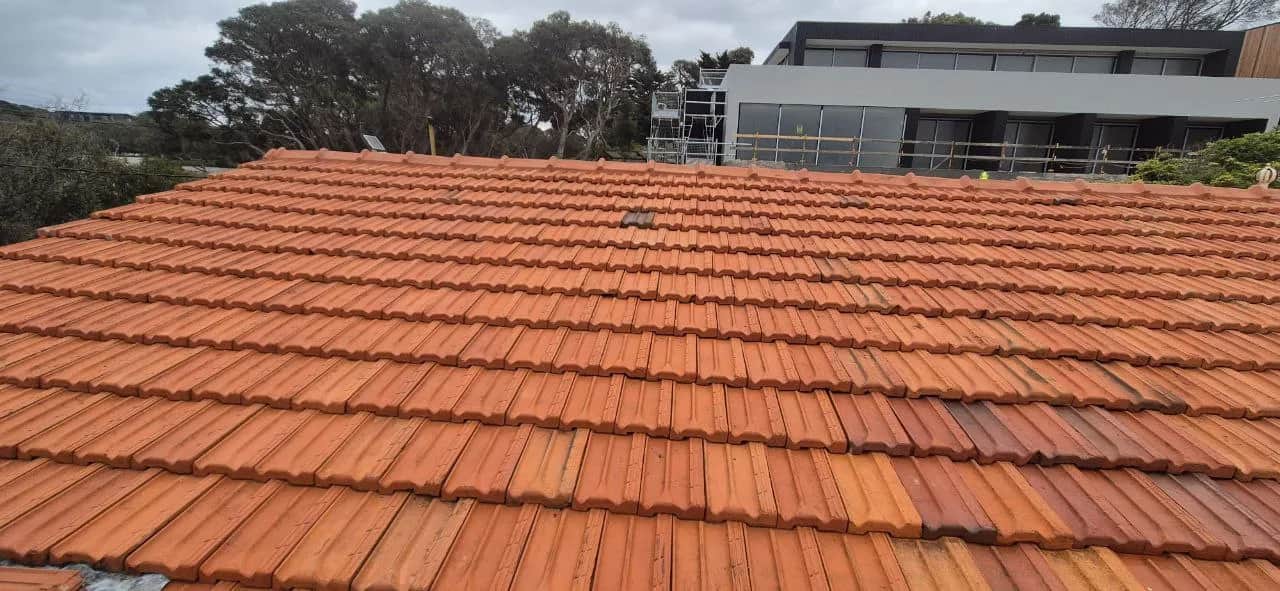
If you live in Frankston, the Mornington Peninsula, or the surrounding Bayside suburbs, your roof colour is doing more than setting the tone for your home’s appearance. It’s directly affecting your energy bills, your indoor comfort, and how long your roof lasts. On a 35°C summer day, a dark charcoal roof can reach surface temperatures exceeding 70°C, while a light grey or white roof under the same conditions might only hit 45°C. That 25-degree difference on the surface translates into a measurable difference in your living room temperature — and your electricity bill.
The Science Behind Roof Colour and Heat
Understanding why colour matters starts with two key measurements: Total Solar Reflectance (TSR) and Thermal Emittance. TSR measures how much solar energy is reflected by a surface rather than absorbed. A TSR of 0 means the surface absorbs all solar energy (like a pure black hole), while a TSR of 1 means it reflects everything (like a perfect mirror).
Standard black roof tiles might have a TSR of less than 0.05 — meaning they absorb 95% of the sun’s energy. That energy doesn’t just disappear. It converts into heat, transfers through the tile, radiates into your roof cavity, pushes through your insulation, and eventually heats your living spaces. By 3pm on a hot Frankston afternoon, your air conditioner is fighting a losing battle against the heat pouring in from above.
The Cool Roof Effect
Light-coloured roofs — especially those treated with modern heat-reflective coatings — operate on high reflectivity. By bouncing the sun’s rays back into the atmosphere, the roof surface stays cooler, the ceiling cavity stays cooler, and your living spaces stay cooler. The result is a significant drop in the transfer of radiant heat into your home, which means your air conditioner cycles less frequently and your energy bills drop.
The Financial Impact: How Roof Colour Affects Your Bills
We’re all feeling the pinch of rising electricity costs in Victoria. Running an air conditioner from November through March is one of the biggest household expenses across the South East suburbs and the Mornington Peninsula.
- Households with dark roofs can pay up to $694 more annually on cooling costs compared to lighter-roofed homes
- Light-coloured tiles can deliver energy savings of 25–36% on cooling loads
- Over a 10-year period, that’s nearly $7,000 in savings — effectively paying for a professional roof restoration
- A cooler roof also reduces wear on your air conditioning unit, extending its lifespan and avoiding costly repairs
💡 Pro Tip: Think of your roof as part of your home’s insulation system. The right colour and coating combination acts as a shield that stops heat before it reaches your ceiling insulation — making your existing batts or blankets far more effective.
The Coastal Factor: Why Peninsula Homes Need Special Attention
Serving areas like Seaford, Mornington, Mount Eliza, and down to Portsea presents challenges that generic roofing companies often miss. Being local means understanding the microclimates of the Bayside area and how they affect roof colour decisions.
Salt Air Corrosion
If you live within 5km of the bay — which covers most of our service area — salt spray is a constant threat. Salt accelerates corrosion on metal roofs (Colorbond and Zincalume) and degrades the pointing on tiled roofs. When we perform roof painting on the Mornington Peninsula, we use premium primers and sealers designed to lock out salt moisture. High-gloss finishes help rain wash away salt accumulation more effectively than matte, porous, aged surfaces.
The Urban Heat Island in Suburbia
In denser suburbs like Narre Warren or central Frankston, houses are built close together. If every house has a dark roof, the entire ambient temperature of the street rises. By choosing a lighter, reflective roof, you’re contributing to cooling your immediate neighbourhood and making outdoor entertaining areas more comfortable during summer.
Intense UV Exposure
The Australian sun is harsh. UV radiation breaks down the chemical bonds in standard paint, leading to chalking and fading — especially on darker colours that absorb more energy. We only use premium, UV-resistant coatings (from brands like Dulux Acratex, Nutech, and Regent) that are tested for Victorian conditions. Our 10-Year Workmanship Warranty stands behind this: we know our roofs won’t peel or fade rapidly because we use materials built for this specific climate.
Dark vs Light: Finding the Right Balance
"But I love the look of a dark charcoal roof — it looks modern!" We hear this all the time, and we agree. Dark roofs look fantastic and provide a striking contrast to light render or brickwork. So is it impossible to have a dark roof and energy efficiency? Not anymore.
Modern Infrared Heat Reflective Coatings
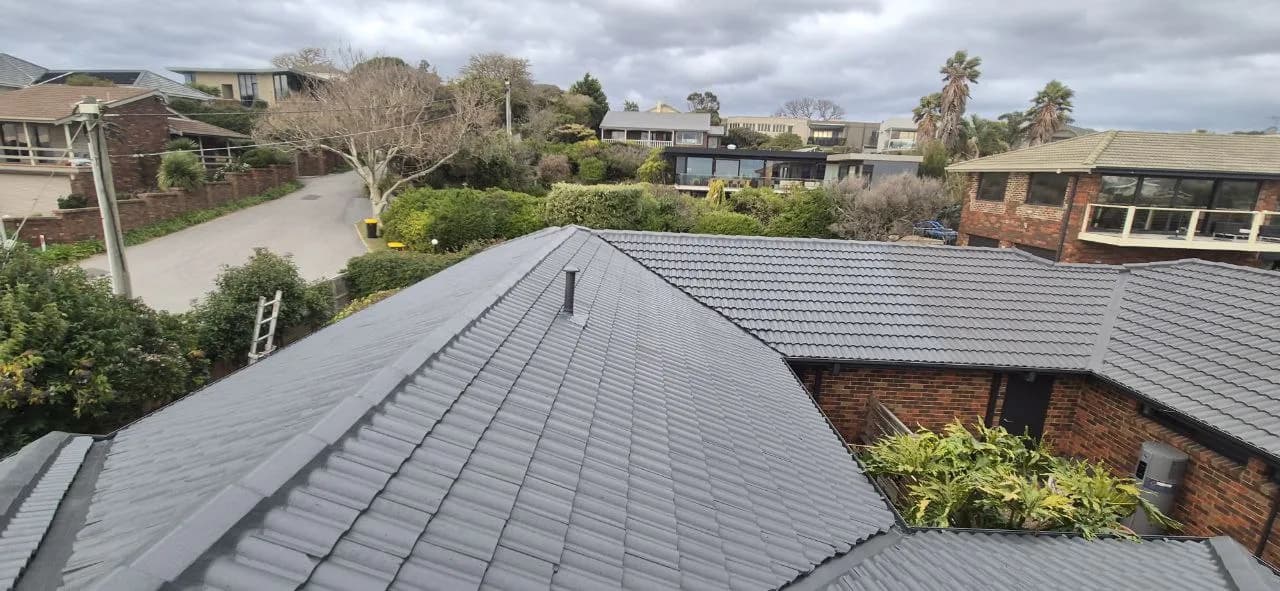
Manufacturers have developed heat reflective technology that adds special pigments to darker-coloured paints. These pigments reflect the infrared portion of the solar spectrum — the invisible energy that creates heat — while keeping the visible colour you want. You can paint your roof a Monument or Charcoal Grey and still achieve a significantly higher Total Solar Reflectance than standard paint.
⚠️ Safety Warning: A dark heat-reflective coating won’t match the cooling performance of a pure white roof, but it bridges a significant gap between style and performance. If maximum energy efficiency is your priority, lighter colours will always win.
The Winter Warmth Question
Critics of cool roofs argue: "If a light roof reflects heat in summer, won’t it make my house cold in winter?" Here’s the reality for Melbourne’s climate:
- Summer sun angle: The sun is high, hitting the roof directly. The roof is the primary source of heat gain.
- Winter sun angle: The sun sits low. Heat gain comes mostly through windows (passive solar), not the roof.
- Heat physics: In winter, you’re trying to keep heat in (insulation), not bring heat in from the roof.
- The energy savings from summer cooling in our climate vastly outweigh the negligible heat penalty in winter.
Colour Trends for Peninsula Homes in 2026
Your roof makes up about 30% of your home’s visible exterior. A fresh coat of the right colour can significantly increase your property value and transform your home’s street appeal.
- The Hamptons Look: Light grey or charcoal roofs paired with white weatherboards — very popular in Bayside suburbs like Chelsea and Mount Eliza
- Modern Industrial: Dark, moody colours (Monument, Ironstone) paired with recycled brick — trending in Frankston, Narre Warren, and Cranbourne
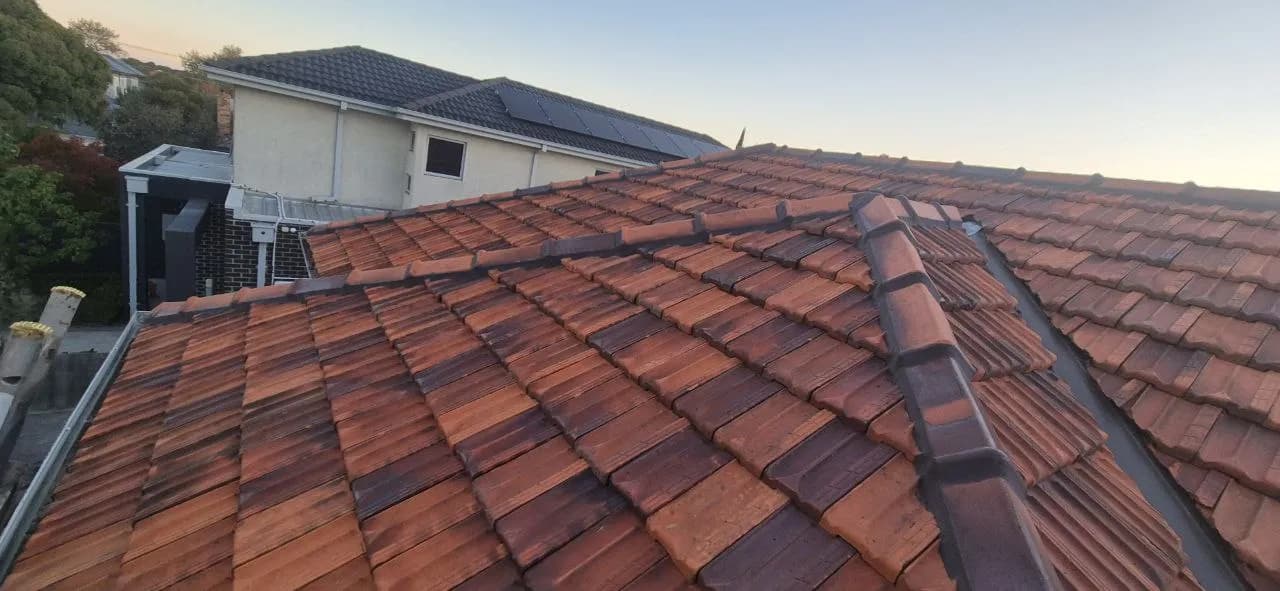
- Classic Australian: Terracotta or red tones making a comeback in heritage restorations, though many 1980s homeowners are switching to modern grey
- Coastal Contemporary: Surfmist and light stone tones that complement beach-side properties from Seaford to Dromana
Colour Psychology and Practical Considerations
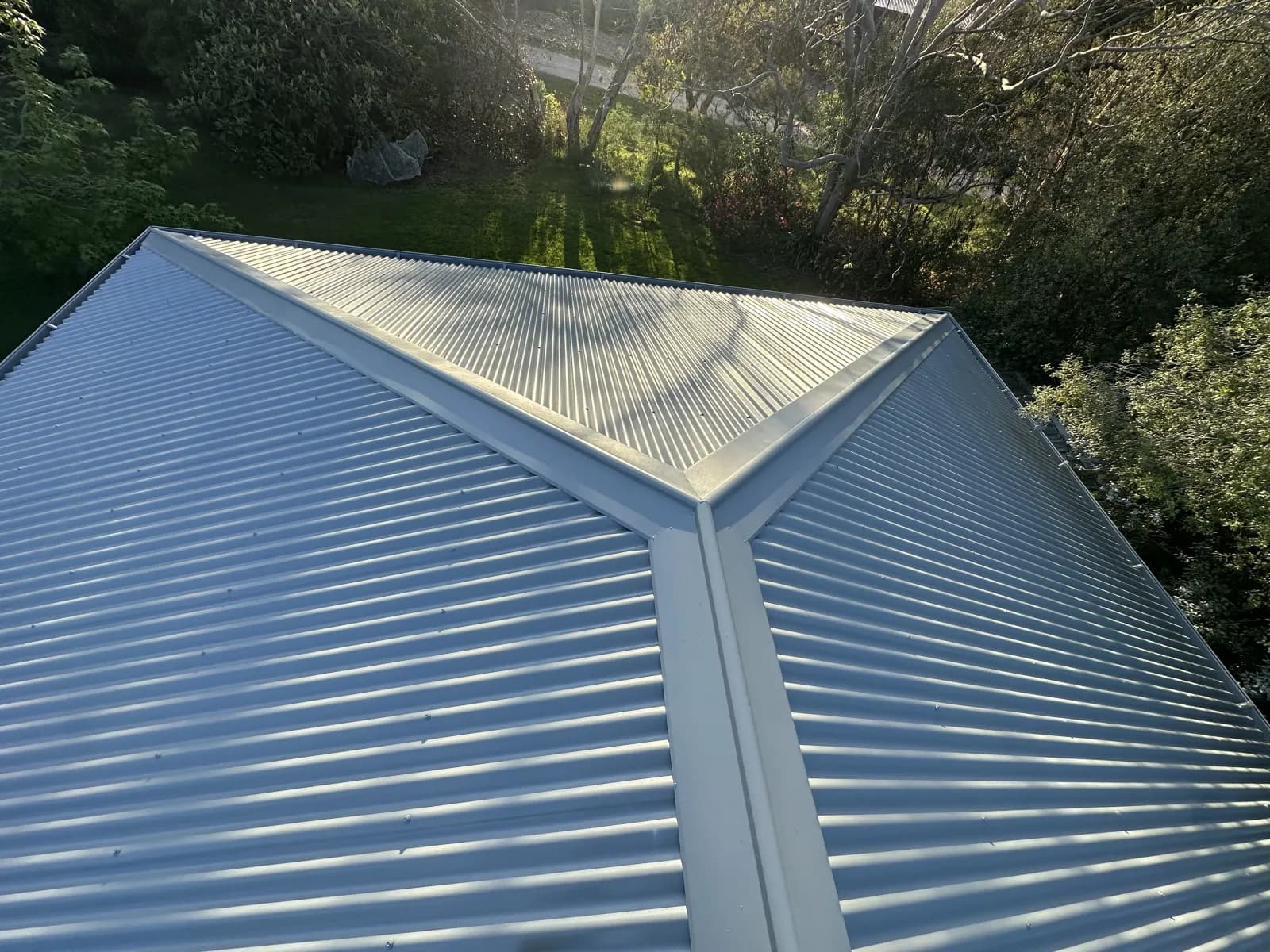
- Light Greys / Silver: Clean, modern, expansive feel. Best for energy efficiency. Hides dust well.
- Charcoals / Blacks: Sophisticated, grounding, bold. Requires heat-reflective technology to remain efficient.
- Greens / Reds: Traditional, blends with nature — great for bushy areas like Langwarrin and Somerville.
- Cream / Off-white: Maximum energy efficiency and a bright, coastal appearance — ideal for Mount Martha and Dromana.
💡 Pro Tip: Not sure what colour fits? We offer free colour matching consultations. Mike will visit your property, assess the style, surroundings, and your energy goals, and recommend a palette that suits your home perfectly.
Our Roof Restoration Process: Colour Done Right
Choosing the right colour is only half the equation. The preparation and application process determines whether that colour choice actually delivers energy savings. Here’s how we ensure your new roof colour performs as well as it looks.
- Step 1 — Inspection: We assess your roof’s condition, identify repairs needed, and discuss colour options with you on-site.
- Step 2 — High-Pressure Cleaning: Industrial-grade 3000+ PSI pressure washing strips away moss, lichen, salt buildup, and old oxidised paint.
- Step 3 — Repairs: We replace broken tiles, re-bed and re-point ridge capping, and replace rusted valleys before any paint goes on.
- Step 4 — Sterilisation: A fungal wash kills remaining moss spores so they don’t grow back under the new paint.
- Step 5 — Primer & Sealer: Specialised primer that bonds to tiles or metal and creates the foundation for the topcoat.
- Step 6 — Two Colour Coats: Premium UV-resistant, energy-efficient membrane applied with airless spray technology for a uniform finish.
- Step 7 — Final Inspection: We clean gutters, remove debris, and ensure the finish meets our professional standards.
DIY vs Professional: Why Roof Colour Choice Needs Expert Application
The heat reflective coatings that deliver real energy savings aren’t available at your local hardware store. Consumer "roof paint" typically lacks the durability, thickness, and reflective properties of professional-grade membranes. And a domestic pressure washer isn’t powerful enough to properly clean a tile roof — it’ll leave slime behind, meaning your new paint peels within 12 months.
- Safety: Roofing is high-risk work. Falls from heights are a leading cause of injury in Australia. We’re fully licensed and insured with proper safety equipment.
- Materials: We use industrial-grade coatings (Nutech, Dulux Acratex, Regent) that are unavailable to consumers.
- Application: Airless spray technology ensures the precise film thickness needed for heat reflection — brush application can’t achieve this.
- Warranty: If you DIY and it peels, you start again. With us, you get a 10-Year Workmanship Warranty.
Environmental Benefits: Beyond Your Energy Bills
By restoring and repainting your roof rather than replacing it, you’re keeping tonnes of concrete and metal out of landfill. A good restoration can extend the life of a concrete tile roof by 15 to 20 years. And by lowering your energy consumption through a cool roof, you’re reducing demand on Victoria’s power grid. It’s a small step for one home, but if more Peninsula homeowners make this choice, the cumulative impact on our region’s carbon footprint is significant.
Ready to Choose the Right Colour for Your Roof?
Whether you’re after maximum energy savings with a light colour, a stylish dark finish with heat reflective technology, or just honest advice on what will look best and last longest on your home — we’re here to help. Call Mike on 0437 641 027 for a free roof assessment and colour consultation. We’ll show you how the right colour choice can save you thousands over the life of your roof.
Related Services
Serving Frankston, Mornington Peninsula & South-East Melbourne
We provide expert roofing services across these suburbs and surrounding areas. Click your suburb for local information and a free quote.
Frequently Asked Questions
How much can roof colour affect my energy bills on the Mornington Peninsula?
Research shows dark-roofed homes can pay up to $694 more annually on cooling costs compared to lighter-roofed homes. Over the 10-year period of our Workmanship Warranty, that adds up to nearly $7,000 in savings — effectively paying for a roof restoration.
Can I have a dark roof and still be energy efficient?
Yes. Modern infrared heat reflective coatings contain special pigments that reflect the invisible infrared portion of sunlight while keeping the visible dark colour. A dark roof with heat reflective technology runs about 20% cooler than standard dark paint, though it won’t match a pure white roof.
What is Total Solar Reflectance (TSR) and why does it matter?
TSR measures how much solar energy a surface reflects rather than absorbs, on a scale from 0 (absorbs everything) to 1 (reflects everything). Standard black tiles may have a TSR below 0.05, absorbing 95% of solar energy. Premium reflective coatings achieve TSR ratings of 0.80–0.95, dramatically reducing heat transfer into your home.
Does a light-coloured roof make my house colder in winter?
The impact is negligible for Peninsula homes. In winter, the sun sits low and heat gain comes mainly through windows (passive solar), not the roof. The energy savings from summer cooling vastly outweigh any minor winter heat reduction. Your insulation keeps warmth in regardless of roof colour.
What roof colours are trending in Frankston and the Mornington Peninsula?
The Hamptons look (light grey or charcoal with white weatherboards) is very popular in Bayside suburbs. Modern industrial styles use Monument or Ironstone. Classic terracotta tones are returning for heritage homes, while many 1980s homeowners are switching from red to modern greys for an updated look.
Need Help With Your Roof?
Get a free, no-obligation inspection and quote. We'll give you honest advice — even if that means telling you it just needs minor repairs.