Annual Roof Inspections: What We Check & Why Peninsula Homes Need One
Your roof protects everything under it, yet it is the one part of the home most people never look at until something goes wrong. By the time a brown ring appears on the ceiling, water has usually been getting in for weeks, soaking insulation, softening plasterboard and wetting roof timbers.
We inspect roofs across Frankston, the Mornington Peninsula and the City of Casey every week. The pattern is the same nearly every time: the expensive repairs are the ones that started as a cracked ridge cap, a lifted sheet or a blocked valley that nobody saw. A <strong>regular roof inspection</strong> is the cheapest way to catch those problems while they are still small.
This guide explains how often your roof should be checked, the checklist we work through on every inspection, the local conditions that make Peninsula roofs age faster, and what to do with the findings.
How Often Should Your Roof Be Inspected?
There is no single answer for every home. The right schedule depends on the age of the roof, what it is made of and how exposed it is. Here is the rule of thumb we give our customers:
- <strong>Every year:</strong> roofs over 20 years old, homes within about 5 km of Port Phillip Bay or Western Port, and homes with large trees overhanging the roof.
- <strong>Every 2–3 years:</strong> newer roofs (under 20 years) in more sheltered inland suburbs, with no history of leaks.
- <strong>Straight away:</strong> after a severe storm, hail or strong winds; when you notice a ceiling stain, damp smell or dripping; and before you buy or sell a property.
In practice, that puts most homes in Seaford, Frankston, Mount Eliza, Mornington and the southern Peninsula towns on a yearly schedule. Salt air, wind and leaf litter simply wear these roofs faster than a roof in an inland suburb.
💡 Pro Tip: <strong>Put it in the calendar.</strong> Treat your roof like a car service. Pick a month (October or April works well), book it every year, and keep each report in one folder. It makes insurance claims and future sales far easier.
Why Peninsula Roofs Need More Frequent Checks
A roof in Frankston faces conditions that a roof in Melbourne’s northern suburbs does not. These are the local factors we see causing most of the damage we find:
Salt Air Corrosion
Salt carried in from the bay settles on metal roofs, screws, flashings and gutters. On galvanised iron and older Zincalume it shows up first as white powdery rust (zinc oxide), then as red rust around laps, cut edges and fixings. On coastal homes we check these areas closely, and where sheets need replacing we recommend Colorbond Ultra or other coastal-grade steel.
Wind Uplift
Strong winds off the bay find any weak point. Cracked ridge pointing lets ridge caps move, and loose screws let metal sheets lift. Once wind can get underneath, the next storm can strip tiles or peel back sheets and expose the roof space to rain.
Temperature Swings
Victoria’s “four seasons in one day” weather makes roofing materials expand and contract constantly. Over years, this loosens fixings, cracks rigid cement pointing and opens up hairline cracks in older tiles.
Trees, Leaves and Lichen
Leafy suburbs like Frankston South, Mount Eliza and Langwarrin look beautiful, but gum leaves block valleys and gutters, and shade keeps tiles damp. That moisture feeds moss and lichen, which make concrete tiles more porous over time. Blocked valleys are one of the most common leak sources we find. Read more in our guide on <a href="/blog/clogged-gutters-cause-roof-leaks">whether clogged gutters can cause roof leaks</a>.
Our Roof Inspection Checklist
A proper inspection is more than a quick look from a ladder. This is the checklist we work through on every roof, inside and out.
Inside the Roof Space (Where Access Allows)
- <strong>Daylight:</strong> light coming through where it should not, which points to cracked or slipped tiles or gaps.
- <strong>Water trails and stains:</strong> marks on timbers, sarking or insulation that show where water has been running.
- <strong>Damp or compressed insulation:</strong> wet insulation stops working and adds weight to the ceiling.
- <strong>Timber condition:</strong> sagging, rot or pest damage in rafters, battens and trusses.
- <strong>Mould and ventilation:</strong> musty smells or mould growth that point to trapped moisture.
Tiled Roofs (Concrete and Terracotta)
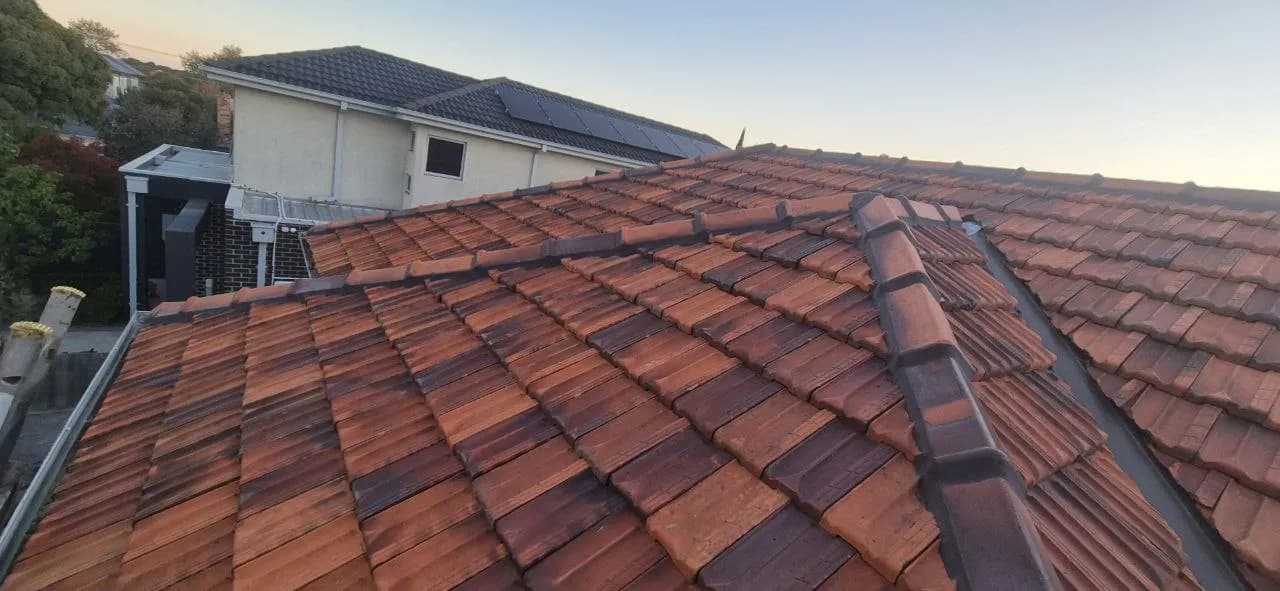
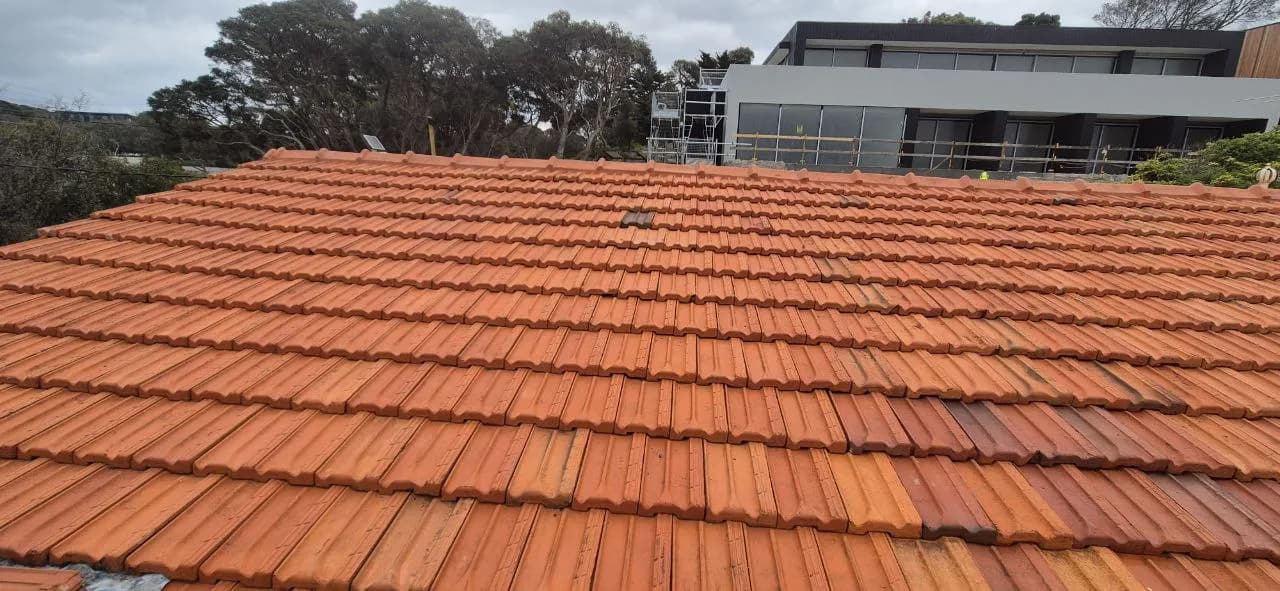
- <strong>Cracked, chipped or broken tiles:</strong> even a hairline crack can let water in during wind-driven rain.
- <strong>Slipped or displaced tiles:</strong> often caused by wind, foot traffic or failing nails.
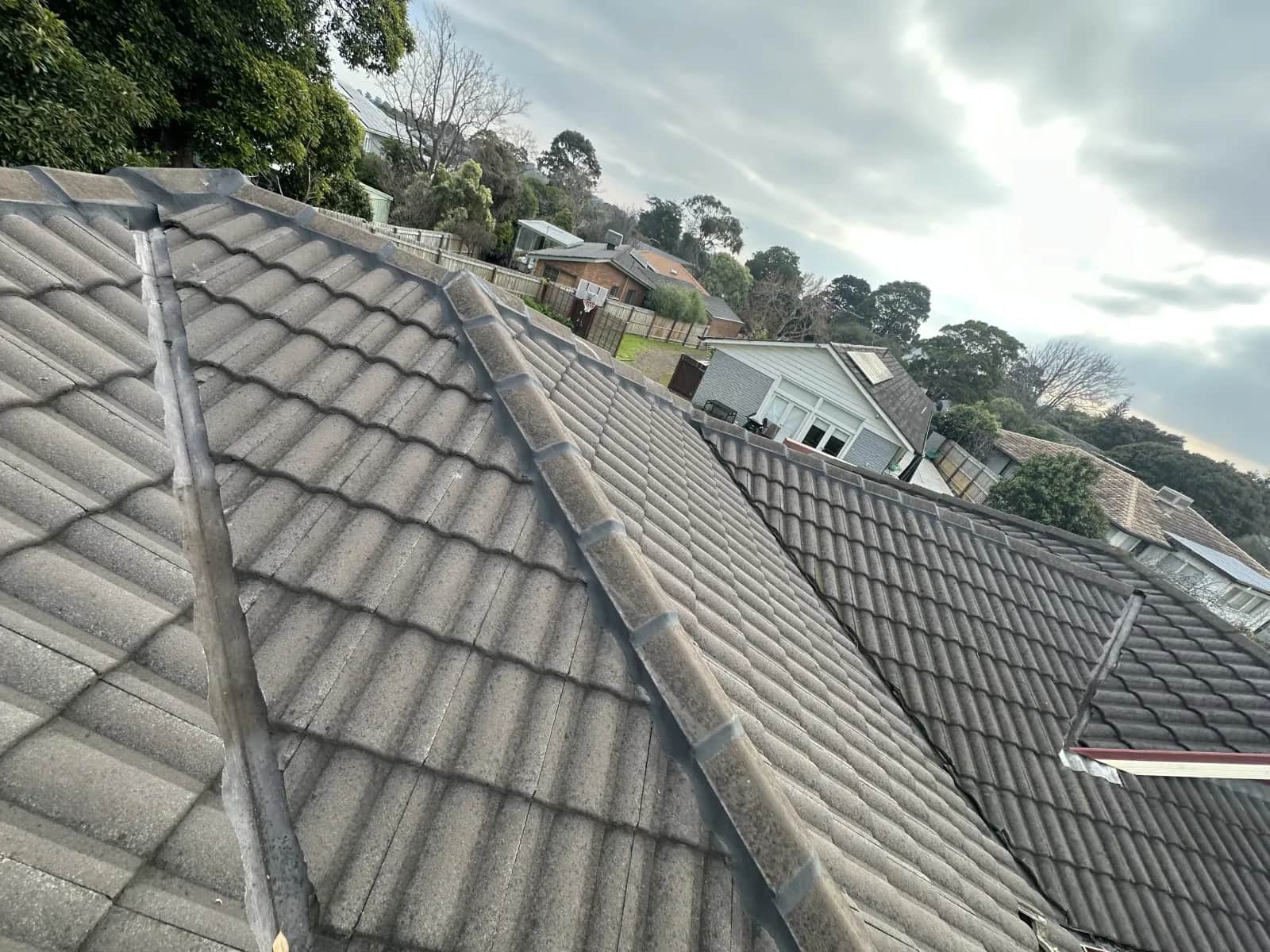
- <strong>Ridge capping bedding and pointing:</strong> cracked or crumbling mortar along ridges and hips is one of the most common problems on older tile roofs. See our <a href="/services/ridge-capping">ridge capping service</a> for how we fix it.
- <strong>Surface condition:</strong> lichen, moss and porous, worn tiles that are absorbing water.
Metal Roofs (Colorbond and Zincalume)
- <strong>Rust and corrosion:</strong> especially at laps, cut edges, around fixings and under overhanging branches.
- <strong>Roof screws:</strong> perished rubber washers and loose or rusted screws, each one a potential leak point.
- <strong>Lifted or dented sheets:</strong> dents hold water (ponding), which speeds up rust.
- <strong>Sealant:</strong> cracked or failed silicone at joins and penetrations.
Flashings, Valleys and Penetrations
Flashings are the single most common source of leaks we find. We check the flashings around chimneys, skylights, vent pipes and wall junctions, plus valley irons for rust holes and debris. Our <a href="/blog/roof-flashing-repair-frankston-guide">roof flashing repair guide</a> explains the warning signs in more detail.
Gutters, Downpipes and Fascia
- <strong>Blockages:</strong> leaves and silt in gutters, valleys and downpipe outlets.
- <strong>Fall:</strong> gutters that hold water instead of draining to the downpipes.
- <strong>Rust holes and leaking joins:</strong> common on older steel gutters near the coast.
- <strong>Brackets and fascia:</strong> loose brackets, and rotting fascia boards behind overflowing gutters.
At the end of the inspection we take you through what we found, with photos, and sort it into three groups: <strong>fix now</strong> (active leaks and safety issues), <strong>fix soon</strong> (problems that will leak within a season or two), and <strong>keep an eye on</strong> (normal wear to check again next year).
When Is the Best Time to Book?
The two best windows are spring and autumn, and each has a different job:
- <strong>Spring (September–November):</strong> finds damage left by winter wind and rain, and gets repairs done before summer heat and the storm season. If you are reading this in November, this is the window.
- <strong>Autumn (March–May):</strong> clears leaves from gutters and valleys and fixes loose tiles, pointing and screws before the heavy winter rain arrives.
Summer storms on the Peninsula can bring sudden heavy rain and strong winds with little warning. A roof checked in spring is far better prepared. If a storm has already hit, read our guide on <a href="/blog/storm-damage-roof-mornington-peninsula">how to assess storm damage to your roof</a>.
Why We Don’t Recommend DIY Roof Inspections
It is tempting to grab a ladder and take a look yourself. A ground-level check is a good idea (see the next section), but climbing onto the roof is where things go wrong.
- <strong>Falls:</strong> falls from roofs and ladders are a leading cause of serious injury in Victoria. We use harnesses, roof anchors and the right access equipment for single and double-storey homes.
- <strong>New damage:</strong> stepping on the wrong part of a tile can crack it, and walking between the ribs of a metal sheet can dent it. We often find leaks caused by someone walking on the roof.
- <strong>Missed problems:</strong> cracked bedding, early rust at laps and failing flashings are easy to miss if you don’t know where to look.
⚠️ Safety Warning: Never go onto a wet, mossy or steep roof, and never work on a roof alone. If you can see damage from the ground, stay off the roof and call a licensed roofer.
What You Can Safely Check From the Ground
Between professional inspections, a five-minute walk around the house twice a year will catch a lot. Look for:
- Broken, slipped or missing tiles, and ridge caps that look out of line
- Rust streaks or lifted edges on metal sheets
- Gutters that sag, overflow in rain, or have plants growing in them
- Downpipes that are disconnected or not draining
- Inside: ceiling stains, peeling paint, damp smells or mould in upstairs rooms and wardrobes
If you spot any of these, book an inspection. Our guide on <a href="/blog/identifying-hidden-roof-damage-guide">6 warning signs of hidden roof damage</a> has more detail, and if a stain has already appeared, read <a href="/blog/water-stain-roof-what-to-do">what to do when you notice a water stain</a>.
After the Inspection: Repair, Restore or Replace?
Most inspections end with one of three outcomes:
- <strong>Minor repairs:</strong> a few broken tiles, a reseal around a skylight, new screws or a rusted valley iron. These are usually quick jobs. If a repair is all you need, a repair is all we quote. See our <a href="/services/roof-repairs">roof repairs service</a>.
- <strong>Restoration:</strong> the roof is structurally sound but worn: tired coating, failing pointing, lichen. A <a href="/services/roof-restoration">roof restoration</a> (clean, repair, rebed and repoint, prime and two coats of membrane) can add 15–20 years of life.
- <strong>Replacement:</strong> metal rusted through, or tiles so porous they crumble. Patching a roof past its use-by date wastes money, and we will tell you honestly when it is time to replace.
The Cost of Skipping Inspections
A small leak rarely stays small. Water soaks the insulation (raising your energy bills), stains and softens the plasterboard, and eventually reaches timber framing. We have seen ceilings come down in living rooms from a leak that had been running quietly for months. Wet wiring adds a fire risk on top of that.
Insurance is the other catch. Most policies exclude damage caused by wear and tear or lack of maintenance. A dated inspection report with photos is good evidence that you have looked after your roof. Our article on <a href="/blog/home-insurance-roof-maintenance-gutters">home insurance and roof maintenance</a> explains this in more detail, and <a href="/blog/roof-leak-risks-home-damage">8 risks roof leaks cause to your home</a> covers the damage side.
Book Your Roof Inspection
We are a local team based in Narre Warren with over 15 years of roofing experience across Frankston, the Mornington Peninsula and south-east Melbourne. Mike inspects roofs himself, so you speak to the person who will stand behind the work, which comes with our 10-year workmanship warranty. We are fully licensed and insured, and we give clear findings with photos and honest advice.
Spring is the time to get your roof checked before summer storms. Call Mike on 0437 641 027 or request a free quote online, and we’ll book your roof inspection at a time that suits you.
Related Services
Serving Frankston, Mornington Peninsula & South-East Melbourne
We provide expert roofing services across these suburbs and surrounding areas. Click your suburb for local information and a free quote.
Frequently Asked Questions
Is once a year too often for a roof inspection?
Not for most Peninsula homes. If your roof is over 20 years old, sits within a few kilometres of the bay, or has large trees overhanging it, a yearly check is the safest schedule. Newer roofs in more sheltered inland suburbs can usually go every two to three years. Either way, book an extra check after any severe storm or hail event.
What is the best month to book a roof inspection in Victoria?
Spring (September to November) and autumn (March to May) are best. A spring inspection picks up damage left by winter storms and gets repairs done before summer heat and storm season. An autumn inspection clears gutters and valleys and fixes loose tiles or pointing before the heavy winter rain. Book early, as diaries fill up quickly in both seasons.
Can I inspect my own roof instead?
You can do a safe check from the ground: look for slipped or broken tiles, rust streaks, sagging gutters and overflowing downpipes, and check inside for ceiling stains. We do not recommend climbing onto the roof. Falls from roofs and ladders are a leading cause of serious injury, and walking on tiles or metal sheets in the wrong place can crack tiles or dent sheets, causing new leaks.
How much does a roof inspection cost?
It depends on the roof size, pitch, single or double storey, and whether you need a verbal summary or a written report with photos (for a pre-purchase or insurance claim). We give free quotes for every inspection type, so call us with your address and roof type and we will give you a clear price before we visit.
Will an inspection affect my home insurance?
It can help. Most home insurance policies exclude damage caused by wear, tear or lack of maintenance. A dated inspection record with photos shows that you have maintained your roof, which can make a storm damage claim easier to support. Keep a copy of each report with your insurance documents.
Need Help With Your Roof?
Get a free, no-obligation inspection and quote. We'll give you honest advice — even if that means telling you it just needs minor repairs.