Metal Roofing: Pros, Cons & What’s Best for Your Mornington Peninsula Home
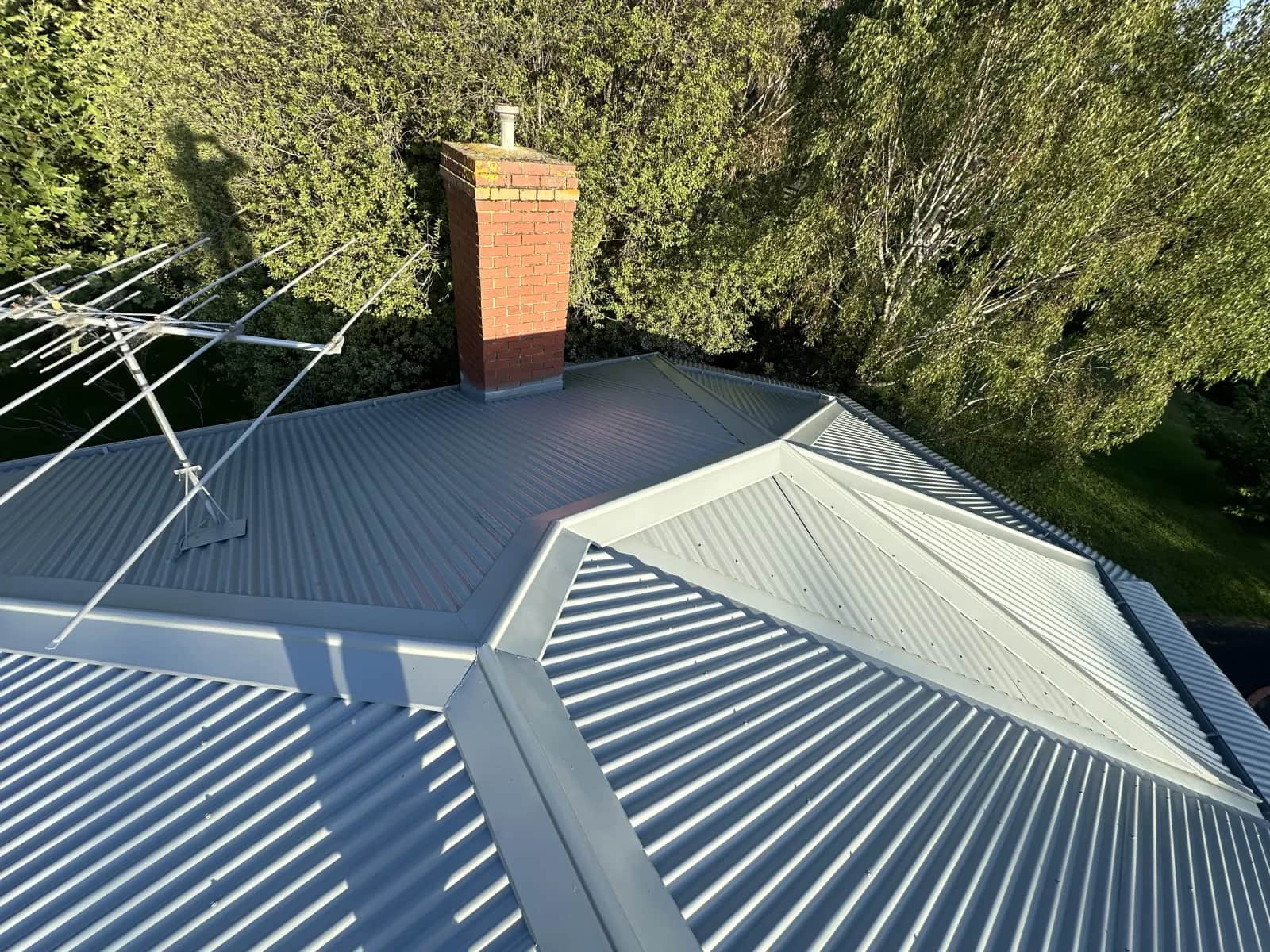
Metal roofing has overtaken tiles as the material of choice across Melbourne’s bayside suburbs. If you live in Frankston, the Mornington Peninsula, or the City of Casey, your roof battles salt-laden winds off Port Phillip Bay, intense UV, and the occasional hailstorm. A metal roof installed correctly handles all of these challenges while lasting decades longer than traditional tiles. This guide covers everything: from Colorbond steel and aluminium to zinc and copper, along with real costs, grade selection for coastal properties, and our professional tile-to-metal conversion process.
Why Metal Roofing Is Dominating the Peninsula
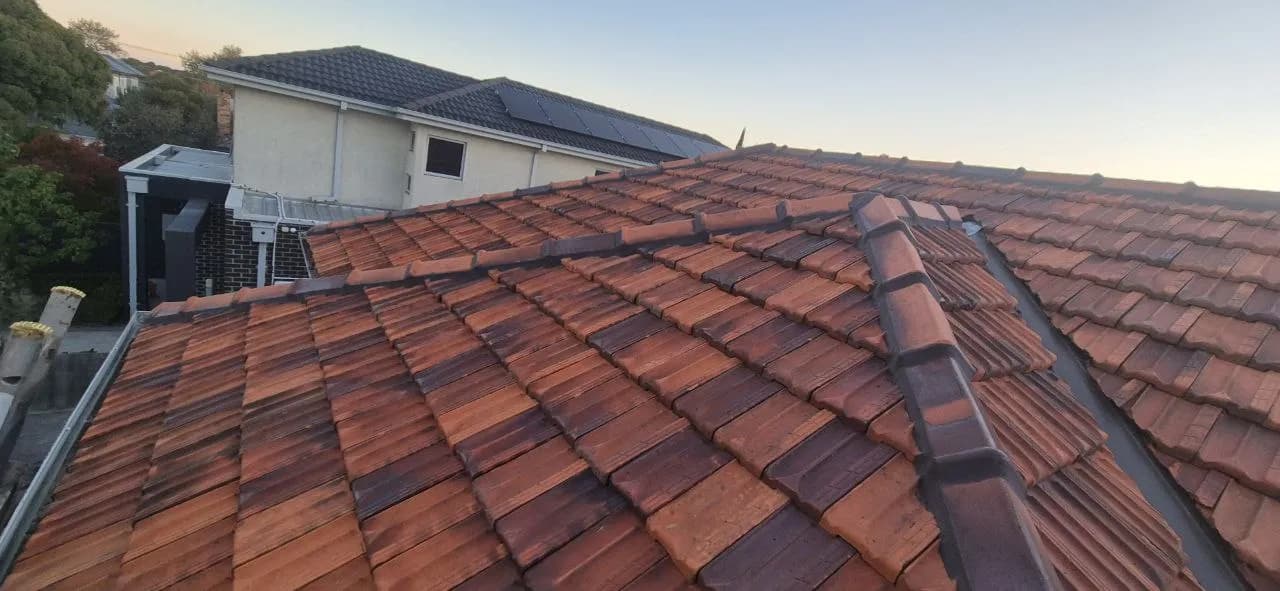
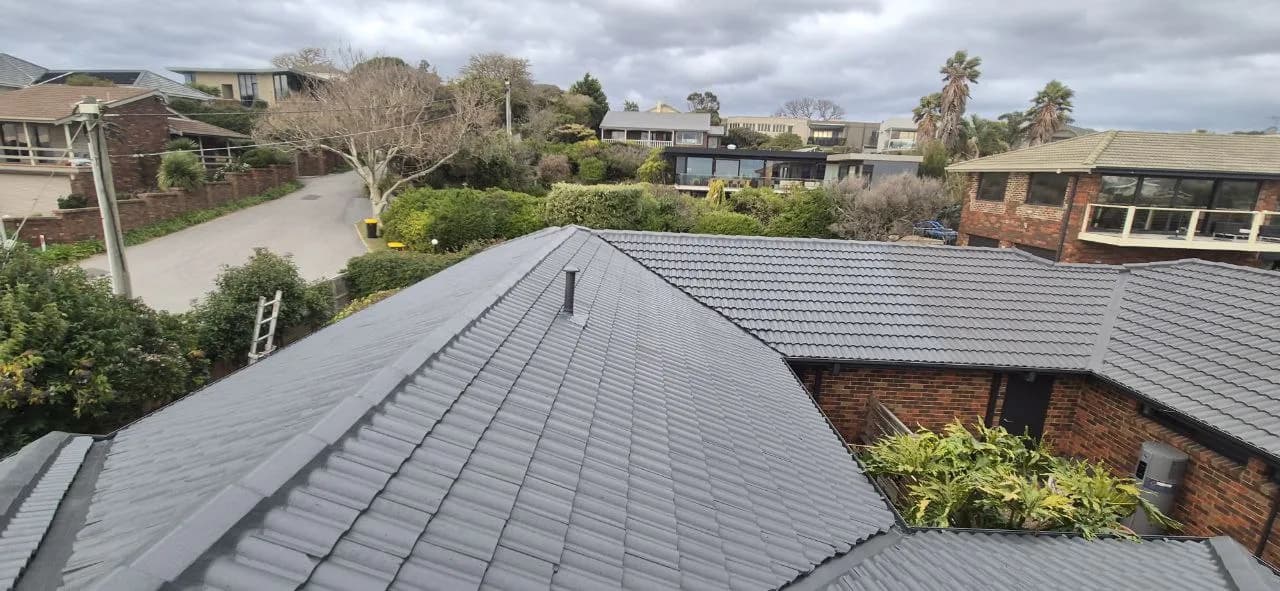
Walk through any established suburb in Frankston, Seaford, or Mount Eliza and you will notice the shift happening street by street. Homes that once had cracked concrete tiles or faded terracotta are being upgraded to sleek Colorbond. The three driving factors behind this shift are longevity, structural integrity, and modern aesthetics.
The Mornington Peninsula is a marine environment. Salt spray travels further inland than most homeowners realise — up to 1 kilometre from the coast in windy conditions. Concrete tiles are porous and absorb this salt-laden moisture, accelerating deterioration. Metal roofing sheds water instantly and does not absorb anything. For suburbs like Chelsea, Seaford, Dromana, and Safety Beach where salt exposure is significant, metal is the logical choice.
Colorbond Steel: The Australian Standard
Colorbond by BlueScope Steel is not generic painted metal. It is a five-layer engineered system: a structural steel base, metallic coating (Activate® technology), pre-treatment layer, corrosion-inhibitive primer, and a baked-on topcoat with Thermatech® solar reflectance. Each layer works together to resist our harsh coastal climate.
Colorbond Advantages
- Durability: 50+ year life expectancy with material warranties up to 25 years.
- Lightweight: Approximately 5kg/m² — twelve times lighter than tiles. Ideal for older homes with tired frames.
- Thermal Efficiency: Thermatech® reflects solar heat, reducing summer cooling costs.
- Low Maintenance: No re-bedding, no re-pointing, no moss treatments. An occasional rain rinse is sufficient.
- Water Collection: Compliant with AS/NZS 4020 for potable water — perfect if you have a rainwater tank.
- Design Range: 22+ colours and multiple profiles (Custom Orb, Trimdek, Klip-Lok, Nailstrip) to suit any architectural style.
Colorbond Disadvantages
- Higher Upfront Cost: A full replacement can cost $20,000+ depending on roof size and complexity. However, lifetime cost is lower than tiles when you factor in avoided maintenance.
- Noise Without Insulation: Uninsulated metal roofs amplify rain. Professional installation with Anticon blanket eliminates this issue entirely.
- Thermal Movement: Metal expands and contracts with temperature changes. Specialist fasteners with expansion allowance prevent the creaking sounds associated with poorly installed roofs.
- Marine Grade Required Near Coast: Standard Colorbond is not suitable within 200m of the bay. Colorbond Ultra must be specified for these locations.
Selecting the Right Grade for Your Location
This is where many roofing companies fail their clients. Using the wrong grade voids your warranty and leads to premature corrosion. The selection depends entirely on your property’s distance from the coast.
- Colorbond Standard: Suitable for properties more than 1–2km from the ocean. Homes in Narre Warren, Cranbourne, Langwarrin, and Hallam typically qualify for standard grade.
- Colorbond Ultra: Mandatory for properties within 100–200m of calm marine water or breaking surf. Required for much of Frankston, all of Seaford, Chelsea, Dromana, Safety Beach, Portsea, and Mornington.
- Aluminium: Recommended for extreme marine environments or properties directly on the waterfront. Offers superior salt corrosion resistance but at a higher price point.
💡 Pro Tip: We assess every property’s marine exposure zone before recommending a grade. Using standard Colorbond in a marine zone will void your BlueScope warranty. Our team ensures the correct specification every time.
Alternative Metal Materials for Peninsula Homes
Aluminium Roofing
Aluminium offers exceptional corrosion resistance — even better than steel in severe marine environments. It is lightweight, recyclable, and will never rust. For homes directly on the water in Safety Beach, Dromana, or Portsea, aluminium is often the safest long-term choice. The trade-offs are a higher price point and softer surface (more prone to denting from large hailstones or falling branches).
Zinc Roofing
Zinc is increasingly popular for high-end architectural homes in Mount Eliza and Portsea. It lasts 80–150+ years and is self-healing: surface scratches develop a protective patina (zinc carbonate) that seals the wound. Requires minimal maintenance. The disadvantage is cost — significantly more expensive than Colorbond — and it demands specialist installation with careful ventilation underneath to prevent underside corrosion.
Copper Roofing
The ultimate premium material. Copper is immune to rust, lightweight, and develops a distinctive green patina (verdigris) over decades. It is suited to heritage restorations and prestige properties. The cost is 3–4 times that of Colorbond, and run-off can stain surrounding concrete. Copper is rarely specified for standard residential projects but remains an option for high-end builds.
Metal vs Tiles: The Direct Comparison
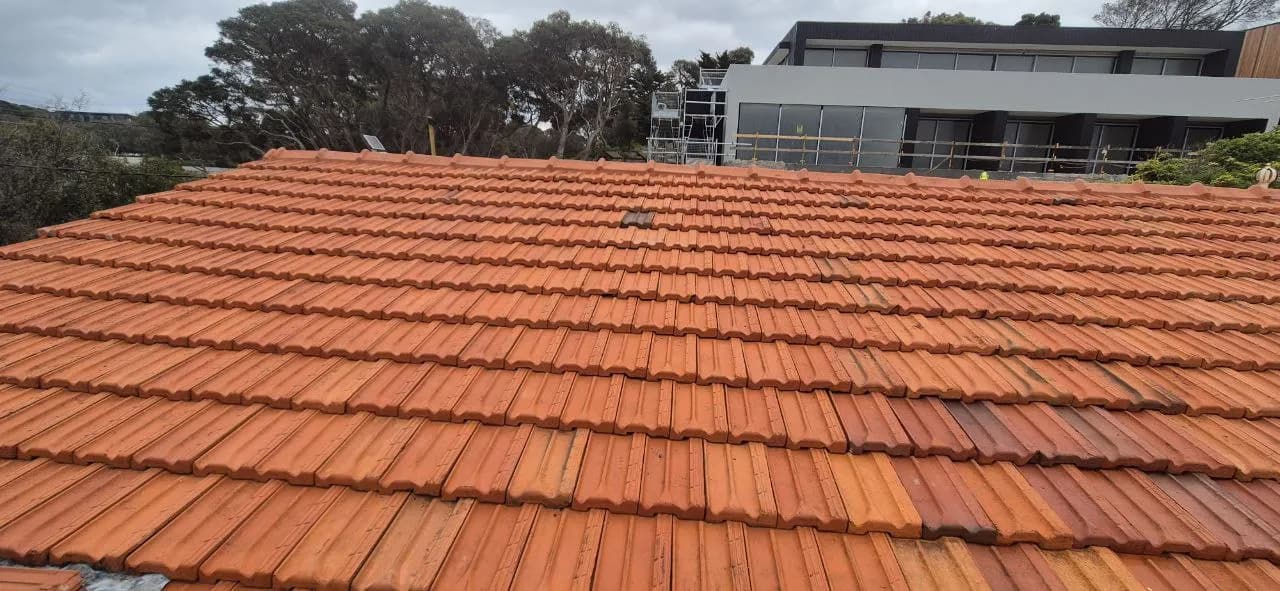
After years of completing roof restorations and metal roof replacements across Frankston and the Mornington Peninsula, we see the same tile-related failures repeatedly. Here is how metal compares on the factors that matter most for our climate.
- Weight: Metal at ~5kg/m² vs tiles at 40–60kg/m². Removing tiles and switching to metal can structurally save an older home without expensive frame reinforcement.
- Water Absorption: Metal absorbs nothing. Tiles absorb moisture, becoming up to 30% heavier when wet and stressing roof timbers during storms.
- Wind Resistance: Metal sheets are screw-fastened to battens and resist high winds. Tiles rely on gravity and clips — vulnerable to lifting in the strong gusts common along the coast.
- Maintenance: Metal needs an occasional wash. Tiles require re-bedding and re-pointing every 10–15 years ($3,000–$6,000), plus moss treatment and cracked tile replacement.
- Lifespan: Quality metal lasts 50+ years. Tiles last 30–50 years but require ongoing investment to reach that age.
- Installation Speed: Metal sheets cover large areas quickly. Tiles are laid individually, increasing labour time and cost.
- Security: Metal cannot be lifted from outside. Individual tiles can be removed to gain roof-space access.
The Tile-to-Metal Conversion Process
Converting a tiled roof to metal is our most requested service. At Frankston Peninsula Roofing, we follow a strict 7-step protocol backed by our 10-Year Workmanship Warranty.
- Safety & Site Prep: Perimeter guard rails installed (WorkSafe Victoria requirement). Driveways and garden beds protected.
- Strip & Drop: Old tiles removed and recycled where possible. Rusted iron disposed of responsibly.
- Timber Inspection: Every batten and rafter checked. Damaged or undersized battens replaced with new metal top-hat battens or treated pine.
- Insulation & Sarking: 55mm Anticon foil-faced blanket rolled out for thermal control, acoustic dampening, and condensation prevention.
- Sheet Installation: Colorbond sheets cut to size on the ground (prevents metal swarf from rusting on the roof). Installed with Class 4 marine-grade screws with neoprene washers.
- Custom Flashings: Every junction, chimney, vent, and valley sealed with custom-bent flashings. This is where quality workmanship prevents future leaks.
- Final Cleanup: Roof blown down, gutters cleared, magnetic sweeper run across yard for stray screws. Walk-through inspection with the homeowner.
Roof Restoration vs Full Replacement
Not every roof needs a full replacement. If your existing metal roof is structurally sound but cosmetically tired (faded paint, minor surface rust, chalking), roof restoration and painting can extend its life by 15–20 years at a fraction of the replacement cost. Our restoration process includes high-pressure cleaning, rust treatment, priming, and two coats of membrane roof paint matched to Colorbond colours.
However, if your roof has significant structural rust (perforations, corroded fixings, compromised valleys) or if you are converting from tiles, a full metal roof replacement is the correct long-term investment. We provide honest assessments — if restoration will solve your problem, we will tell you.
Why Choose Frankston Peninsula Roofing
- Local Knowledge: We know the difference between a roof in Narre Warren and one in Portsea. Wind loads, salt levels, and building requirements vary significantly across our service area.
- Correct Grade Specification: We always assess marine exposure and specify the right Colorbond grade for your property — protecting your warranty.
- 10-Year Workmanship Warranty: If it leaks due to our installation within 10 years, we fix it at our cost.
- Premium Materials Only: Genuine BlueScope Colorbond steel, Class 4 marine-grade fasteners, and Anticon insulation blanket. No cheap imports.
- Owner-Operator: Mike is on site. Your roof is not managed by a sales rep who never sees the job.
- Payment Plans Available: Quality roofing accessible through flexible payment options.
Get Your Free Roof Assessment
Whether you are weighing up a tile-to-metal conversion, need metal roof repairs, or simply want an expert opinion on the best material for your property, our team provides obligation-free assessments across Frankston, the Mornington Peninsula, and all surrounding suburbs.
💡 Pro Tip: Call Mike on 0437 641 027 for your free, no-obligation roof assessment. We will inspect your current roof, discuss your options honestly, and provide a fixed-price quote with no hidden costs. Based in Narre Warren, servicing Frankston, Mornington Peninsula, Cranbourne, and all surrounding suburbs.
Related Services
Serving Frankston, Mornington Peninsula & South-East Melbourne
We provide expert roofing services across these suburbs and surrounding areas. Click your suburb for local information and a free quote.
Frequently Asked Questions
How much does a metal roof replacement cost in Frankston and the Mornington Peninsula?
Every roof is different. Factors include pitch, height, access, and complexity (valleys, dormer windows). Generally, a full Colorbond replacement starts from $120–$160 per square metre for a standard single-storey home. We provide fixed-price quotes with no hidden costs. Call 0437 641 027 for your free assessment.
Which metal roofing material is best for coastal homes near Port Phillip Bay?
For homes within 200 metres of the coastline in areas like Seaford, Dromana, or Portsea, Colorbond Ultra is the minimum grade required. For properties directly on the waterfront, aluminium roofing offers even greater corrosion resistance. We assess every property’s marine exposure level before recommending the right grade.
How long does a metal roof last compared to tiles?
A quality Colorbond roof lasts 50+ years with minimal maintenance. Concrete tiles typically last 30–50 years but require costly maintenance (re-bedding, re-pointing, tile replacements) every 10–15 years. When factoring in total lifetime cost, metal roofing is usually the better investment for Peninsula homeowners.
Can you convert my tiled roof to metal without replacing the frame?
In most cases, yes. Metal roofing weighs approximately 5kg/m² compared to tiles at 40–60kg/m². Removing heavy tiles actually reduces stress on your existing frame. We inspect the timber structure during the project and replace any damaged battens, but full frame reconstruction is rarely needed.
Will a metal roof be noisy in the rain?
Not with proper installation. We install Anticon insulation blanket (55mm foil-faced) directly under the sheets. This absorbs vibration and reduces rain noise to a gentle hum. Old uninsulated tin roofs are noisy, but a professionally installed metal roof with quality sarking is surprisingly quiet.
Need Help With Your Roof?
Get a free, no-obligation inspection and quote. We'll give you honest advice — even if that means telling you it just needs minor repairs.