How to Assess & Deal With Storm Damage to Your Roof on the Mornington Peninsula
What good is a roof if it can't protect your home from the elements? It's your first line of defence against the outside world. But roofs aren't impervious to the extreme weather we experience here in Victoria. Living in the bayside suburbs — from Seaford down to Mount Eliza and across the Mornington Peninsula — we're blessed with beautiful coastlines but also face a unique set of challenges. Salt air, whipping bay winds, and unpredictable Melbourne storms can wreak havoc on roofing structures. If your roof has suffered storm damage, or you're preparing for the wetter months ahead, this guide covers everything you need to know.
Understanding Our Local Weather Challenges
Before examining the damage itself, it's vital to understand what is attacking your roof. In Frankston, Narre Warren, and the wider Peninsula area, we don't just get rain — we get complex weather systems that stress roofing materials in multiple ways simultaneously.
The "Four Seasons in One Day" Problem
It's a Melbourne cliché, but for roofers it's a daily reality. Thermal shock is a real issue. On a typical January day, your roof tiles might bake in 35°C heat, expanding significantly. By afternoon, a cool change rolls in off Port Phillip Bay, dropping the temperature by 15 degrees in an hour, followed by rain. This rapid expansion and contraction causes older mortar (pointing) to crack and terracotta tiles to become brittle over time.
The Salt Air Factor
If you live in Frankston, Seaford, or Mount Eliza, your home is constantly subjected to salt spray. Salt is corrosive. For older metal roofs that haven't been treated with modern protective coatings, rust is an inevitability. Even concrete tiles suffer from salt crystallisation within the pores, leading to fretting and degradation. This is why we only use premium materials designed for coastal environments.
Assessing Wind Damage
Wind is the most common cause of roof damage on the Mornington Peninsula. Because Port Phillip Bay offers little resistance to wind from the south-west, our suburbs often take the brunt of gale-force gusts.
How Wind Uplift Works
Most homeowners assume wind damage happens when wind blows down on the roof. Actually, the biggest danger is uplift. As wind moves over your roof, it acts like an aeroplane wing — creating low pressure above the tiles. The higher pressure inside your roof cavity pushes up, trying to equalise. If tiles aren't secured properly, or metal sheet screws are loose, the roof can literally be pulled off the frame.
Wind Speed Threat Levels
- Moderate Gale (50–61 km/h): Tiles may rattle. Loose branches begin to move.
- Gale-Force (62–74 km/h): The Bureau of Meteorology issues warnings at these speeds. Twigs break off trees and unsecured roofing materials can be dislodged.
- Strong Gale (75–88 km/h): Ridge caps and slates can be blown off. Structural damage begins.
- Storm Force (89–102 km/h): Trees uprooted. Considerable structural damage occurs.
💡 Pro Tip: Older roofs and those with DIY repairs often fail when gusts hit 80–100 km/h. If ridge capping hasn't been re-bedded in twenty years, wind can peel the caps straight off.
Signs of Wind Damage to Look For
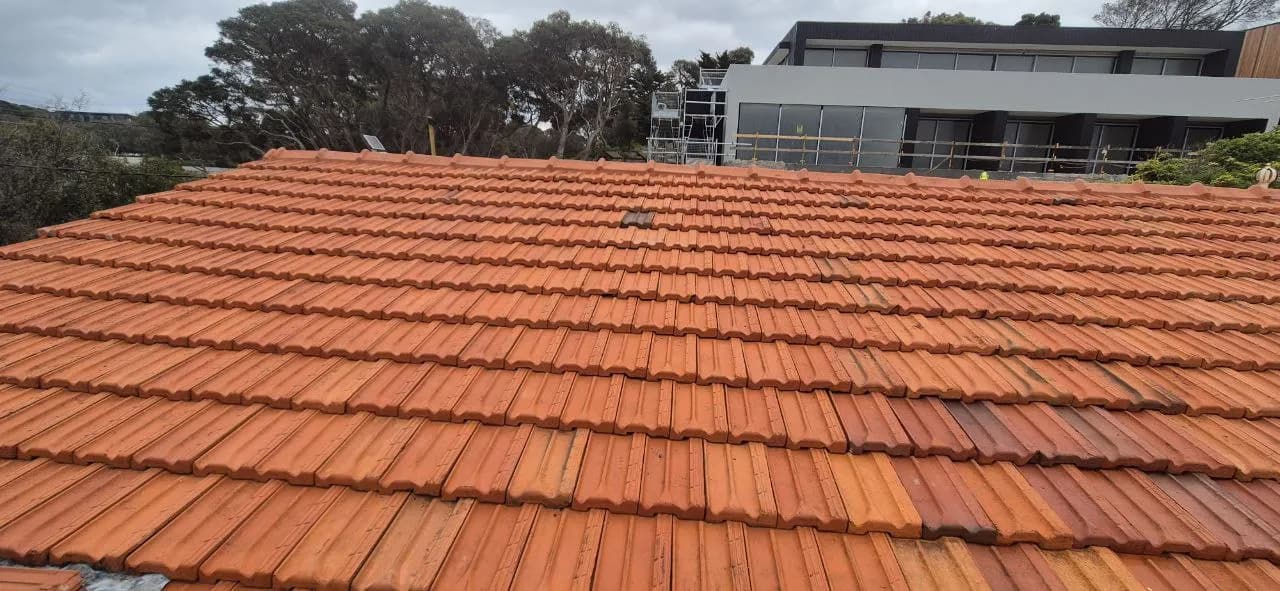
- Missing tiles or shingles — check your lawn and garden beds for debris
- Visible underlayment (sarking) — if you can see the silver or blue paper under tiles, your roof is vulnerable to leaks immediately
- Loose or peeled-back flashing around chimneys, vents, or skylights
- Heavy debris accumulation on the roof that may have cracked tiles underneath
Tree and Impact Damage
Powerful storms bring more than wind. Lightning can fell old gum trees instantly. In leafy suburbs like Mount Eliza and parts of Narre Warren, falling branches are a primary cause of emergency roof repairs.
The "Silent" Damage of Trees
It isn't always a massive trunk crashing through the ceiling. Often it's the repetitive slapping of a smaller branch against the roof during a storm that causes problems:
- Abrasion — a branch rubbing against metal or painted tiles strips away the protective coating
- Cracked pointing — vibration from a heavy branch hitting repeatedly can loosen ridge capping mortar
- Blocked gutters — leaves and twigs stripped during a storm fill gutters instantly, causing backflow flooding
Safe Inspection After Tree Damage
- Walk the perimeter: look for dents in gutters or fascia boards
- Check the ground: fresh green branches below may indicate eave damage above
- If a large tree has fallen onto the structure, do not enter the home — structural integrity may be compromised
- Take photos of all damage immediately for insurance purposes
⚠️ Safety Warning: If a large tree has fallen onto your roof structure, evacuate and call emergency services first. Then call a roofer for emergency weather-proofing.
Hail and Heavy Rain Damage
Although less common than wind, hailstorms have hit Melbourne with ferocity in recent years. Even small hail can be destructive to ageing roofs.
How Hail Affects Different Roof Types
- Metal roofs (Colorbond/Zincalume): Hail leaves dents that cause "ponding" where water sits and leads to rust. If the paint coating chips, steel is exposed to Peninsula salt air.
- Tile roofs: Hail can crack aged terracotta or concrete tiles. Hairline fractures invisible from the ground will suck in water via capillary action during the next rain.
When Heavy Rain Overwhelms Your Roof
The heavy rains that accompany storms can overwhelm gutter and downpipe capacity. When a high-volume rain event hits, water spills over the back of gutters into eaves and wall cavities. Roof valleys — the metal channels where two roof sections meet — are high-traffic zones for water. If blocked with debris or rusted through, they become major leak entry points.
💡 Pro Tip: In bayside areas, we often see modern "box gutters" fail during storms because they weren't sized for Australian rainfall intensity. If your box gutters overflow during heavy rain, they may need resizing.
Your Post-Storm Action Plan
The first thing to do after a heavy storm is get your family to safety. Do not go outside if there is lightning or downed power lines. Once the storm passes, follow these steps:
Step 1: Ground-Level Inspection
- Walk around the outside of your home looking at the roofline
- Note any debris on the roof or on the ground (broken tiles, metal fascia)
- Check if gutters are hanging loose or overflowing
- Inside: check every room for water stains on ceilings — even small discolouration matters
Step 2: Document Everything
If you plan to make an insurance claim, you need evidence. Photograph all damage from multiple angles. Write down the date and time of the storm. Keep any fallen debris as evidence.
Step 3: Call a Local Professional
Your next call should be to a reputable local roofer who can assess the damage and perform emergency weather-proofing if needed.
⚠️ Safety Warning: Avoid "storm chasers" — unlicensed door-knockers who appear after big storms offering cheap repairs. They often do poor work and vanish. Always check for a licence and insurance. We're locally based and aren't going anywhere.
When a Full Restoration Makes More Sense Than Repairs
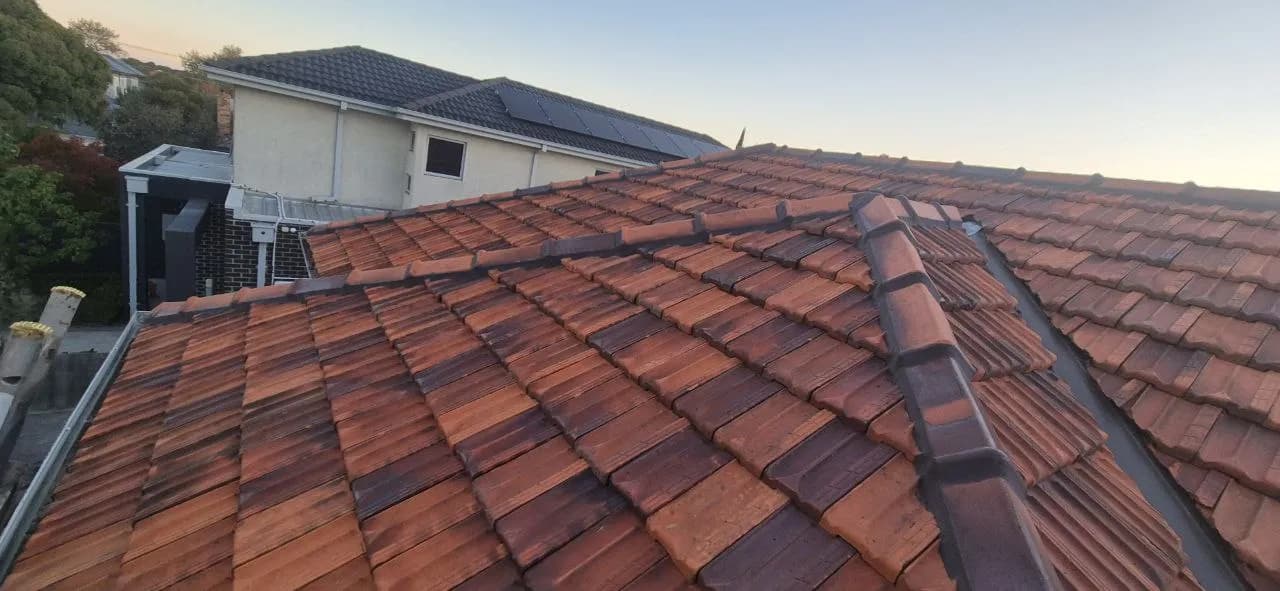
If your roof is over 15–20 years old, storm damage might be the trigger that indicates a full restoration rather than patching individual problems. A restoration isn't just cosmetic — it's a renewal of the roof's waterproofing integrity.
What a Roof Restoration Includes
- High-pressure cleaning to strip moss, lichen, and oxidised coating — revealing the true condition
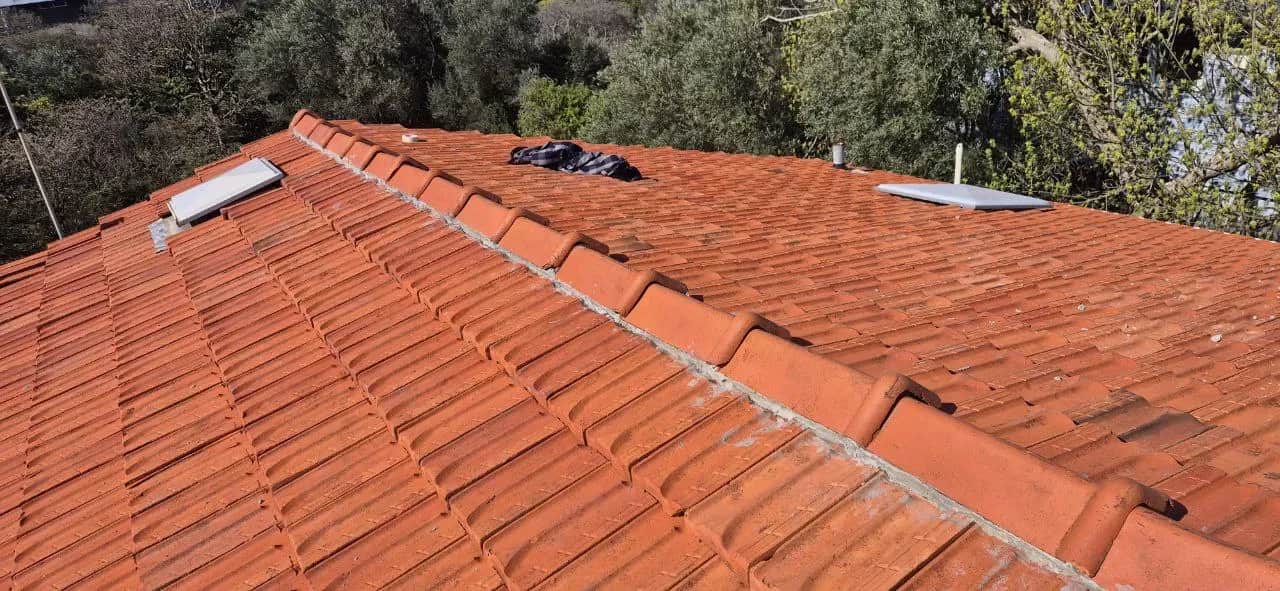
- Re-bedding: removing old crumbling mortar from ridge caps and laying fresh bedding
- Re-pointing with flexible compound (not stiff cement) that moves with temperature changes and resists wind uplift
- Replacing every broken or chipped tile
- Anti-fungal sterilisation treatment to stop moss growing back
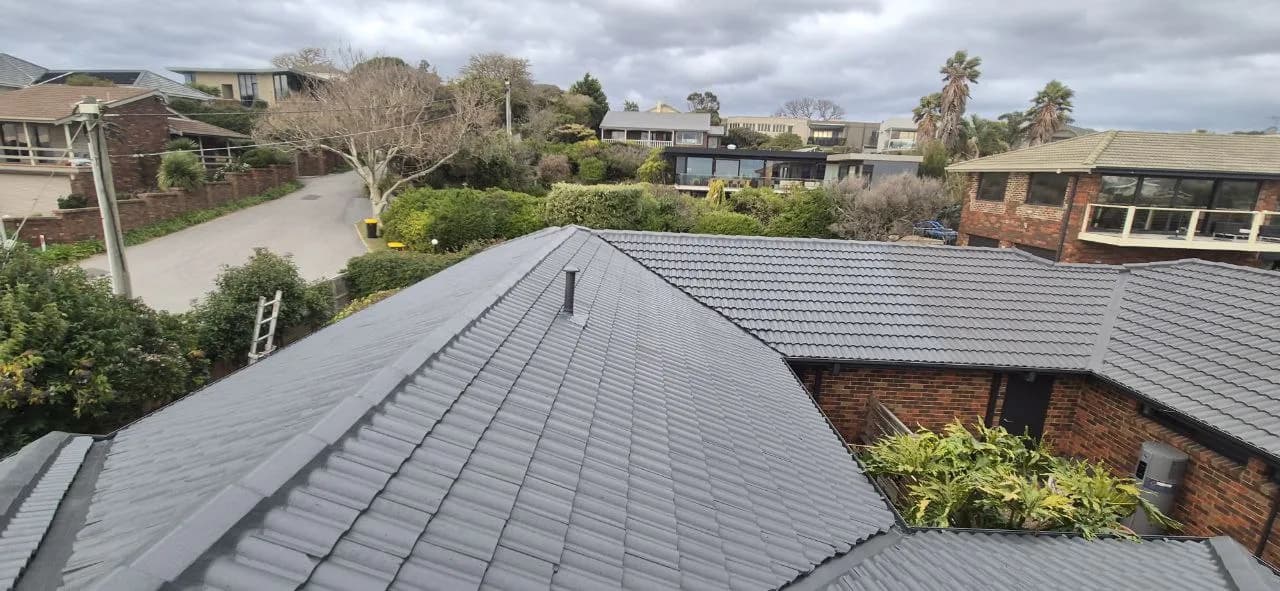
- Three-coat membrane system (primer + two top coats) that seals porous tiles and provides 15–20 years of protection
Prevention Is Better Than Emergency Repairs
Don't wait for the next big storm to think about your roof. A small repair now — fixing a few loose tiles or repointing cracked ridge capping — might cost a few hundred dollars. Left alone, that same issue can rot timber trusses, destroy insulation, and cause ceiling collapse during a storm, turning a small job into a major expense.
Preventative Services We Offer
- Gutter cleaning — ensuring water flows freely during heavy rain
- Valley replacement — swapping rusted valley irons for new Colorbond or zinc
- Flashing checks — ensuring seals around skylights and chimneys are watertight
- Free roof inspections — we'll identify vulnerabilities before the next storm finds them
Protect Your Home Before the Next Storm
Your roof is the umbrella for your life's biggest investment. Whether it's the salt air of Seaford or the gale-force winds of a Mornington winter, your roof takes a beating so you don't have to. If you suspect storm damage, or simply want a professional assessment to ensure you're ready for the next season, don't wait for the leak to ruin your ceiling.
Call Mike today for a friendly chat and a free, no-obligation assessment. We're locally based, fully licensed, and every restoration comes with our 10-year workmanship warranty.
Related Services
Serving Frankston, Mornington Peninsula & South-East Melbourne
We provide expert roofing services across these suburbs and surrounding areas. Click your suburb for local information and a free quote.
Frequently Asked Questions
How do I check my roof for storm damage safely?
Never climb onto your roof during or immediately after a storm. Start with a ground-level inspection: walk the perimeter of your home, look for fallen tiles or debris on the ground, check gutters for damage, and inspect ceilings inside every room for new water stains. Use binoculars to look at the roofline from the ground. If you see anything concerning, call a professional roofer — we offer free post-storm inspections across Frankston and the Mornington Peninsula.
Should I make an insurance claim for storm damage to my roof?
If the damage is significant — missing tiles, structural impact from fallen branches, or active leaking — yes, you should contact your insurer. Document everything with photos before any temporary repairs. We can provide detailed inspection reports and quotes to support your insurance claim. Note that general wear and tear is not covered, but sudden storm damage typically is.
How quickly can you respond to emergency storm damage?
We aim to respond within 60 minutes for emergency calls across Frankston, Seaford, Mornington, and surrounding areas. For widespread storm events affecting many homes, we prioritise based on severity — active leaks and structural compromise come first. We can perform temporary weather-proofing the same day and schedule full repairs once conditions are safe.
Why are Mornington Peninsula roofs more vulnerable to storm damage?
Our location on Port Phillip Bay means homes face unobstructed south-westerly winds, salt-laden air that weakens mortar and corrodes metal over time, and rapid temperature swings that cause thermal expansion in tiles. Coastal suburbs like Frankston, Seaford, and Mount Eliza experience 30-50% more wind and salt exposure than inland suburbs. This means roof materials degrade faster, making them more vulnerable when storms hit.
Need Help With Your Roof?
Get a free, no-obligation inspection and quote. We'll give you honest advice — even if that means telling you it just needs minor repairs.