Can Clogged Gutters Cause Roof Leaks? Guide for Frankston & Mornington Peninsula Homes
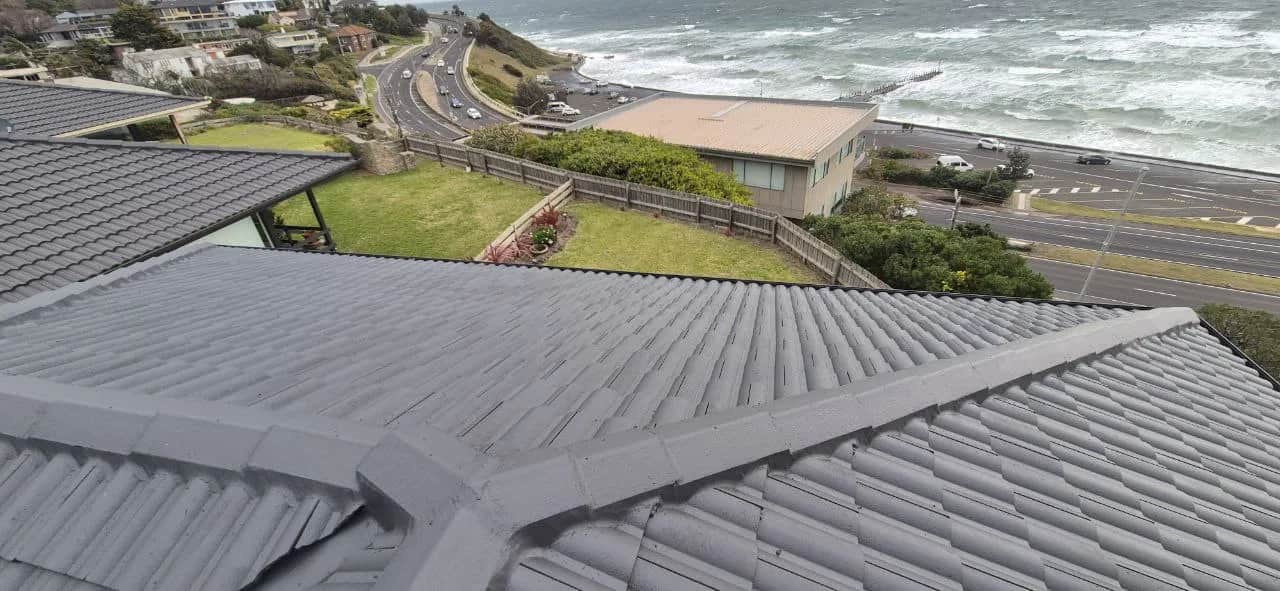
At Frankston Peninsula Roofing, we've spent years scaling ladders, inspecting tiles, and restoring roofs across Narre Warren, Frankston, Seaford, Mount Eliza, and the wider Mornington Peninsula. We've seen it all — from storm-damaged ridge caps to sun-bleached concrete tiles. However, one of the most persistent, damaging, and entirely preventable issues we encounter is clogged gutters.
It often starts as a small maintenance oversight. You see a few leaves poking out of the guttering, or perhaps a small tuft of grass growing in the corner, and you think, "I'll get to that next weekend." But in our unpredictable Victorian climate, that delay can quickly spiral into a serious headache involving internal water leaks, rotted timber, damaged insulation, and costly emergency repairs.
Ignoring blocked gutters is similar to ignoring the check engine light in your car. It might run fine for a few more kilometres, but eventually the damage is done. In the roofing world, this negligence leads to premature deterioration — often resulting in urgent roof repairs that homeowners could have avoided, or even a full roof restoration they didn't budget for.
Why Frankston & The Peninsula Face Unique Gutter Challenges
Our unique location in Victoria demands a specific approach to roof maintenance. We don't just deal with standard rain — we face the "four seasons in one day" phenomenon that Melbourne is famous for, compounded by our coastal geography.
The Salt Air Factor
Living in suburbs like Frankston, Seaford, and Mornington, your home is constantly exposed to salt-laden winds coming off the bay. Salt is corrosive. When debris piles up in your gutters, it traps salt against your metal guttering, downpipes, and roof valleys. This accelerates rusting and corrosion at a rate much faster than in inland suburbs. If your gutters are clogged, that salty, wet sludge sits there for months, eating away at the protective layers of your roof plumbing.
The Bayside Winds
The winds whipping through Mount Eliza and the Mornington Peninsula are notoriously strong. These winds strip leaves, twigs, and bark from native gum trees and deposit them directly onto your roof. Gum leaves are oily and slow to break down, creating a dense mat in your gutters that acts like a dam — preventing water flow even during minor showers.
Intense Rainfall Bursts
Victoria is seeing more frequent, high-intensity rainfall events. Your roof drainage system is designed to handle a specific flow rate. When your gutters are restricted by even 20% due to debris, a sudden downpour can overwhelm the system instantly. This leads to "backflow," where water has nowhere to go but inside your roof cavity. According to the Victorian Building Authority, poor roof drainage and water ingress are consistently among the top building defect complaints in the state.
The "Domino Effect": How Clogged Gutters Cause Roof Leaks
Many homeowners believe gutters are just there to stop water dripping on their heads at the front door. In reality, gutters are the drainage highway of your home — their job is to transport thousands of litres of water away from your foundation and walls. When this highway is blocked, water finds the path of least resistance. Here is the step-by-step "domino effect" of how a clog becomes a leak.
Stage 1: Overflow & Fascia Rot
When the gutter fills up, water rises. In many older Frankston and Narre Warren homes, the front of the gutter is actually higher than the back. This means when it overflows, it spills backward toward the house. The water constantly saturates the fascia board — the timber your gutters are fixed to. Over time, this timber softens, rots, and loses its structural integrity. Peeling paint on the fascia is the first warning sign.
Stage 2: Eaves and Soffit Damage
As overflow continues backward, it travels along the underside of the eaves. You'll start to see water stains, bubbling paint, or dark patches on your outdoor eaves. If these eaves are made of asbestos cement (common in older Seaford homes) or timber, the moisture can cause dangerous deterioration.
Stage 3: Internal Ceiling Stains
This is when panic usually sets in. If the water pools high enough, or if the wind blows the overflowing water back up under your roof tiles, it enters the roof cavity. It drips onto your insulation (rendering it useless) and then soaks into your plaster ceiling. By the time you see a brown ring or a bubble on your ceiling, the leak has likely been active for weeks or months.
Stage 4: Structural Foundation Issues
If water spills over the front of the gutter, it pools directly at the base of your home. In areas with reactive clay soil — common in parts of Narre Warren, Cranbourne, and the south-east — this excess water causes the ground to swell, potentially cracking your home's slab or shifting the stumps. At Frankston Peninsula Roofing, we believe in stopping this domino effect at Stage 1.
Warning Signs Every Peninsula Homeowner Should Watch For
You don't always need to climb a ladder to know you have a problem. Knowing what to look for from the ground can save you thousands of dollars.
- Miniature waterfalls: Water pouring over the sides of your gutters during heavy rain indicates a blockage.
- Sagging gutters: Gutters aren't designed to hold the weight of wet sludge. If they're bowing in the middle or pulling away from the house, the brackets are failing.
- The "garden" in the sky: Tufts of grass, weeds, or small saplings poking out of your gutter line means significant soil build-up.
- Stains on brickwork: Vertical streaks of dirt or mould on external walls directly under the gutters.
- Peeling fascia paint: Specifically on the fascia boards or the eaves — a classic sign of gutter overflow.
- Increased pest activity: Possums and rats love nesting in dry, debris-filled gutters.
- Mould in upper corners: Dampness in the upper corners of internal rooms often indicates a gutter overflow issue rather than a tile failure.
💡 Pro Tip: If you live in Mount Eliza or leafy parts of Frankston South, you likely have overhanging trees. Check for these warning signs monthly, not just annually.
Roof Valleys: The Most Vulnerable Point in Your System
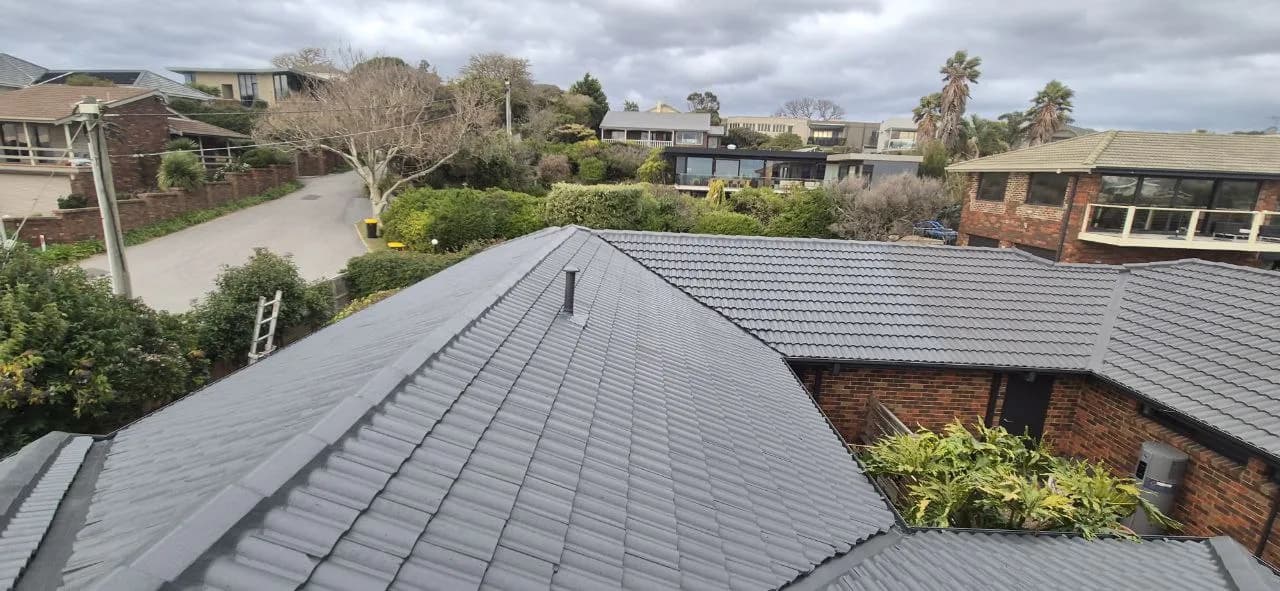
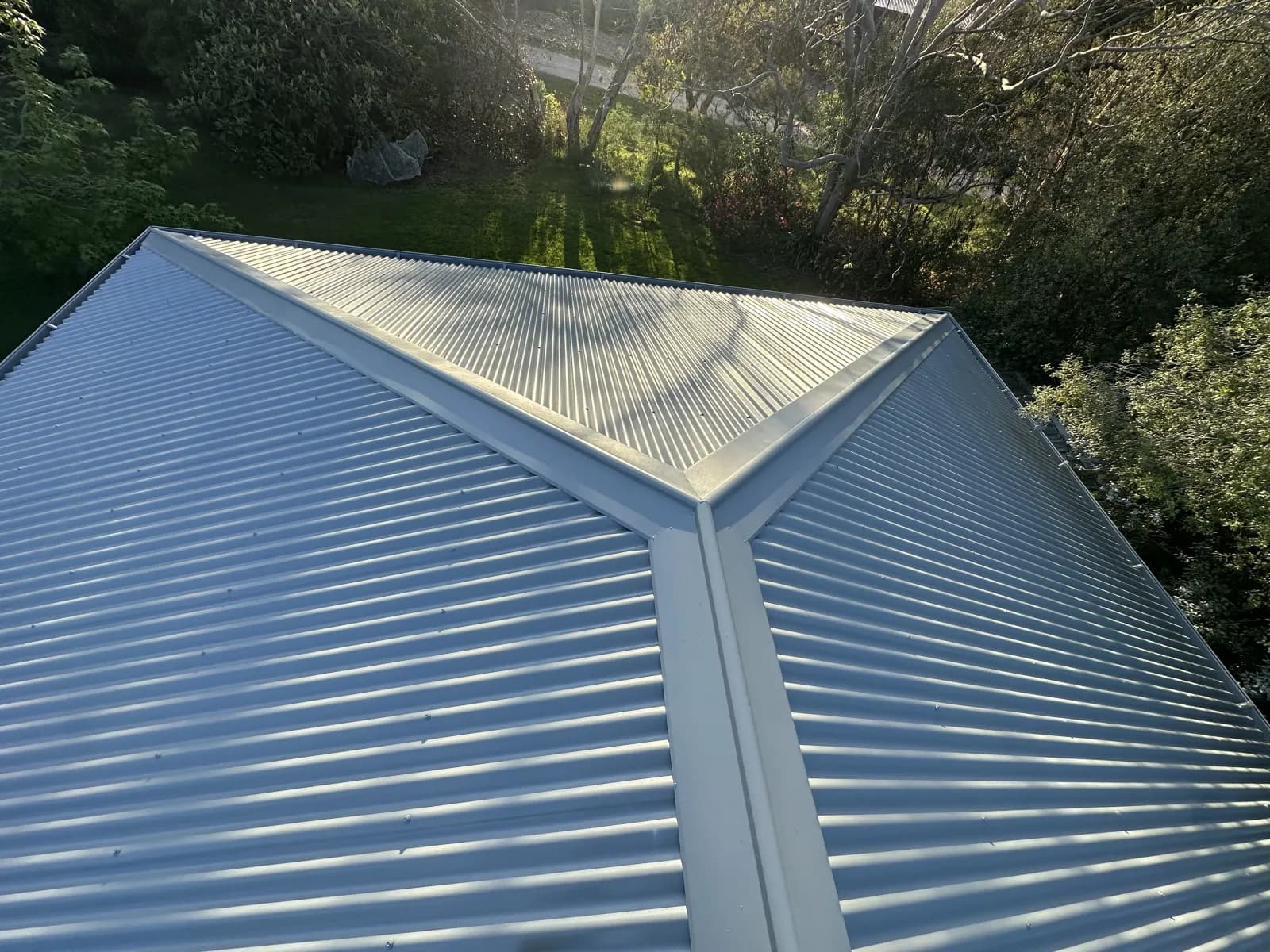
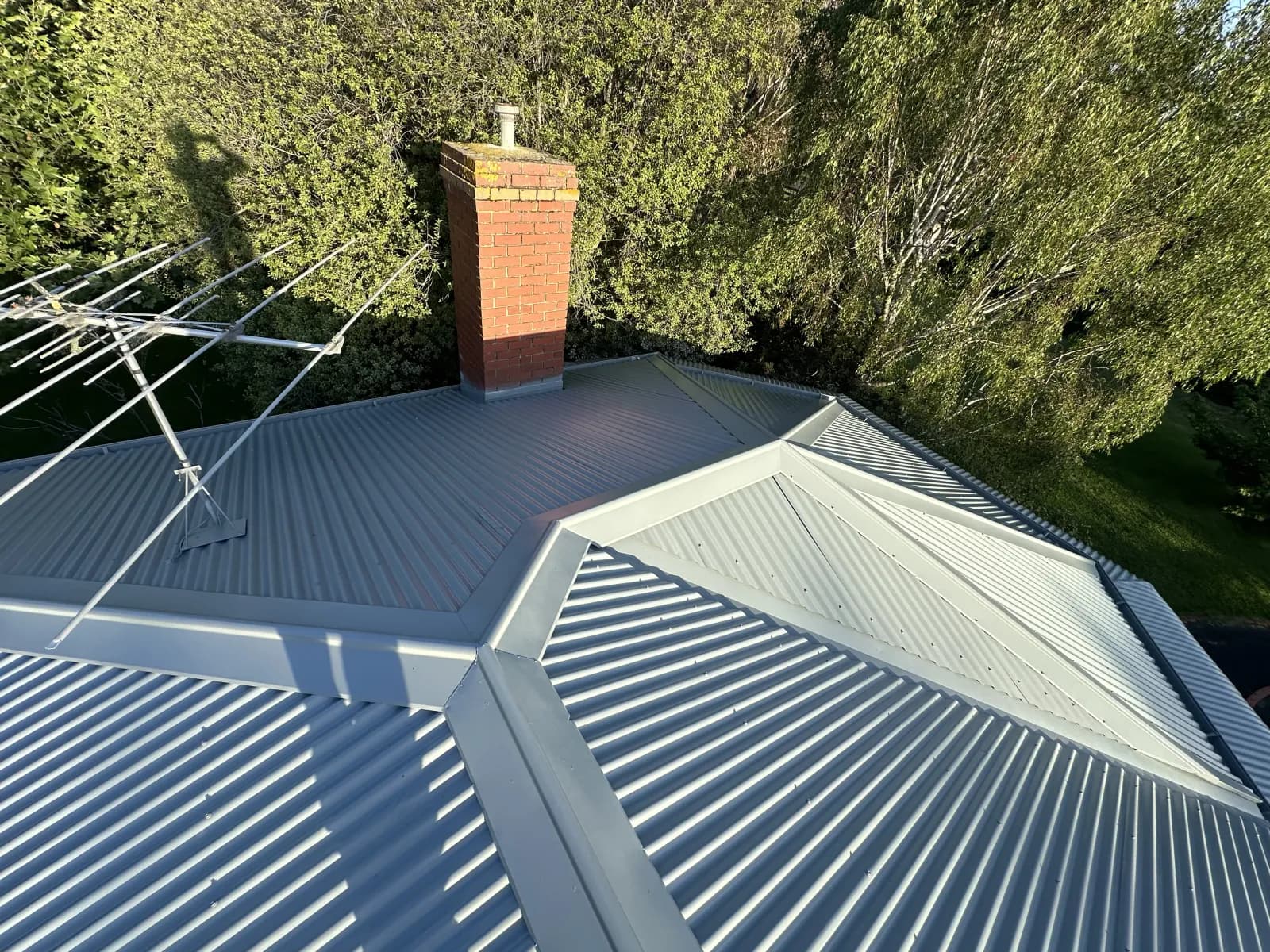
If the gutters are the highway, the roof valleys are the main on-ramps. A valley is the internal angle where two roof slopes meet, handling a massive concentration of water flow. In suburbs like Mornington and Seaford, valleys are often the first point of failure.
- The "Dam" Effect: Leaves slide down the roof and congregate in the valley. If they get stuck, they form a dam — water hits this blockage and is diverted sideways under your tiles.
- Rusted irons: Older homes often have galvanised valley irons. Once wet leaves sit on these irons, they rust through rapidly.
- Cracked mortar: The bedding mortar along the valley cuts can crack over time, allowing water ingress during high winds.
If you have a leak that only appears during heavy rain, 9 times out of 10 it's a blocked or failing valley. We don't just patch valleys — we replace them with high-quality Colorbond or zinc valley irons and ensure the overlap is sufficient to handle bayside downpours.
Professional Roof Cleaning: More Than Just a Leaf Blow
Regular roof cleaning is the cornerstone of preventing gutter-related leaks. At Frankston Peninsula Roofing, we advise scheduling cleaning at least twice a year — typically in late autumn (after deciduous trees drop) and early spring (to prepare for storm season). Our comprehensive clean involves:
- Manual debris removal: We hand-remove bulk debris to prevent clogging downpipes during the wash.
- High-pressure cleaning: We wash away moss, lichen, and algae spores that eat into concrete tiles.
- The "flushing" test: After cleaning, we run water through the system to ensure every downpipe flows freely to the stormwater drain.
- Full inspection: While up there cleaning, we inspect for cracked tiles, rusted valleys, and loose bedding.
Keeping your roof clean also reduces the acidic load on your roof materials. Debris that rots turns acidic, which etches into metal and degrades concrete pointing.
DIY Gutter Cleaning vs. Professional Service
We understand the Aussie spirit of "having a go." However, ladder falls are one of the leading causes of injury and death for men over 50 in Australia. Working at heights on a two-storey property in Narre Warren or on a steep pitch roof in Mount Eliza requires harnesses and anchor points. Walking on tiles incorrectly can break them — we often get called to fix leaks that were actually caused by the homeowner walking on tiles while trying to clean the gutters.
When you hire Frankston Peninsula Roofing, you get fully licensed and insured professionals, expert eyes that spot cracks and issues you would miss, and a complete clean-up where we bag and remove all debris. That's the difference between a maintenance task and a proper inspection.
Why Regular Maintenance Saves You Money
Think of roof maintenance as an insurance policy. A gutter clean costs a small annual fee. A ceiling replacement costs thousands. Mould remediation can go into the tens of thousands and affect your family's health.
Furthermore, many home insurance policies have a clause regarding "maintenance." If an assessor determines that your water damage was caused by clogged gutters (negligence) rather than a storm event, they may deny your claim. Regular invoices from Frankston Peninsula Roofing serve as proof that you have maintained your property diligently.
Protect Your Home — Don't Wait for the Drip to Become a Deluge
Whether you need a simple gutter clean, a complex valley replacement, or a full roof restoration, the team at Frankston Peninsula Roofing is ready to help. We're local, we're licensed, and we care about your home. Don't wait for a small maintenance issue to turn into an expensive emergency.
Call Mike today on 0437 641 027 for a free, no-obligation assessment. Based in Narre Warren, serving Frankston and the entire Mornington Peninsula.
Related Services
Serving Frankston, Mornington Peninsula & South-East Melbourne
We provide expert roofing services across these suburbs and surrounding areas. Click your suburb for local information and a free quote.
Frequently Asked Questions
How often should I clean my gutters in Frankston?
We recommend at least twice a year — once in late autumn after the deciduous trees drop, and once in early spring before storm season. If you have large gum trees or pine trees overhanging your roof, quarterly cleaning is advisable. Properties in leafy suburbs like Mount Eliza and Frankston South may need even more frequent attention.
Can blocked gutters really cause structural damage to my home?
Yes. When overflowing water pools at the base of your home, it can cause the soil to swell — especially in areas with reactive clay soil like parts of Narre Warren and Cranbourne. This can crack concrete slabs or shift stumps. Inside, water entering the ceiling cavity destroys insulation and can rot timber trusses. What starts as a maintenance oversight can become a major structural issue.
Will my insurance cover damage caused by clogged gutters?
Many home insurance policies include a clause about "maintenance." If an assessor determines your water damage was caused by neglected gutters rather than a sudden storm event, they may deny your claim. Regular professional gutter cleaning invoices serve as proof that you've maintained your property — which can make the difference in a disputed claim.
Are gutter guards worth the investment?
For homes surrounded by trees — especially gum trees common across the Mornington Peninsula — gutter guards can significantly reduce the frequency of gutter blockages. They won't eliminate maintenance entirely, but they can extend the interval between cleans from twice yearly to once every 1-2 years. We install mesh-style guards that prevent leaves and debris while allowing water to flow freely.
Need Help With Your Roof?
Get a free, no-obligation inspection and quote. We'll give you honest advice — even if that means telling you it just needs minor repairs.