How to Prepare Your Roof for Winter: Maintenance Guide for Mornington Peninsula Homeowners
As the golden days of autumn fade and the distinct chill of a Victorian winter settles in, homeowners across Frankston, Narre Warren, and the Mornington Peninsula need to turn their eyes upward. Here in Melbourne's south-east, we don't just get ordinary winter weather — we face a unique cocktail of elemental challenges. From the salt-laden winds whipping off Port Phillip Bay to the torrential downpours that hammer Frankston and Mount Eliza, our roofs endure punishment that inland suburbs simply don't experience.
Winter weather, with its driving rain, gale-force winds, and abrupt temperature drops, can wreak havoc on a roof that isn't prepared. Ensuring your roof is in peak condition before harsh winter conditions arrive is not just good advice — it is an essential safeguard to protect your biggest asset and avoid repair bills that can run into the tens of thousands.
At Frankston Peninsula Roofing, we've spent years on roofs from Narre Warren to Sorrento. We've seen firsthand how a small, neglected crack in June can turn into a flooded living room by August. In this comprehensive guide, we cover everything you need to know about preparing your roof for winter — including leak detection, the science of pointing and bedding, the specific dangers of salt corrosion, and why a professional inspection is the smartest investment you can make this season.
Why Roof Maintenance Is Critical for Bayside & Peninsula Homes
Winter storms, heavy rainfall, and cold temperatures can cause significant damage to an unprepared roof. However, living in areas like Frankston, Seaford, Mount Eliza, and the Mornington Peninsula adds an extra layer of complexity to roof maintenance that inland homeowners rarely face.
The Impact of Salt Air and Coastal Winds
If you live within 5km of Port Phillip Bay, your home is subject to "marine aerosol" effects. Salt air is highly corrosive. It eats away at untreated metal, rusts valley irons faster than in inland suburbs, and degrades the glaze on older tiles. The Peninsula is also exposed to high winds coming off the water. These winds don't just hit your roof — they create uplift pressure. If your ridge caps are loose or your pointing has cracked, a strong winter gale can lift tiles right off the battens, exposing the roof cavity to horizontal rain.
Thermal Shock: Melbourne's "Four Seasons in One Day"
Melbourne is famous for its fluctuating weather. In winter, your roof might be 5°C in the morning, hit by direct UV sunlight raising the surface temperature to 30°C by noon, and then rapidly cooled by a rain shower. This expansion and contraction cycle puts immense stress on rigid materials like old cement bedding. Without proper maintenance, this thermal shock causes hairline cracks — the perfect entry point for water.
1. Inspect for Roof Leaks — The Hidden Dangers
A major concern for homeowners during winter is water infiltration. Leaks are rarely dramatic waterfalls in the middle of the room — they're usually insidious, slow drips that rot timber frames and grow mould long before you see them. Finding a leak requires detective work, which is why professional diagnosis is vital.
What to Look for Inside Your Home
- Ceiling discolouration: Look for faint yellow or brown rings on your ceiling. This is often "tea staining" from insulation that has become soaked.
- Bubbling paint: If paint on your walls or ceiling is bubbling, water is trapped behind it.
- Musty odours: A persistent damp smell in a specific room often indicates mould growth in the cavity above.
- Cold spots: If one part of your ceiling feels significantly colder than the rest, your insulation may be wet and compressed, losing its thermal efficiency.
The "Paper Trail" of Water
Water follows the path of least resistance. A stain in your bedroom might actually be caused by a broken tile over the lounge room, with the water running down a rafter before dripping. This is why professional diagnosis from Frankston Peninsula Roofing is vital — we trace the leak to the source, not just the symptom.
2. Clean and Maintain Gutters — Your First Line of Defence
Clogged gutters are the number one cause of preventable water damage in suburbs like Mount Eliza and Mornington, where leafy streets look beautiful but drop tonnes of debris. When gutters clog, water fills the gutter and flows backwards into your eaves and roof cavity — a phenomenon known as "backflow."
Cleaning vs. Maintaining — They're Not the Same
Simply scooping out leaves isn't enough. Proper gutter maintenance involves checking the fall (gutters must slope towards the downpipe — sagging brackets cause water to pool and accelerate rust), inspecting for pinhole rust spots (if you see light through the bottom of a gutter in our coastal service areas, it needs replacement), and ensuring downpipes are clear all the way to the stormwater drain.
💡 Pro Tip: We recommend high-quality gutter guards for homes surrounded by gum trees, especially in Mount Eliza and Frankston South. Even with guards, an annual flush is recommended to prevent fine debris build-up.
3. Repoint and Rebed Ridge Caps — The Backbone of Your Roof
Ridge caps are the V-shaped tiles at the apex of your roof. They're held in place by mortar bedding and sealed with pointing. This is perhaps the most critical structural element of a tiled roof — and one of the first to fail.
Why Old Cement Fails
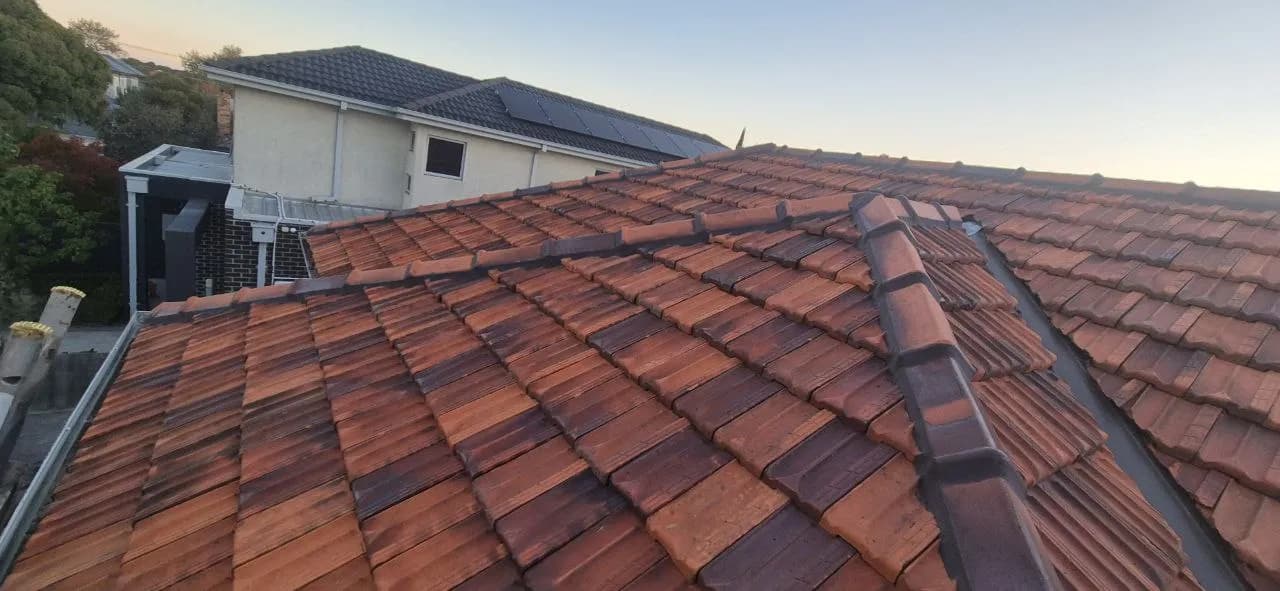
Homes built 15+ years ago in Narre Warren, Cranbourne, or Seaford likely rely on standard cement mortar. Cement is rigid. As your house shifts slightly with age and your roof expands and contracts with temperature, rigid cement cracks. Once it cracks, the ridge cap becomes loose — and in a winter storm, it can be lifted right off.
The Flexible Pointing Advantage
At Frankston Peninsula Roofing, we exclusively use premium flexible pointing compounds. Unlike rigid cement, flexible pointing moves with your roof, absorbing thermal shock without cracking. It bonds ridge caps to roof tiles far stronger than cement and is inherently water-resistant. If your ridge caps are loose, we lift the caps, remove old crumbled cement, lay fresh bedding, and finish with flexible pointing colour-matched to your roof.
4. Check for Missing or Damaged Tiles
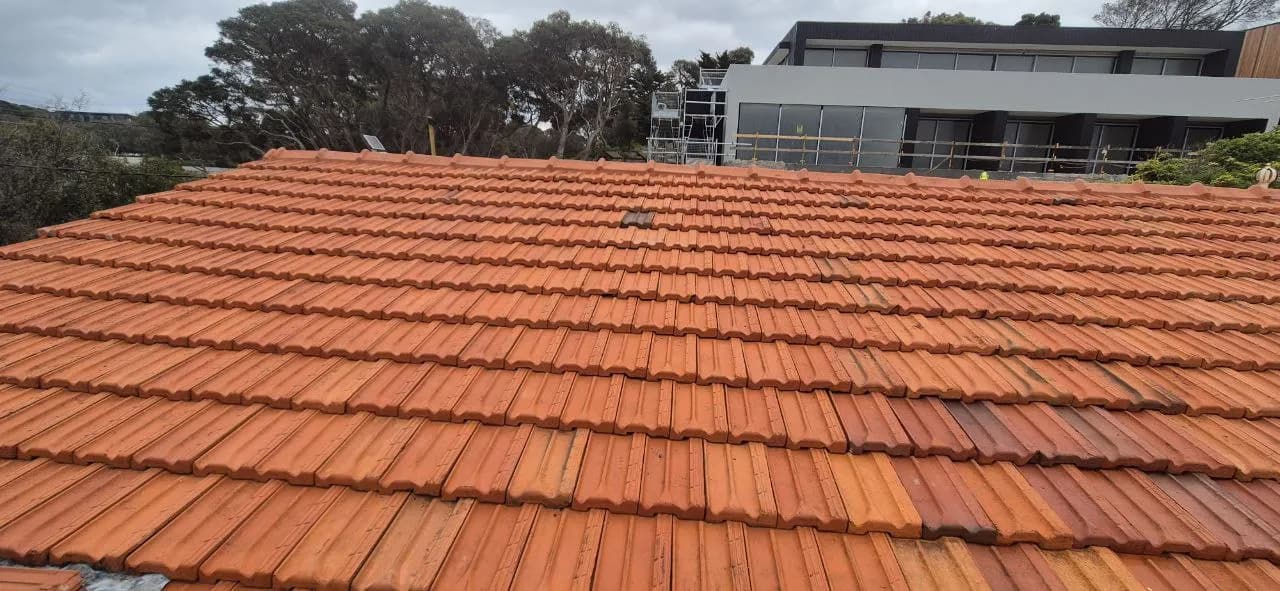
Roof tiles are durable, but not invincible. Foot traffic, falling branches, and severe hail can crack them. Before winter, it's essential to identify and replace any compromised tiles.
Concrete vs. Terracotta Issues
- Concrete tiles: Over 20-30 years, the protective glaze wears off. The concrete becomes porous, absorbing water like a sponge. This makes tiles heavier (stressing the timber frame) and prone to crumbling — a process called "fretting."
- Terracotta tiles: While the colour lasts a lifetime, terracotta can become brittle with age. In coastal areas like Frankston and Seaford, they can also suffer from flaking if salt crystallises inside the clay pores.
We source matching tiles — even for discontinued profiles — to ensure seamless repairs. We also check the small, cut tiles near valleys, which original builders often don't secure properly and which slide out of place over time.
5. Roof Painting and Sealing — It's Not Just About Looks
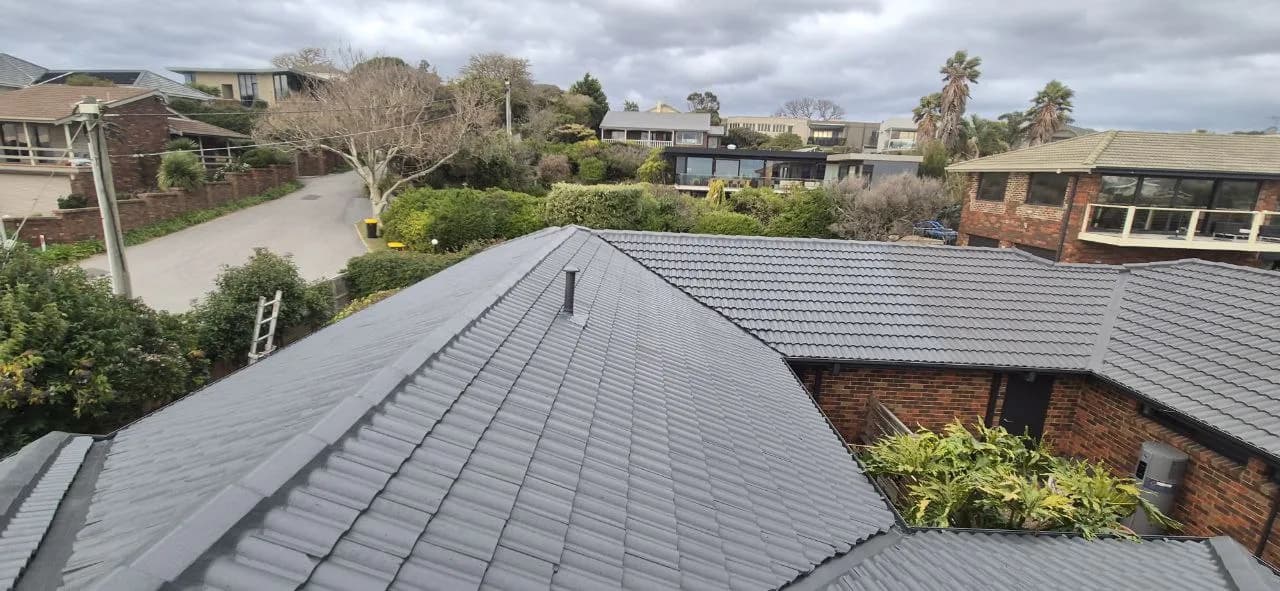
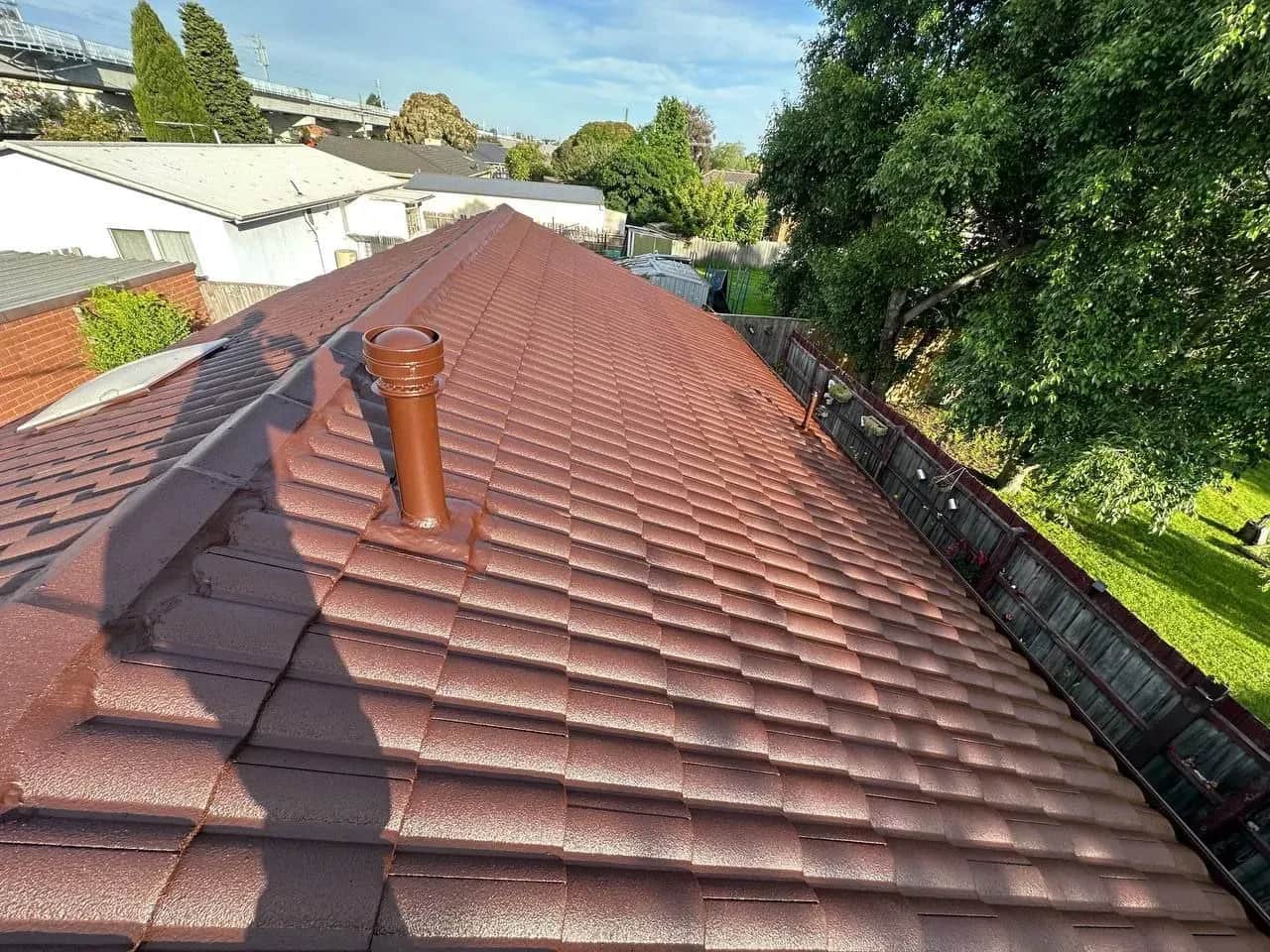
Many homeowners in Frankston think roof painting is purely cosmetic. While a freshly painted roof does look incredible, the primary purpose of a roof restoration is protection. A professional restoration isn't just a splash of paint — it's a membrane system.
The Coating Process Explained
- High-pressure clean: We blast away decades of moss, lichen, and oxidised paint at 4000 PSI.
- Sterilisation: We apply an anti-fungal treatment to kill spores deep in the tile pores.
- Primer/sealer: A crucial base coat that bonds to the tile and provides a surface for the topcoat.
- Base coat: A thick, colour-rich acrylic membrane for UV and weather protection.
- Top coat: A final sealing layer for maximum durability and colour retention.
We also offer heat-reflective coatings that reflect the sun's infrared rays, keeping your roof cavity and home significantly cooler in summer while providing the same protective membrane during winter months.
6. Inspect Flashings and Valleys — The Weakest Links
Roof valleys — the metal channels running down internal roof corners — handle the highest volume of water during rain. In Mornington Peninsula homes, old galvanised valley irons eventually rust through. Once they do, water pours directly into the ceiling.
We replace failing valleys with Zincalume or Colorbond steel for superior corrosion resistance. We also check every flashing — the metal seals around chimneys, skylights, and vent pipes. If the silicone seal breaks or lead flashing cracks, water enters. Every penetration point on your roof needs to be watertight before winter storms arrive.
7. Trim Overhanging Branches
Trees are beautiful, but they're the enemy of a clean roof. Overhanging branches cause physical damage during storms (whipping against tiles and cracking them), continuous debris (gum leaves release oils that stain roof paint and accelerate metal corrosion), and vermin access (branches act as bridges for possums and rats to enter your roof void).
⚠️ Safety Warning: Ensure all branches are trimmed back at least 2 metres from the roofline before winter. This single step can dramatically reduce gutter blockages and prevent storm damage.
8. Book a Professional Roof Inspection
You generally should never climb onto your own roof. It's dangerous, and walking on tiles incorrectly can cause more damage than you fix. A professional inspection from Frankston Peninsula Roofing covers sarking health (checking the foil insulation paper under tiles for tears), timber batten condition (checking for rot or termite damage), and solar panel surrounds (inspecting underneath panels where pigeons nest and debris accumulates).
By identifying potential issues early, we prevent small problems from becoming major disasters. The cost of a professional inspection is a fraction of the cost of emergency repairs after a winter storm.
Why Choose Frankston Peninsula Roofing for Your Winter Preparation?
Based in Narre Warren and serving the entire Mornington Peninsula, we understand the difference between a roof in Seaford (salt spray exposure) and a roof in Cranbourne (suburban wind tunnels). We tailor our materials and techniques to each suburb's specific conditions — not a one-size-fits-all approach.
- Owner-operated: Mike Umarov personally inspects, quotes, and oversees every job. The person who promises quality is the person who delivers it.
- 10-year workmanship warranty: We stand behind our work. If our restoration or repairs fail, we fix it — no questions asked.
- Premium materials only: We use Dulux AcraTex, Nutech NXT Cool Zone, and Shieldcoat Roofbond — premium Australian-made coatings with 10-15 year manufacturer warranties.
- 100% satisfaction guarantee: We don't leave the site until you are happy. We clean up our mess, remove all debris, and leave your home looking better than we found it.
Don't Wait for the First Storm — Act Now
The cost of prevention is a fraction of the cost of repair. Whether you need a simple gutter clean, a ridge cap re-pointing, valley replacement, or a full roof restoration, the team at Frankston Peninsula Roofing is ready to ensure your home is watertight, secure, and looking fantastic before winter arrives.
Call Mike today on 0437 641 027 for a free, no-obligation roof assessment. Based in Narre Warren, serving Frankston and the entire Mornington Peninsula — let us help you prepare your roof for winter.
Related Services
Serving Frankston, Mornington Peninsula & South-East Melbourne
We provide expert roofing services across these suburbs and surrounding areas. Click your suburb for local information and a free quote.
Frequently Asked Questions
How often should I have my roof inspected before winter?
We recommend a professional roof inspection every 2-3 years, or immediately after a major storm event. However, if your roof is over 15 years old, an annual pre-winter inspection is a wise investment. For coastal properties in Frankston, Seaford, and Mornington, salt exposure accelerates wear — so annual checks are especially important.
Can I pressure wash my roof myself to prepare for winter?
We strongly advise against DIY pressure washing. Incorrect technique forces water under tiles and into the ceiling cavity, causing massive water damage. It also makes the roof extremely slippery and dangerous. A professional clean uses the correct pressure settings, angles, and safety equipment to avoid damage and injury.
How long does a full roof restoration take?
Depending on roof size and weather conditions, a full restoration (clean, repair, repoint, seal, and paint) typically takes 3-5 days. We need consecutive dry days for coating application, so we may schedule around forecast weather. Smaller repair jobs can be completed in a single day.
My tiles look fine — why would I need roof painting before winter?
Concrete tiles become porous as they age, even when they look intact from the ground. Porous tiles absorb water like a sponge, adding weight to the timber frame, creating damp conditions in the roof cavity, and accelerating moss and lichen growth. A professional roof coating waterproofs the tiles and provides a protective membrane against winter rain.
Do you help with insurance claims for storm damage?
Yes, we provide detailed reports and photographic assessments to assist with insurance claims for storm damage. If your roof is damaged during winter storms, call us immediately on 0437 641 027 — we offer 24/7 emergency response and can provide temporary tarping while your claim is processed.
Need Help With Your Roof?
Get a free, no-obligation inspection and quote. We'll give you honest advice — even if that means telling you it just needs minor repairs.