What To Do When You Notice A Water Stain On Your Roof (And Why You Shouldn't Ignore It)
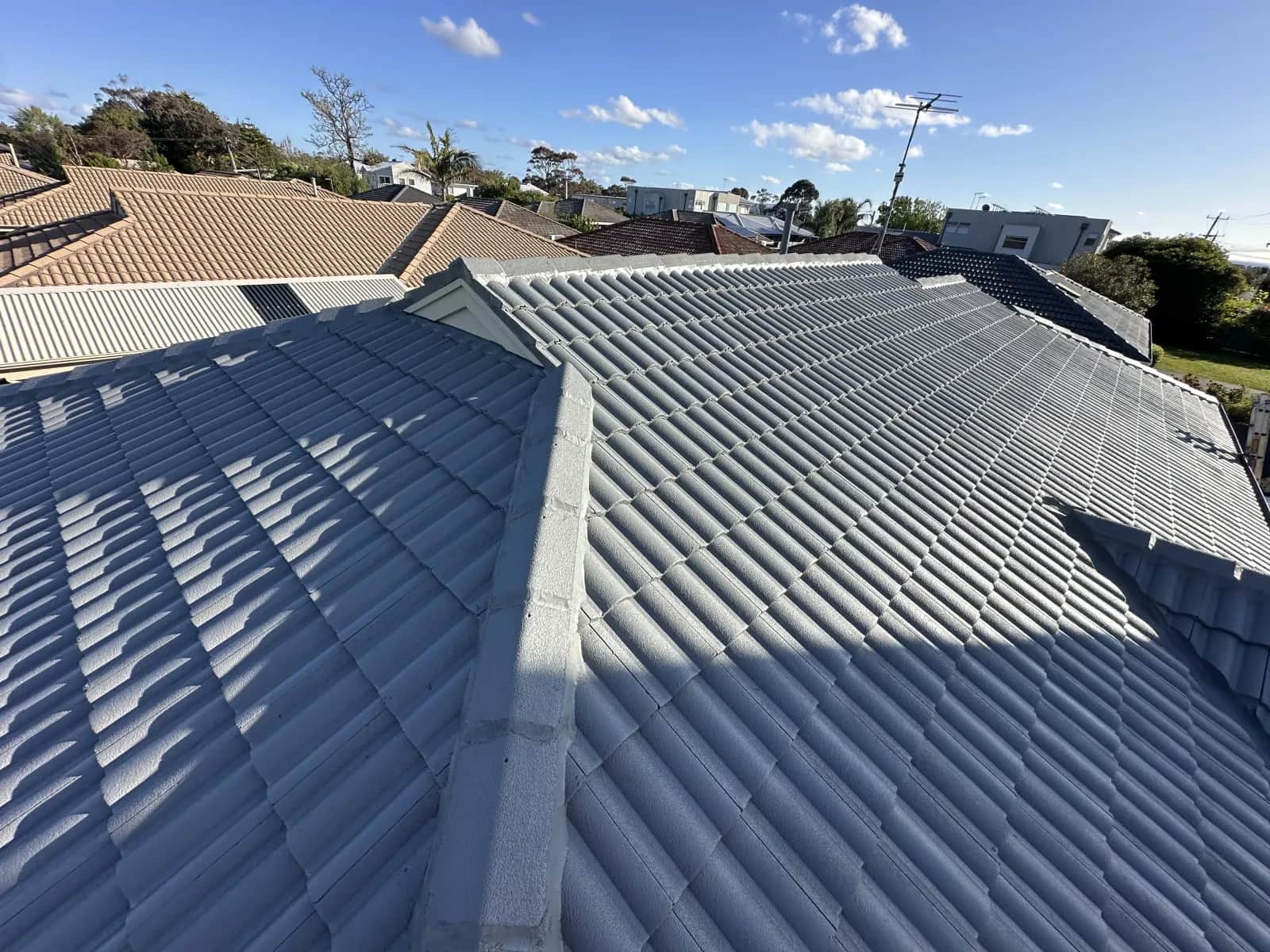
We’ve all heard the horror stories associated with roof leaks. You’re sitting in your lounge room in Mt Eliza or Frankston, listening to a heavy Victorian storm battering the windows, when you look up and see it: a discoloured, brownish patch spreading across your ceiling. Panic sets in. Is it a small leak? Has a pipe burst? Is the roof about to cave in? A water stain is rarely just a cosmetic issue — it is a symptom of a much larger problem occurring above your ceiling plaster. As the owner of Frankston Peninsula Roofing Construction, I have spent years diagnosing and fixing roofs from Narre Warren to Portsea. Below, you can read our comprehensive guide on exactly what you should do when you notice a water stain on your roof or ceiling, how to diagnose the source, and why prompt action is the key to saving your home.
1. Do Not Panic, But Do Not Delay
The moment you spot a water stain, the clock starts ticking. In the building industry, we call water "the universal solvent." Given enough time, it destroys everything in its path — insulation, timber framing, plasterboard, and electrical wiring.
However, panic leads to bad decisions (like climbing a ladder in a thunderstorm). Take a deep breath. Grab a bucket if water is actively dripping. Then, prepare to investigate systematically.
The Local Factor: Why Frankston and Peninsula Roofs Struggle
Living in our beautiful pocket of Victoria comes with specific challenges for roofing. Unlike suburbs further inland, homes in Frankston, Seaford, and the Mornington Peninsula are subjected to:
- Salt Air Corrosion: If you live near the bay, salt accumulation can rust galvanised iron sheets, valley irons, and gutters much faster than normal.
- High Winds: The coastal winds can lift tiles and loosen flashing more frequently than in sheltered suburbs.
- Thermal Shock: Our weather is unpredictable. Scorching heat followed by a cool change causes rapid expansion and contraction of roof materials, leading to cracked bedding and pointing.
2. Check Your Gutters: The Usual Suspects
Your gutters are usually the main source of water stains and leaks. They are the primary drainage system for your entire roof surface area. If the water has nowhere to go, it will flow backwards into your eaves and ceiling cavity.
The Safety First Approach
⚠️ Safety Warning: If you don’t feel qualified enough to climb a ladder to inspect your gutters, or if the weather is wet and windy, schedule an appointment with your local roofers. Frankston Peninsula Roofing Construction offers comprehensive roof inspections because we know that ladder falls are a leading cause of injury in Australia.
What You Are Looking For
If you feel qualified to check your gutters on your own, gather the proper equipment first — safety goggles and heavy-duty gloves are essential. You’d be surprised by how many people get harmed by cutting their hands on rusted metal while checking gutters.
Look for these red flags:
- Blocked Downpipes: Sometimes the gutter looks clear, but the downpipe is clogged with tennis balls, leaves, or sludge.
- Vegetation: In suburbs like Mt Eliza or Langwarrin, gum leaves and pine needles accumulate rapidly. This debris acts like a dam, forcing water to pool.
- Rust Holes: In our service area, salt corrosion eats through older gutters. If you see light poking through the bottom of the gutter, water is pouring through there too.
- Incorrect Pitch: If your gutters are sagging, water will sit stagnant rather than flowing to the downpipe, eventually overflowing into the fascia.
💡 Pro Tip: If there is a lot of debris, branches, and grime in your gutters, clean it as soon as possible. However, if the gutters are rusted through or pulling away from the house, cleaning won’t help — you need repairs.
3. Check Your Roof: The Exterior Inspection
If there’s a water stain on your ceiling, you should definitely assess the roof condition — preferably from the ground with binoculars, or safely secured on a ladder. The water stain on your ceiling is rarely directly below the leak in the roof. Water travels down rafters, along pipes, and pools at the lowest point before soaking through the plaster.
Common Roofing Failures in Victoria
When we inspect a roof in the Bayside suburbs, we are typically looking for these specific failures:
A. Broken or Displaced Tiles
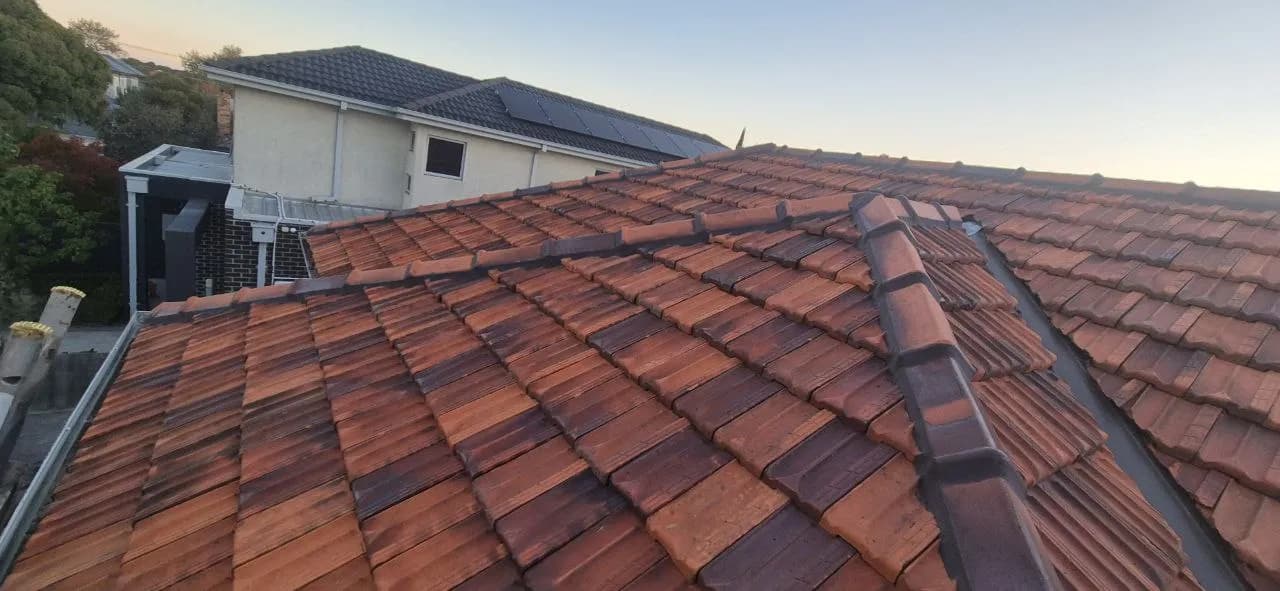
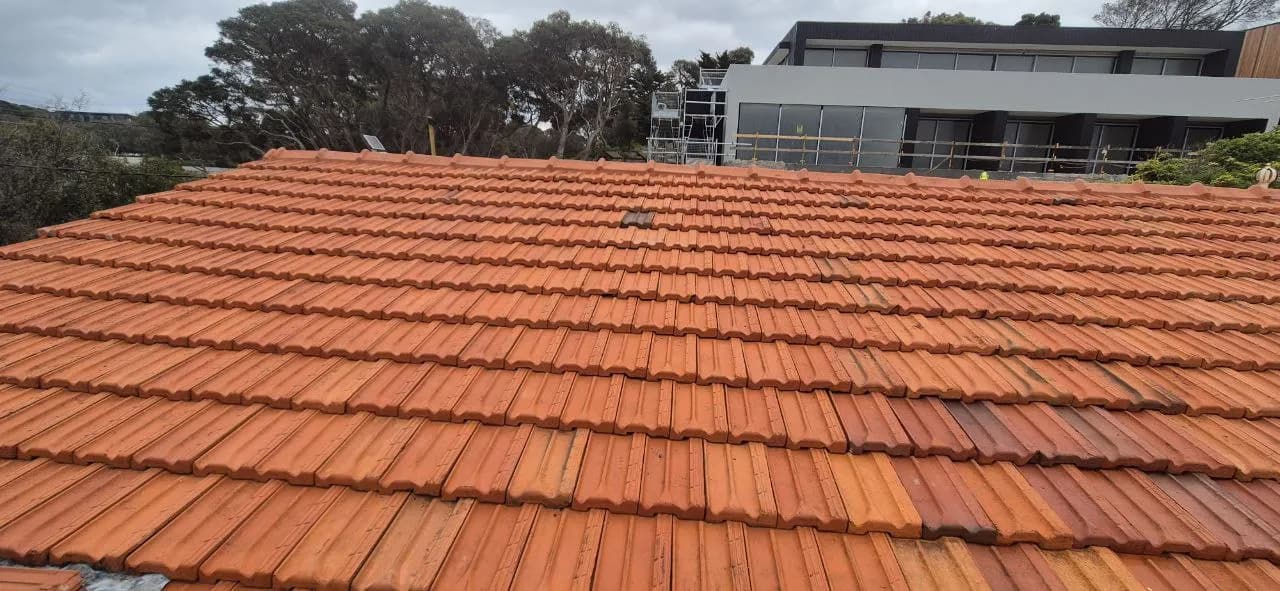
Concrete tiles can crack under the weight of foot traffic or falling branches. Terracotta tiles can become brittle with age and delaminate. Slipping a new tile in sounds easy, but you must match the profile and age of the tile to ensure a watertight seal.
B. Failed Bedding and Pointing
This is the most common issue we see in roof restoration projects across Frankston and the Mornington Peninsula. Bedding is the cement mortar that holds your ridge caps in place. Pointing is the flexible material that seals the bedding. Over time, cement cracks. When it does, water seeps into the roof cavity during wind-driven rain.
💡 Pro Tip: If you see chunks of cement in your gutters, your ridge caps are compromised. At Frankston Peninsula Roofing Construction, we use a flexible pointing compound that expands and contracts with the Victorian weather, backed by our 10-Year Workmanship Warranty.
C. Rusted Valley Irons
The "valley" is where two sections of the roof meet at an internal angle. It handles a massive volume of water. In coastal areas like Seaford and Mornington, the old galvanised valley irons rust out. Even a pinhole leak here can flood a ceiling quickly.
D. Flashing Failures
Flashing is the metal seal around chimneys, skylights, and vent pipes. If the silicone has perished or the lead has cracked, water will run straight down the side of the penetration and onto your ceiling.
The Decision: Repair or Replace?
- Minor Damage: A simple repair job — locate the leak, fix the specific area, and ensure it is watertight.
- Major Wear: If 30% of your tiles are fretting or your metal sheets are universally rusted, you may need a full restoration or re-roof.
4. The Hidden Dangers: Inside the Roof Cavity
If the exterior looks okay, or if you can’t identify the source, the answer lies inside the roof void. This is a dark, dusty, and cramped environment, but it tells the truth about your leaks.
Electrical Hazards
⚠️ Safety Warning: Before entering any roof space, turn off the mains power. Water and electricity are a fatal combination. If water has dripped onto junction boxes or downlight transformers, the risk of electrocution or fire is real.
Insulation Saturation
Check your insulation batts. If they are wet, they lose their thermal efficiency immediately. Furthermore, wet insulation against timber trusses promotes rot. As part of our service, we can assess if your insulation needs replacing due to water damage.
Mould and Mildew
A water stain is often the breeding ground for mould. In the humid environment of a roof cavity, black mould can spread rapidly, posing severe health risks to your family, particularly those with asthma.
5. Call in the Professionals: Why DIY is a Risk
Roofing is statistically one of the most dangerous professions. In a residential setting, without harnesses, guard rails, or experience, the risk of a serious fall is incredibly high.
The Insurance Trap
If you’re not experienced enough to know where your water stain is coming from and how to fix it, stop. Your insurance company can decide not to cover you for DIY projects. Most home insurance policies have strict clauses regarding maintenance. If you attempt to fix a leak yourself using silicone and duct tape, and the leak subsequently worsens and destroys your carpet and furniture, the insurer may deny the claim due to "improper workmanship" or "lack of maintenance."
As such, you’ll be responsible for:
- The original DIY costs (materials, tools, ladders).
- The cost of hiring a professional to undo your DIY fix.
- The cost of the internal damage to your home.
Structural Integrity
Walking on a tiled roof incorrectly can break dozens of tiles. Walking on a metal roof can dent the sheets, causing water to pool (ponding) which leads to rust. If you have to tear down a wall or mess with your roof trusses, you can damage the overall structure of your home, causing more leaks and damage. If the problem worsens, you can even cause your ceiling to collapse under the weight of saturated plasterboard.
6. The Frankston Peninsula Roofing Construction Difference
When you notice that water stain, you need a partner you can trust. You need someone who knows the local area, understands the weather patterns, and stands behind their work. Here is why Frankston Peninsula Roofing Construction is the preferred choice for homeowners in Narre Warren, Frankston, and the Mornington Peninsula:
- 10-Year Workmanship Warranty — We don’t just patch and run. Whether it’s a full roof restoration or a valley iron replacement, you get peace of mind for a decade.
- Fully Licensed & Insured — We carry full liability insurance and all necessary licenses to operate in Victoria. You are protected from the moment we step onto your property.
- Premium Materials — We only use high-quality, Australian-standard materials. From flexible pointing compounds that withstand thermal movement to rust-resistant valley irons and premium paints.
- 100% Satisfaction Guarantee — I, Mike Umarov, own and operate this business. My reputation is built on your happiness. We don’t sign off on a job until you are completely satisfied.
7. Restoration vs. Repair: What Do You Need?
Sometimes a water stain is a sign that your roof needs a facelift, not just a patch.
When a Repair is Right
If your roof is generally healthy but has isolated damage — a fallen branch, a few cracked tiles — a repair is the cost-effective solution. We locate the leak, fix the specific area, and ensure it is watertight.
When You Need a Full Restoration
If your roof is showing signs of age — faded colour, moss and lichen growth, brittle pointing across the board — a restoration is a better investment. Our restoration process includes:
- High-Pressure Cleaning: Removing years of dirt, moss, and oxidation.
- Re-bedding and Pointing: Securing all ridge caps.
- Tile Changing: Replacing all broken tiles.
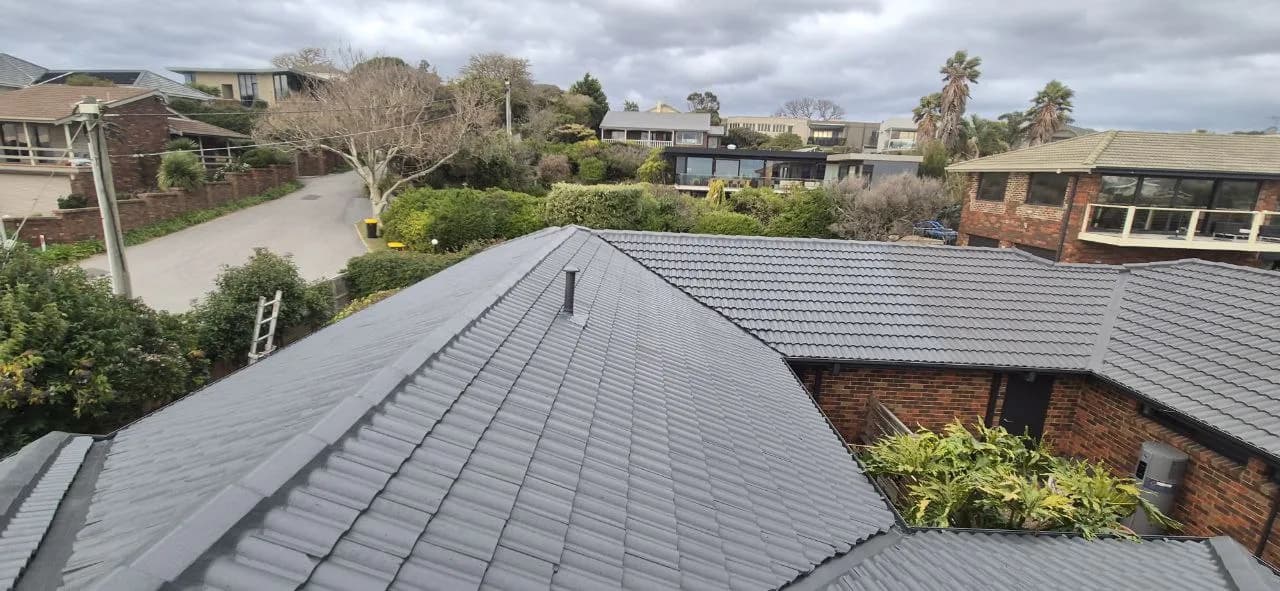
- Sealing and Painting: Applying a sealer and premium roof membrane to protect the tiles and transform the look of your home.
Roof painting is not just aesthetic; it seals porous concrete tiles, preventing them from absorbing water (which makes them heavy and prone to cracking).
Don’t Let a Small Stain Become a Big Disaster
The path of water is unpredictable, and the damage is often worse than it looks on the surface. A small water stain today can turn into structural timber rot, mould infestations, electrical hazards, and collapsed ceilings if left unchecked. DIY projects can end up costing you more in the long run, which is why you should make sure to call in the professionals.
Don’t wait for the next storm to turn a stain into a stream. Protect your biggest asset — your home.
💡 Pro Tip: If you are in Narre Warren, Frankston, Mornington Peninsula, Seaford, Mt Eliza, or surrounding Bayside suburbs, call Mike Umarov today on 0437 641 027 for a FREE, no-obligation roof assessment. We’ll inspect your roof, identify the source of the stain, and provide a clear, honest plan to fix it — backed by our 10-Year Warranty.
Related Services
Serving Frankston, Mornington Peninsula & South-East Melbourne
We provide expert roofing services across these suburbs and surrounding areas. Click your suburb for local information and a free quote.
Frequently Asked Questions
What causes water stains on a ceiling?
Water stains are typically caused by a roof leak, blocked gutters, failed flashing, cracked bedding and pointing, rusted valley irons, or burst plumbing. The stain you see is rarely directly below the leak — water travels along rafters and pipes before pooling on plasterboard.
Can I fix a roof leak myself?
We strongly advise against DIY roof repairs. Roofing is statistically one of the most dangerous trades, and improper repairs can void your home insurance. A professional roofer can safely diagnose the source, fix the issue correctly, and provide warranty-backed workmanship.
How quickly should I act on a water stain?
As soon as you notice it. Water is called "the universal solvent" in the building industry — given enough time, it destroys insulation, timber framing, plasterboard, and electrical wiring. A small stain today can become a collapsed ceiling, mould infestation, or electrical hazard within weeks.
Will my home insurance cover roof leak damage?
It depends on the cause. Most insurers cover sudden storm damage but may deny claims for damage caused by lack of maintenance or DIY repairs classified as "improper workmanship." Having a licensed professional handle repairs protects your claim eligibility.
How do I know if I need a roof repair or a full restoration?
If the damage is isolated (a few cracked tiles, a single flashing failure), a repair is cost-effective. If your roof shows widespread signs of age — faded colour, moss growth, brittle pointing across the board — a full restoration is a better long-term investment. Call us on 0437 641 027 for an honest assessment.
Need Help With Your Roof?
Get a free, no-obligation inspection and quote. We'll give you honest advice — even if that means telling you it just needs minor repairs.