6 Warning Signs of Hidden Roof Damage Every Frankston & Peninsula Homeowner Should Know
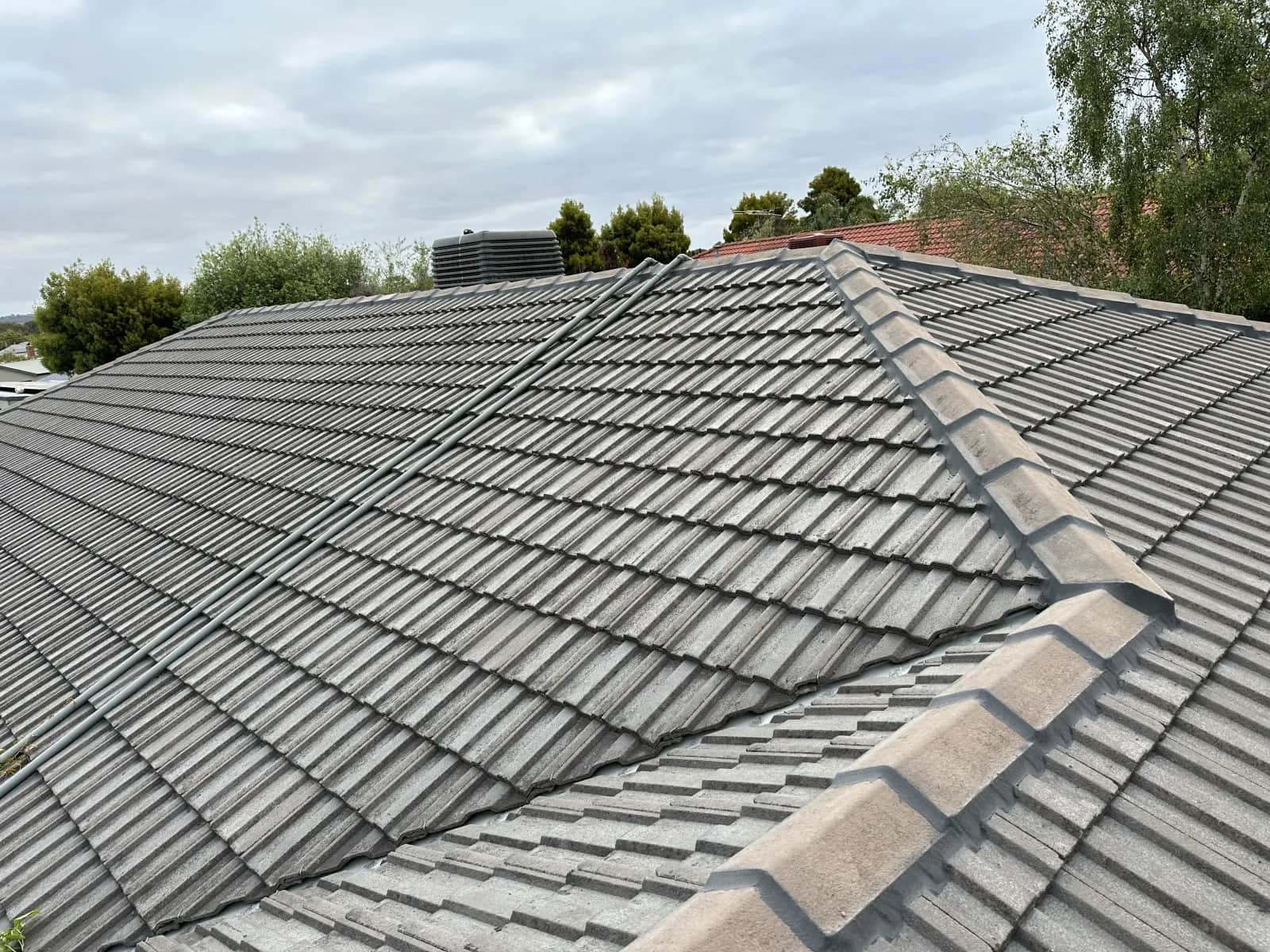
Living on the Mornington Peninsula or in the Bayside suburbs of Melbourne offers a lifestyle that is the envy of many. From the stunning coastlines of Mount Eliza to the family-friendly streets of Frankston and the quiet charm of Seaford, we are privileged to call this area home. However, the very elements that make our region beautiful — the crashing waves, the salt air, and the coastal winds — are silent enemies to the structural integrity of your home.
When Melbourne's unpredictable storms hit, or when the scorching summer heat expands rooftops in Narre Warren and Mornington, the first warning signs of damage aren't always obvious. In fact, many homeowners across Frankston, Seaford, and Mount Eliza don't realise they have critical roofing issues until water is dripping onto their dining table or a ceiling collapses.
At Frankston Peninsula Roofing, we believe that knowledge is power. Knowing the signs of roof damage — specifically those unique to our coastal corridor — is crucial to protecting your property, your family's health, and your wallet. This isn't just a list of problems; it's a comprehensive guide to understanding your roof, identifying when it needs attention, and knowing when to call in the experts.
The Coastal Factor: Why Peninsula Roofs Fail Faster
Before we dive into the specific signs of damage, it is vital to understand why roofs in our service area — from Narre Warren down to the tip of the Peninsula — suffer differently than roofs in inland Melbourne.
Salt Air Corrosion
If you live in Seaford, Frankston, or Mount Eliza, your home is constantly bathed in salt-laden air. While therapeutic for humans, salt is devastating for building materials.
- Metal Corrosion: Even galvanised iron and standard metal roofs can succumb to rust prematurely if not treated with marine-grade coatings. The salt accelerates oxidation, eating through valleys, gutters, and downpipes.
- Concrete Erosion: Salt crystals settle into the pores of concrete tiles. When these crystals expand and contract with heat, they cause micro-cracking — a condition known as "fretwork" where the tile surface essentially crumbles away.
The Bayside Winds
The Mornington Peninsula is effectively a wind tunnel between Port Phillip Bay and Western Port Bay.
- Uplift: High winds create negative pressure over your roof. If your ridge capping is loose or your pointing is cracked, these winds can lift tiles, allowing water to drive in at horizontal angles during storms.
- Debris Impact: In leafy suburbs like Mount Eliza, high winds turn branches and gum nuts into projectiles that can crack terracotta tiles instantly.
Understanding this local context is why Frankston Peninsula Roofing tailors every roof restoration project to withstand these specific environmental stressors.
The "Invisible" Danger: Why Homeowners Miss Early Signs
The biggest danger with roof damage is that it is often invisible from the ground. A cracked ridge cap, a lifted valley seal, or a minor tile shift can allow water to trickle into your roof cavity, unnoticed for months or even years.
In older suburbs like Frankston North or the heritage pockets of Mornington, homes often feature original bedding and pointing. Over 30 to 50 years, this mortar becomes brittle. It doesn't explode overnight; it develops hairline cracks.
The "Sponge" Effect
Insulation plays a tricky role here. Modern insulation batts are excellent at trapping heat, but they are also excellent at absorbing water. A slow leak might drip onto your insulation, which soaks it up like a sponge. You won't see a stain on your ceiling until that insulation is fully saturated. By the time the brown patch appears, you could have litres of water sitting in your ceiling, rotting the timber trusses.
This is why we emphasise proactive inspections. In Narre Warren and Frankston, newer builds are not immune either. Settling foundations can shift roof frames slightly, cracking rigid mortar and compromising the water seal.
Sign 1: Stained Ceilings or Walls (The Red Alert)
Let's talk about the most obvious, yet most alarming sign: the stain. Brown stains, sagging plaster, bubbling paint, or "tea-coloured" rings on your ceiling are the classic distress signals of a failing roof. When you notice these in suburbs like Seaford or Mount Eliza, the issue has often progressed past minor seepage.
Decoding the Stain
- Brown/Yellow Rings: This usually indicates water travelling through insulation and leaching tannins from timber beams before settling on the plaster.
- Bubbling Paint: This indicates water is sitting behind the paint layer, pushing it away from the drywall. Do not pop the bubble without a bucket ready.
- Shadows in Corners: Sometimes leaks travel down the roof trusses and pool at the wall plates (where the wall meets the roof). This looks like a dark shadow in the corner of a room.
The Structural Risk
Left untreated, even a small ceiling stain can lead to a full ceiling collapse. Plasterboard (gyprock) loses almost all its structural integrity when wet. We have seen cases in Mornington where an entire living room ceiling came down because a small leak was ignored for a winter.
💡 Pro Tip: If you see a stain, do not just paint over it. That is like putting a band-aid on a broken leg. You must find the source of the water entry first. Call 0437 641 027 for a diagnostic assessment.
Sign 2: Gutter Overflow and Salt Corrosion
Blocked gutters don't just spill water onto your garden — they force water backwards into your home. This is a massive issue in leafy areas like Mount Eliza and Frankston South.
The Mechanism of Failure
Standard gutters are designed to carry water away. When they fill with eucalyptus leaves, pine needles, or sludge:
- Backflow: The water level rises. If the back of the gutter is lower than the front (which it shouldn't be, but often is due to settling), water flows over the fascia board and into the eaves.
- Internal Flooding: From the eaves, water can track back down the internal walls or into the wall cavity, damaging electrical wiring.
- Valley Rust: In Seaford, where salt air is prevalent, debris left in roof valleys holds salty moisture against the metal valley irons. This causes them to rust through rapidly, creating leaks directly over living areas.
Rusting Valleys
One of the most common roof repairs we perform on the Mornington Peninsula is the replacement of rusted valley irons. You might look at your tiles and think they are fine, but if the metal valley underneath them is rusted through, your roof is compromised.
If you spot water cascading over the side of your gutters during a storm, or pooling around the base of your home, your drainage system has failed. This threatens your foundation and your roof structure.
Sign 3: Cracked Tiles, Spalling, and Lifted Ridges
In suburbs like Frankston and Mornington, we see a mix of concrete and terracotta roofs. Each ages differently, and identifying damage requires a trained eye.
Concrete Tile Issues
Concrete tiles are durable, but they become porous as their original sealant wears off (usually after 10-15 years).
- Sand Loss: You might find granules in your gutters. This is the "face" of the tile wearing away.
- Water Absorbency: As the tile becomes porous, it absorbs rain. This makes the tile heavier, putting stress on your roof timbers.
- Cracking: A waterlogged tile is weaker. Stepping on it or a heavy hail storm can snap it easily.
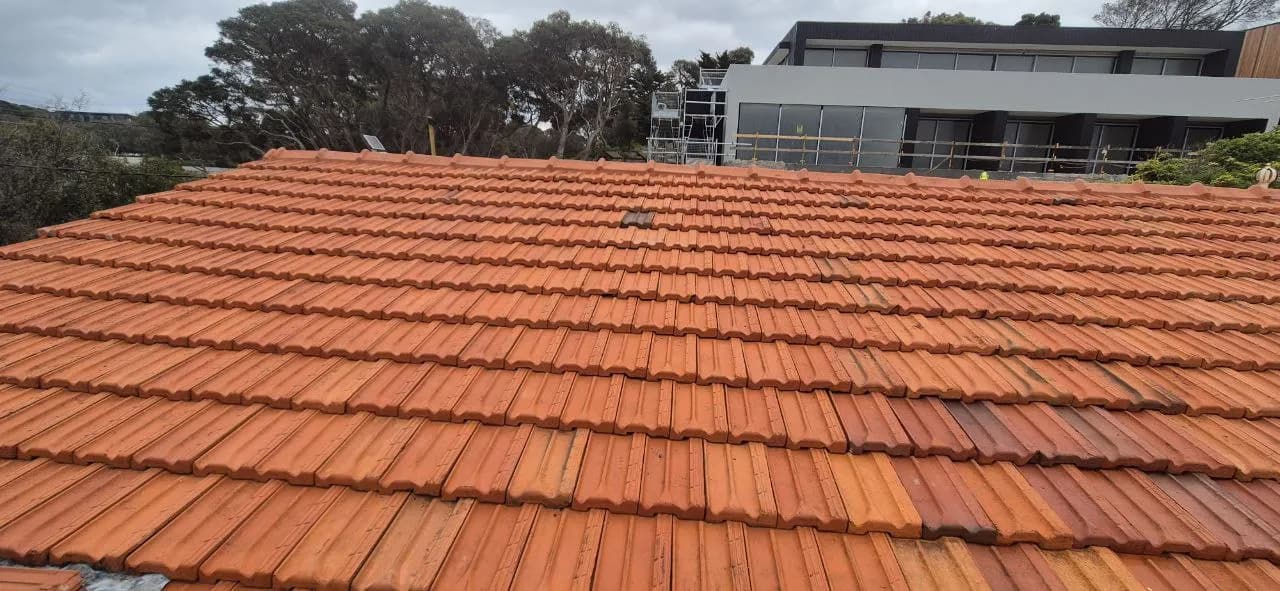
Terracotta Tile Issues
Terracotta is a natural clay product. While it retains colour well, it is brittle.
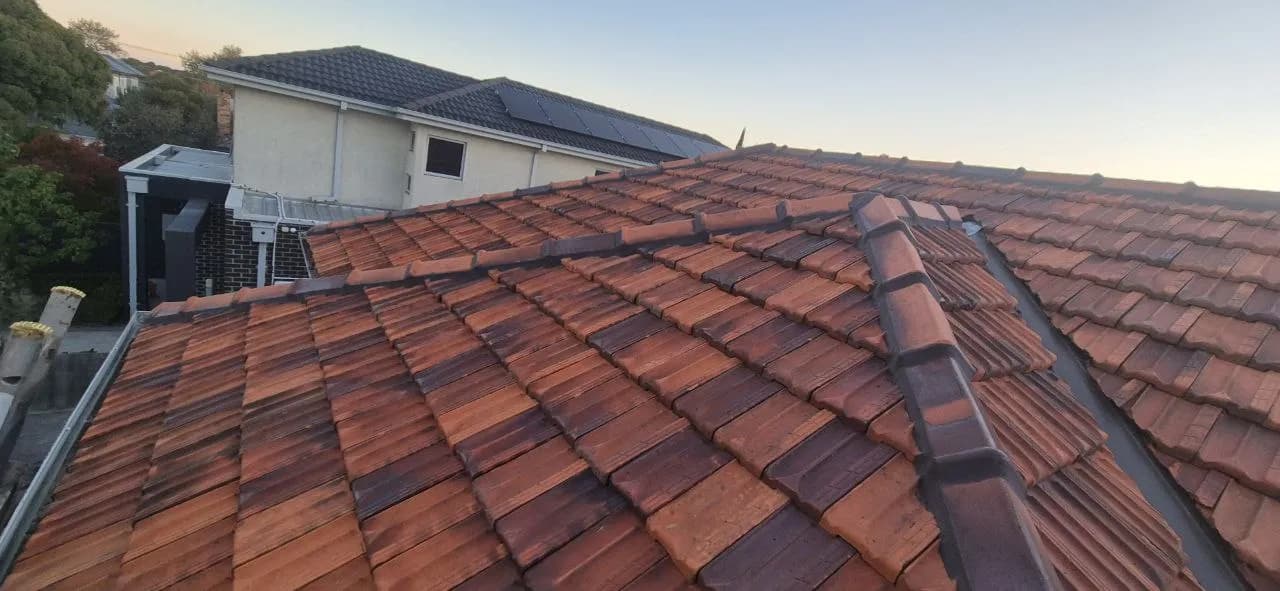
- Fretwork/Spalling: In coastal areas like Mount Eliza, salt crystallisation can cause the surface of the terracotta to flake off.
- Delamination: The glaze can separate from the clay body, exposing the porous tile beneath to water absorption.
The Ridge Cap Danger Zone
The "ridge" is the peak of your roof. The triangular tiles (ridge caps) are held down by "bedding" (cement) and sealed with "pointing" (flexible compound). In older homes across our service area, cracked mortar is extremely common.
- The Check: Go to the street and look up. Do the ridge caps look like they are sitting in a straight line? Or are they zig-zagging? Are there chunks of cement missing?
- The Risk: If a ridge cap is loose, a strong bay wind can blow it right off, crashing onto your car or hurting someone. A loose ridge cap leaves a gaping hole at the highest point of your roof for rain to enter.
Sign 4: Moss, Algae, and Black Roof Streaks
Biological growth is not just a cosmetic issue; it is a roof killer. In damp, humid suburbs or shaded areas of the Peninsula, this is a plague.
The Enemy Lineup
- Moss: Grows in thick clumps. Moss has root systems that grow into the pores of concrete tiles and into the mortar of ridge caps. As these roots expand, they create cracks. Moss also acts like a sponge, keeping the roof wet around the clock.
- Lichen: The white or orange circles you see on tiles. Lichen is acidic — it literally eats into the surface of the tile, causing permanent pitting and damage.
- Algae/Black Streaks: Often Gloeocapsa Magma, a bacteria that feeds on the limestone filler in concrete tiles. It prevents the roof from reflecting heat, increasing your cooling bills.
The Roof Painting Solution
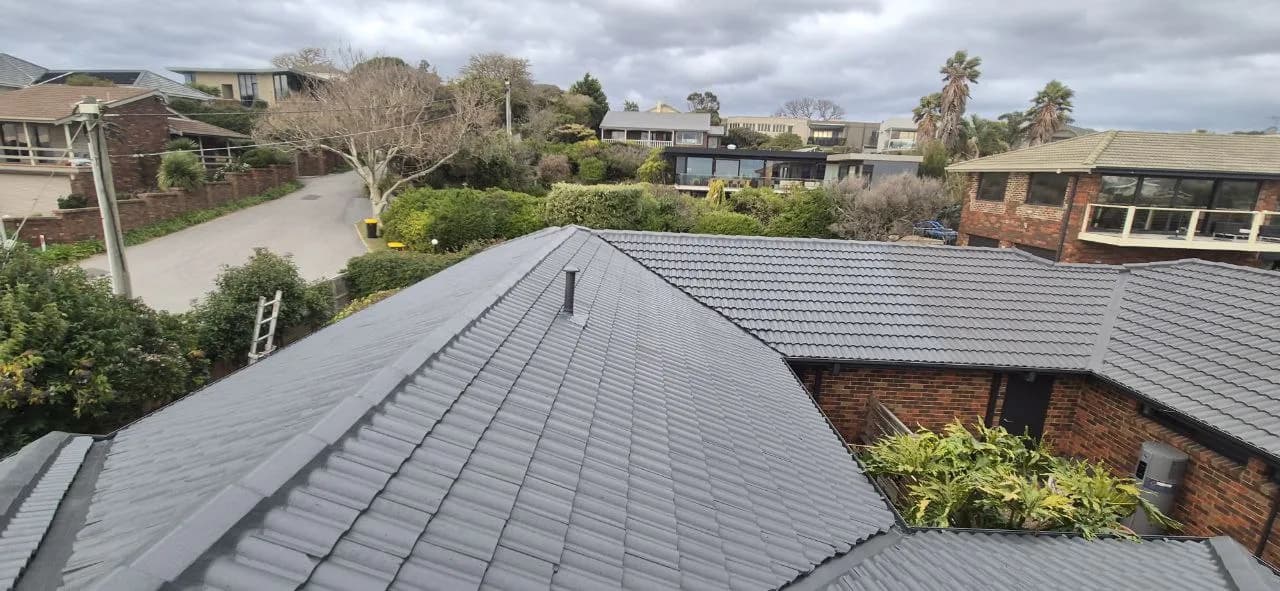
Many homeowners think they can just pressure wash this off. Be careful — high-pressure cleaning by an amateur can strip the surface of the tile and flood the roof cavity. At Frankston Peninsula Roofing, we treat the growth with antifungal agents before cleaning. After cleaning, we apply a premium roof painting system. This isn't just for looks; our sealants and membranes fill the pores of the tile, preventing moss from taking root again.
If your roof in Frankston or Narre Warren is turning green or black, you are losing tile lifespan every day you wait.
Sign 5: Musty Smells and Internal Mould
Sometimes, your nose detects a roof leak before your eyes do.
The Silent Leak
Hidden roof leaks often foster mould growth behind walls and in insulation long before a stain appears. If you walk into an upstairs bedroom or a rarely used guest room and smell dampness, do not ignore it.
Sick Building Syndrome
Mould spores are a serious health hazard, particularly for children, the elderly, or those with asthma. The source of the moisture is often a small, persistent roof leak — perhaps a cracked tile or a flashing failure around a chimney. In older weatherboard properties in Seaford, moisture in the wall cavities can also rot the structural timber frames.
Watch for these tell-tale signs:
- Black spots on cornices or ceiling edges.
- A persistent "earthy" or damp smell that won't go away.
- Condensation on windows that isn't related to cooking or showering.
⚠️ Safety Warning: Recognising these subtle signs early prevents major health and structural risks. Mould remediation is far more expensive than a roof repair — don't wait until it becomes a health emergency.
Sign 6: Uneven Tile Lines or Loose Flashing
Structural shifts are concerning, but they do happen — especially in homes built on reactive clay soils common across the south-east.
Loose Flashing
Flashing is the metal strip used to waterproof junctions — around chimneys, skylights, and where the roof meets a wall. In windy suburbs, lead or aluminium flashing can lift. Once it lifts, water funnels directly into the gap.
- Visual Check: Look at your chimney or vents from the ground. Does the metal around the base look bent, torn, or flapping?
Sagging Roof Lines
Stand across the street from your home. Look at the horizontal line of the ridge. Does it dip in the middle? A "saddleback" roof indicates structural failure. This could be due to:
- Rotting timber trusses (from long-term leaks).
- Excessive weight (from porous, waterlogged tiles or layers of old roofing).
- Foundation movement.
If you see a sag, call Mike at 0437 641 027 immediately. This is not a cosmetic fix; this requires structural assessment.
The Hidden Cost of Inaction: Energy Bills and Property Value
Ignoring these signs doesn't just risk a leak; it hurts your bank account in other ways.
Thermal Efficiency
A damaged roof is an inefficient roof.
- Wet Insulation: Wet insulation is useless. It conducts heat rather than blocking it. If your roof is leaking, your heating bills in winter and cooling bills in summer will skyrocket.
- Reflectivity: Old, dark, moss-covered tiles absorb the sun's heat. A roof restoration that includes heat-reflective roof paint can lower your home's internal temperature significantly.
Property Value
The roof constitutes about 40% of your home's curb appeal. A faded, mossy, or broken roof screams "neglect" to potential buyers. Real estate agents in the Mornington Peninsula market know that a restored roof adds immediate value — often returning 2-3 times the cost of the restoration in the final sale price.
The Solution: Restoration vs. Repair vs. Replacement
Homeowners often ask: "Mike, do I need a whole new roof?" At Frankston Peninsula Roofing, we pride ourselves on honesty. We won't sell you a new roof if a restoration will suffice.
Roof Repairs (The Targeted Fix)
Best for isolated issues:
- Replacing a few broken tiles (less than 20).
- Fixing a specific leak in a valley.
- Re-bedding a small section of ridge capping.
Roof Restoration (The Whole-of-Roof Rejuvenation)
This is our specialty and offers the best value. It brings your roof back to "as new" condition for a fraction of replacement cost. Best for roofs that are structurally sound but aged (15-20+ years), with widespread lichen or moss, or with porous tiles.
Roof Replacement (The Last Resort)
Best for roofs where the tiles are crumbling to the touch, metal has rusted through completely, or there is structural collapse.
Our Restoration Process: How We Fix It
When you hire us for a restoration, you aren't just getting a pressure wash. You are getting a comprehensive, multi-step construction process:
- Safety & Inspection: We install safety rails (compliant with WorkSafe VIC) and inspect every inch of the roof.
- Repair & Replace: We remove all broken tiles and replace them with matching stock. We check the valleys and replace rusted irons with Colorbond or Zincalume steel.
- High-Pressure Clean: We use industrial-grade rotary cleaners to strip years of dirt, moss, and oxidation without damaging the tile structure.
- Re-bedding: We remove the old, cracked cement mortar from the ridge caps and lay a new bed of polymer-modified cement.
- Re-pointing: We apply a flexible pointing compound over the bedding. This flexible material moves with your house so it doesn't crack like old cement.
- Sterilisation: We apply a fungal treatment to kill any remaining spores.
- Primer & Sealer: We apply a high-build primer that soaks into the tile, hardening the surface.
- Membrane Coating (2 Coats): We apply two thick coats of premium, UV-resistant roof membrane in the colour of your choice. This seals the roof and makes it look brand new.
- Final Inspection: Mike personally checks the quality before we consider the job complete.
Why Choose Frankston Peninsula Roofing?
The roofing industry, unfortunately, has its share of "cowboys." In the Frankston and Bayside area, you need a local you can trust.
- Local Expertise: We live here. We know the weather in Seaford, the salt in Mount Eliza, and the winds in Frankston. We don't use generic solutions; we use coastal-ready materials.
- Owner-Operated: When you call, you speak to Mike. He is hands-on with every project.
- 10-Year Workmanship Warranty: We stand behind our work. If our workmanship fails within a decade, we fix it. Period.
- Fully Licensed & Insured: We carry full public liability insurance and proper licensing. You are protected.
- Premium Materials: We do not cut corners with cheap paint. We use top-tier Australian coatings designed for our climate.
- 100% Satisfaction Guarantee: We don't leave until you are happy.
Conclusion: Don't Wait Until Water Hits the Floor
Your roof is the first line of defence against the elements. It protects your family, your possessions, and your investment. In places like Frankston, Mornington, and Narre Warren, waiting until you see water on the floor is a gamble you shouldn't take.
We have saved homeowners thousands of dollars simply by spotting the early signs of roof damage and acting quickly. Don't let a small leak become a structural disaster.
If you have spotted any of the signs mentioned in this guide — stained ceilings, cracked tiles, moss growth, musty smells, or rusted valleys — it is time to act.
Ready to give your roof the care it deserves? Get your FREE assessment and quote today. Let us bring your home's roof back to life with a professional restoration that adds value and security for years to come. Frankston Peninsula Roofing — your local experts in roof restoration, repairs, and painting. Call Mike and the team on 0437 641 027. We serve all of Frankston, Mornington Peninsula, City of Casey, and South-East Melbourne.
Related Services
Serving Frankston, Mornington Peninsula & South-East Melbourne
We provide expert roofing services across these suburbs and surrounding areas. Click your suburb for local information and a free quote.
Frequently Asked Questions
How do I know if my roof has hidden damage?
The most common signs are ceiling stains (brown or yellow rings), musty smells in upstairs rooms, gutters overflowing during rain, cracked or mossy tiles visible from the street, and unexplained spikes in energy bills. If your roof is over 15 years old or you live in a coastal suburb like Frankston or Seaford, a professional inspection is the safest way to check — we offer free assessments.
How often should I have my roof inspected on the Mornington Peninsula?
We recommend a professional roof inspection every 5 years for inland homes and every 3-4 years for coastal properties in Frankston, Seaford, and Mount Eliza where salt air accelerates deterioration. You should also book an inspection after any major storm with high winds or hail.
Can hidden roof damage affect my energy bills?
Yes, significantly. When a slow roof leak saturates your ceiling insulation, it loses its thermal efficiency. Wet insulation conducts heat rather than blocking it, meaning your heater works harder in winter and your air conditioner struggles in summer. We have seen homeowners save hundreds per year on energy bills after a roof restoration that included replacing water-damaged insulation.
What causes roof damage in coastal areas like Frankston?
Salt-laden air from Port Phillip Bay corrodes metal valleys, gutters, and flashings much faster than in inland suburbs. Coastal winds create uplift that loosens ridge caps and displaces tiles. Salt crystals also settle into concrete tile pores, causing micro-cracking called "fretwork." These combined factors mean coastal roofs typically need attention 5-10 years earlier than inland roofs.
Need Help With Your Roof?
Get a free, no-obligation inspection and quote. We'll give you honest advice — even if that means telling you it just needs minor repairs.