From a Water Spot to a Whole New Roof: A Frankston South Case Study
It started with a glance at the ceiling. Just a shadow, really. Mr. and Mrs. Thompson live in a beautiful, classic brick home in Frankston South. Like many properties nestled between the bay and the bush, their home had weathered decades of the Mornington Peninsula’s unique climate. The salt air, the sudden bay winds, and the scorching Australian summer sun had all taken their toll. They hadn’t faced catastrophic issues before — no buckets catching drips in the hallway, no ceiling collapse. But then they noticed it: a water stain slowly appearing in the corner of the master bedroom, and another faint patch in the hallway.
There was no active dripping. No visible mould yet. Just a growing patch of discolouration that seemed to darken after every heavy downpour. They knew this was a whisper that could turn into a scream. They got in touch with us at Frankston Peninsula Roofing to arrange an inspection for potential roof repairs. It is a good thing they did — what we found likely saved them tens of thousands of dollars in structural remediation.
In this post, I am going to walk you through exactly what happened with the Thompson’s roof, and use this project as a guide to teach you everything you need to know about roof replacement in Frankston, roof repairs on the Mornington Peninsula, and when it’s time to stop patching and start replacing.
Part 1: The Inspection — Reading the Signs
The "Iceberg" Theory of Water Stains
When I arrived at the property in Frankston South, the first thing I did was assess the internal damage. The water stain the homeowners saw was, quite literally, the tip of the iceberg. In the roofing industry, we often say that by the time water is visible on your plasterboard, the leak has likely been active for months, perhaps even years. Water is tricky; it travels. It can enter a crack in a tile near the ridge, run down a rafter beam for three metres, soak into the insulation, and finally pool on the ceiling plaster in a completely different room.
What We Found on the Roof
Once I set up my ladder and climbed onto the roof, the true story unfolded. This wasn’t just a "loose tile." The roof was a system in total failure.
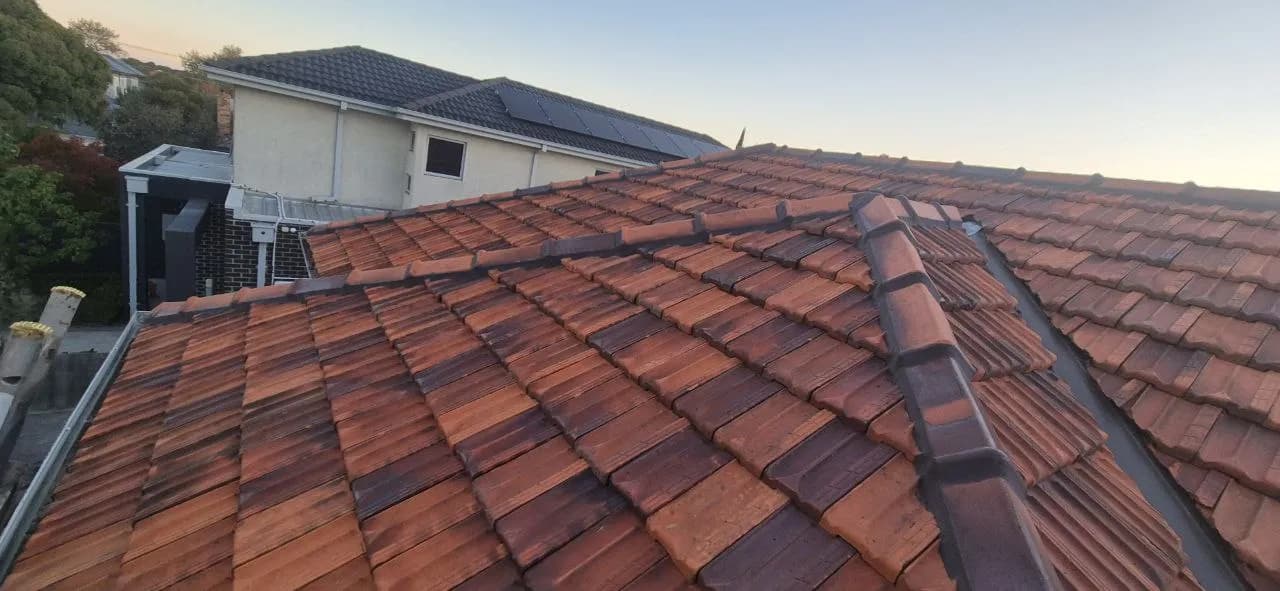
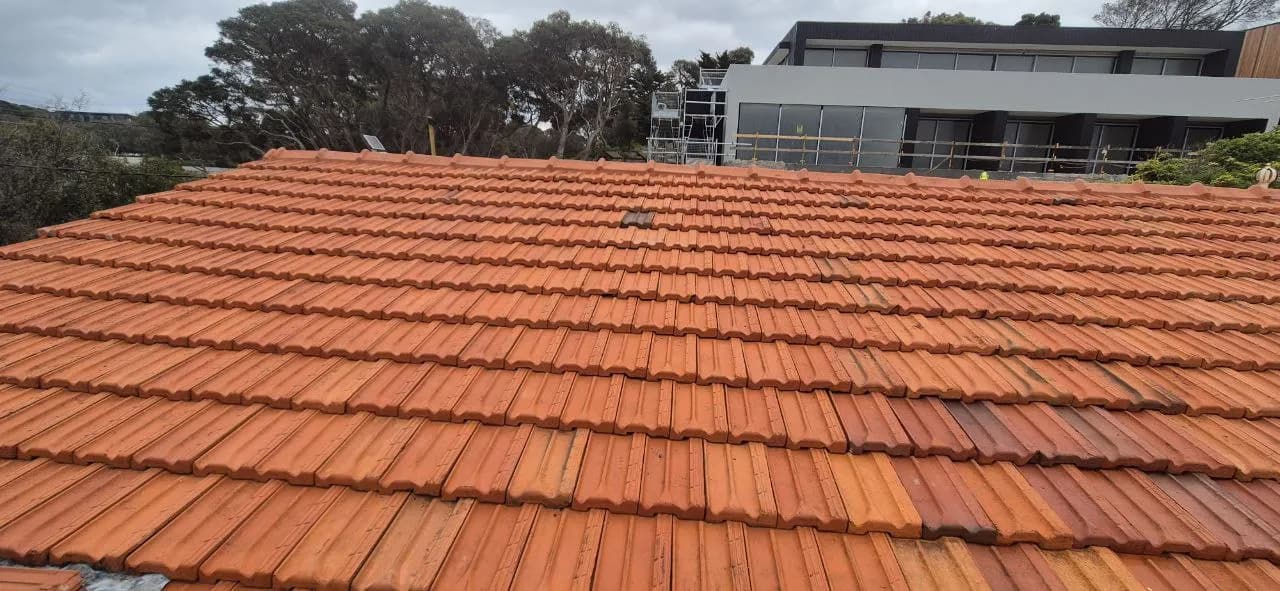
- Concrete Tile Erosion: The original concrete tiles were visibly porous. In coastal suburbs like Mt Eliza, Seaford, and Frankston, the salt air accelerates the breakdown of the glaze on tiles. These tiles had "fretted" — the edges were crumbling, and the protective coating had worn away completely. They were acting like sponges, absorbing water rather than shedding it.
- Failed Pointing and Bedding: The ridge caps (the triangular tiles at the peak of the roof) were sitting on crumbling mortar. The flexible pointing had cracked years ago, leaving gaping holes where wind-driven rain could easily enter.
- The "Bay Wind" Effect: We found several areas where tiles had shifted. The high winds we get coming off Port Phillip Bay can create uplift pressure. Without secure clips, older tiles can rattle and shift, opening gaps.
- Compromised Flashing: The lead flashing around the chimney and vent pipes had fatigue cracks. Lead is durable, but after 30+ years of expansion and contraction in Melbourne’s variable temperature, it splits.
- Moisture in the Cavity: Looking into the roof cavity, some of the underlying timber battens were damp and showing early signs of fungal decay (wood rot).
The Verdict: Repair vs. Replace
This is the most common question I get asked as the owner of Frankston Peninsula Roofing. "Mike, can’t we just patch it? Or maybe do a Roof Restoration?" A Roof Restoration (cleaning, re-bedding, re-pointing, and Roof Painting) is a fantastic option if the tiles are structurally sound but aesthetically tired. It adds value and extends life.
However, in the Thompson’s case, the tiles were too brittle. Walking on them to clean them would have broken 30% of them. Patching individual leaks would have been like playing "Whack-A-Mole" — fix one leak, and two more appear next winter. Mr. and Mrs. Thompson decided on a full roof replacement. This was a proactive move to switch from heavy, porous tiles to a sleek, modern metal roofing system.
Part 2: Why Metal? The Shift from Tiles in Coastal Melbourne
1. Weight Reduction
Concrete and terracotta tiles are incredibly heavy. An average tiled roof can weigh up to 12 tonnes. When wet, they are even heavier. By switching to high-tensile steel, we reduce the load on the home’s structure by roughly 90%. This prevents sagging in older timber frames and reduces the risk of ceiling cracking.
2. The Coastal Factor (Salt Spray)
If you live within a few kilometres of the bay — places like Seaford, Mornington, or Safety Beach — you are in a marine environment. Concrete tiles absorb salt moisture, which can attack the steel reinforcing mesh and degrade the tile bond. We use specific grades of Colorbond (like Colorbond Ultra) for homes very close to the water, and even standard Colorbond is vastly superior at shedding salt water compared to a porous tile.
3. Thermal Efficiency
Older tiled roofs often lack proper sarking (foil) underneath. This means heat gets trapped in the summer and escapes in the winter. Metal roofing systems allow for the installation of heavy-duty blanket insulation directly under the sheets, acting as a thermal break.
Part 3: The Project — Step by Step
Here is exactly how Frankston Peninsula Roofing executed this transformation, and what you can expect if you hire us.
Phase 1: Safety and Site Preparation
Before a single tool was lifted, safety was the priority.
- Perimeter Scaffolding: We installed compliant guard rails (front scaffolding) to ensure the safety of our crew.
- Property Protection: We placed tarps over driveways and garden beds to catch debris.
- Disconnects: We coordinated the safe disconnection of old flues and antennas.
Phase 2: The Demolition
We began by removing all the existing roof tiles. This is hard yakka. Tiles were manually removed and sent down via a conveyor or chute system to avoid damaging the garden. All old tiles and mortar were taken to a recycling facility. We keep our sites clean — no skips sitting on your nature strip for weeks.
Once the skeleton of the roof was exposed, we inspected the timber rafters. We found a few battens that were rotted from the leaks. These were removed and replaced with new structural pine.
Phase 3: Insulation and Battening
This is the invisible part of the roof that makes the biggest difference to your comfort.
- New Metal Battens: We installed new metal roof battens. Unlike timber, these don’t warp, rot, or twist, providing a perfectly flat surface for the new sheets.
- The Blanket: We rolled out a 50mm foil-backed blanket insulation (R1.3 rating). This blanket acts as a vapour barrier (preventing condensation dripping), an acoustic barrier (dampening rain noise), and a radiant heat reflector to keep the home cooler in summer.
Phase 4: Installation of the Clip Lock System
For this project, we moved away from the traditional "corrugated" look and installed a Clip Lock Metal Roof System. Standard metal roofs are screwed down through the top of the sheet. Clip Lock sheets sit on concealed clips.
- No Holes: There are zero screw penetrations on the face of the sheet.
- Water Tightness: Because there are no screws, there are no rubber washers to perish over time. It is practically impossible for water to leak through the field of the roof.
- Aesthetics: It provides a bold, modern, architectural look with strong vertical lines.
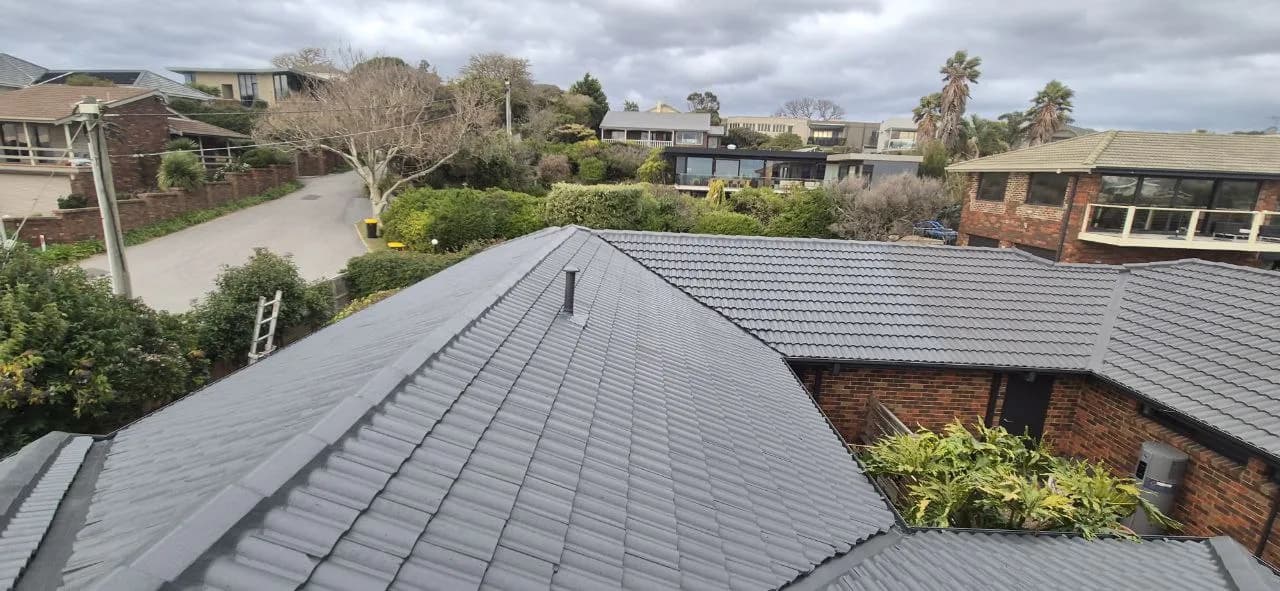
We chose the colour Monument — a deep, charcoal grey that contrasts beautifully with the red brick of the home. This is currently the most popular roof colour on the Mornington Peninsula.
Phase 5: Flashing and Waterproofing
A roof rarely leaks in the middle of a sheet; it leaks at the joins. This is where my team’s expertise really shines.
- Custom Flashings: We site-measured and fabricated custom Colorbond flashings for the ridge, barges, and valleys.
- Penetrations: We installed new "Dektite" rubber flashings around plumbing vents. These are designed to withstand high UV exposure.
- Back Trays: Where the roof met a vertical wall, we installed hidden metal channels that catch any water driven by wind and direct it safely into the gutter, rather than into the wall cavity.
Phase 6: Gutter Works and Timber Restoration
You cannot put a new roof on old, rusted gutters. It’s like putting a new engine in a car with flat tyres.
- New Gutters: We installed brand new Quad Gutters to the right-hand side of the home, finished in Classic Cream to match the existing fascia boards.
- Downpipes: We upgraded the drainage by installing six new PVC downpipes. Many older homes in Melbourne don’t have enough downpipes. During heavy storms, the gutters overflow. We calculated the roof catchment area and added extra downpipes to handle the volume.
- Fascia Repairs: The timber fascia boards (the wood behind the gutter) had some rot spots. We cut out the rot, treated the timber, applied builder’s bog, sanded it back, and painted it to match.
Part 4: The Frankston Peninsula Roofing Difference
There are plenty of roofers in Melbourne. Why did the Thompsons choose us, and why should you?
1. We Are Locals
My base is in Narre Warren, but I spend my life on roofs in Frankston, Seaford, Mt Eliza, and down to Mornington. I know the weather patterns here. I know that a roof in Frankston needs different flashing details than a roof in a sheltered valley. I understand the "Salt Air" challenge.
2. The 10-Year Workmanship Warranty
Most roofers offer the standard statutory warranty. At Frankston Peninsula Roofing, I back my team’s work with a 10-Year Workmanship Warranty. This is on top of the material warranties provided by manufacturers like BlueScope Steel. If a leak develops due to our installation within a decade, we fix it. Free. No arguments.
3. Premium Materials Only
We don’t use imported, cheap steel. We use Australian-made steel (BlueScope/Colorbond) tested for our harsh UV conditions. We use high-grade sealants (Sikaflex) that don’t crack in summer.
4. The "No Shortcuts" Policy
On the Thompson project, we completed a complimentary CCTV inspection of the stormwater drains at the end of the job. We wanted to ensure that no debris had fallen down the pipes during the works. The drains were clear, ensuring the new roof water would flow away freely.
Part 5: The Economics — Cost vs. Value
The Hidden Costs of Ignoring Leaks
If Mr. and Mrs. Thompson had ignored that water stain for another year, the consequences could have been severe.
- Ceiling Collapse: Saturated plasterboard is heavy. It eventually falls, destroying furniture and flooring below.
- Electrical Fire: Water and wiring do not mix. Roof leaks are a common cause of electrical shorts in older homes.
- Structural Rot: Timber rafters that stay wet will rot. Replacing structural roof timbers costs thousands more than just replacing the roof cover.
- Insulation Ruin: Wet insulation loses its R-value and breeds mould.
💡 Pro Tip: A brand new Colorbond roof transforms the curb appeal of a house. In the competitive Mornington Peninsula real estate market, a new roof is a major selling point. It signals to buyers that the "heavy lifting" has been done. It can increase the property value significantly more than the cost of the installation.
Part 6: The Result — A Modern Fortress
The project at Frankston South was a resounding success. The Thompsons now have a home that is watertight, energy-efficient, and looks modern and sharp.
- The Look: Monument Grey roof with Classic Cream gutters — a stunning contrast against the red brick.
- The Performance: R1.3 Insulation and Clip Lock waterproofing — practically impossible for water to enter.
- The Feeling: Peace of mind, backed by our 10-Year Workmanship Warranty.
⚠️ Safety Warning: If there is one key takeaway from this project, it is this: small signs often point to bigger problems. A water stain is a symptom, not the disease. By acting early, the Thompsons avoided structural timber damage and electrical risks. They made a clean transition from an ageing tiled roof to a modern fortress against the Melbourne weather.
Is your roof showing signs of wear? Faded or crumbling tiles? Rusted gutters? Water stains on your ceiling? Moss and lichen buildup? Don’t guess — get an expert opinion. I am Mike Umarov, owner of Frankston Peninsula Roofing. I take pride in being the local expert you can trust. I don’t send salespeople; you deal with me. Call today for a free, no-obligation roof assessment: 0437 641 027.
Related Services
Serving Frankston, Mornington Peninsula & South-East Melbourne
We provide expert roofing services across these suburbs and surrounding areas. Click your suburb for local information and a free quote.
Frequently Asked Questions
Do you service my suburb on the Mornington Peninsula?
Yes. While we are based in Narre Warren, our core service area covers the entire bayside strip and peninsula. This includes Frankston, Frankston South, Seaford, Carrum Downs, Langwarrin, Mt Eliza, Mornington, and surrounding bayside suburbs.
My tiles look dirty but are not leaking. Do I need a replacement or just a restoration?
This depends on the structural condition of the tile. If the tiles are just dirty and the pointing is loose, a roof restoration (cleaning, re-bedding, pointing, and painting) is a great, cost-effective option. If the tiles are brittle, fretting, or crumbling, restoration is a waste of money — you need a replacement. Call us on 0437 641 027 for an honest assessment.
How long does a full roof replacement take?
An average home usually takes 3 to 5 days, depending on the weather. We monitor the forecast carefully and never open up a roof if heavy rain is incoming.
Is a metal roof noisier than tiles when it rains?
This is a common myth. With the 50mm blanket insulation we install under the metal sheets, the noise is dampened significantly. Most clients find the sound of rain on a well-insulated metal roof to be a gentle, soothing white noise.
Are you licensed and insured?
Absolutely. Frankston Peninsula Roofing is fully licensed and carries Public Liability Insurance. We adhere strictly to WorkSafe Victoria standards and back our work with a 10-Year Workmanship Warranty.
Need Help With Your Roof?
Get a free, no-obligation inspection and quote. We'll give you honest advice — even if that means telling you it just needs minor repairs.